Bhupender Yadav chairs G.B. Pant Society meet, urges Himalayan ecological balance by 2047
Synopsis
Environment Minister Bhupender Yadav chaired the 27th G.B. Pant Society meeting in New Delhi, releasing four research publications on Himalayan biodiversity and governance while reiterating the government's push to balance ecological security with development by 2047 — a timeline that now anchors India's entire Himalayan policy agenda.
Key Takeaways
Bhupender Yadav chaired the 27th G.B.
Pant Society of Himalayan Environment and Development meeting in New Delhi on 15 October 2026 .
The government aims to develop a policy framework balancing ecological security with socio-economic growth in the Indian Himalayan Region by 2047 .
Four publications were released covering the Bhagirathi Eco-sensitive Zone , Gangotri Glaciated System , e-PBR governance , and Ramsar wetlands in the Himalayan region.
Yadav also chaired a review of 11 Regional Offices on 14 October , focusing on forest governance and the 'whole of government approach'.
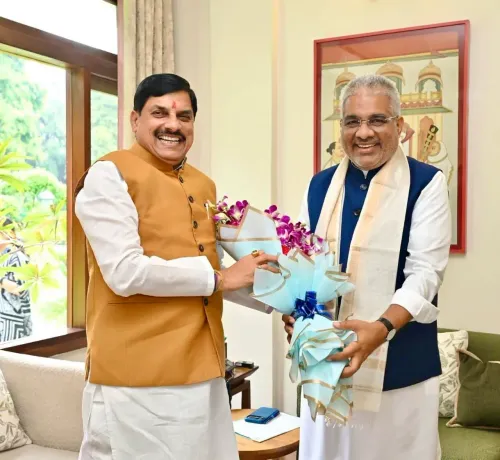
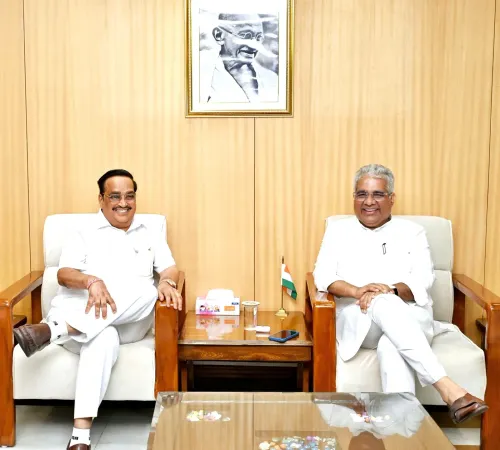
On 13 October , Yadav met Agriculture Minister Shivraj Singh Chouhan at Krishi Bhavan to discuss sustainable stubble management alternatives for farmers.
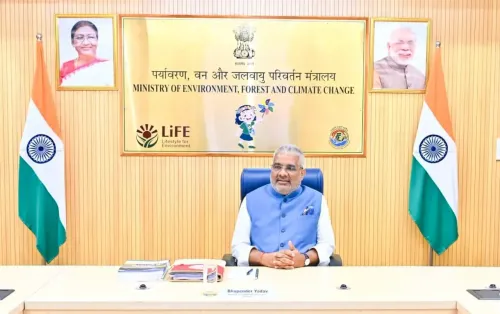
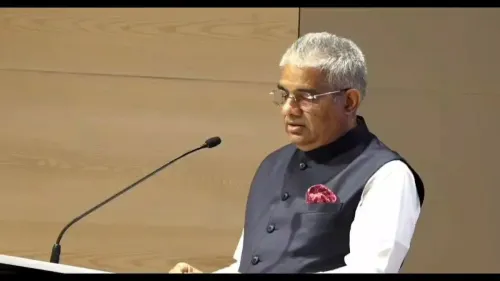
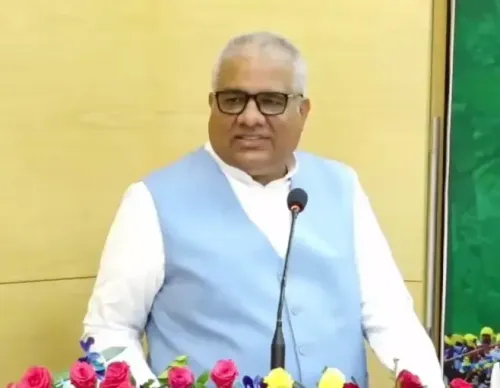
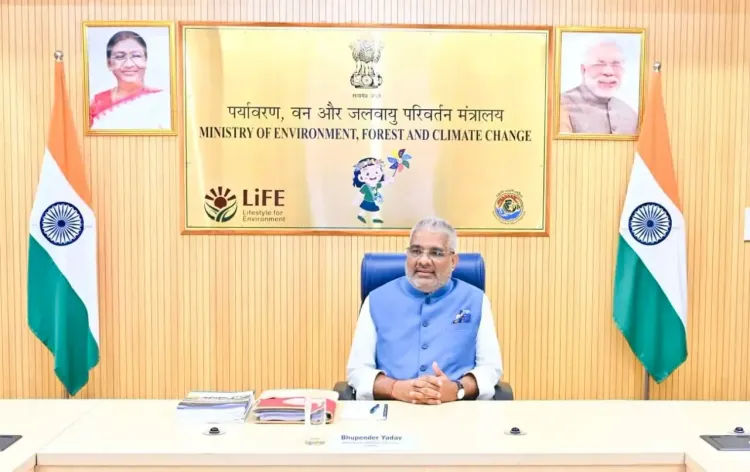
Union Minister for Environment, Forest and Climate Change Bhupender Yadav on Thursday, 15 October 2026, emphasised the need for a robust policy framework to balance ecological security with sustainable socio-economic growth in the Indian Himalayan Region by 2047. Speaking at the 27th meeting of the G.B. Pant Society of Himalayan Environment and Development in New Delhi, Yadav said the effort is being pursued under the leadership of Prime Minister Narendra Modi.
Key Developments at the G.B. Pant Society Meeting
Chairing the annual review, Yadav underlined the importance of access and benefit-sharing rights and People's Biodiversity Registers (PBRs) as instruments for improving livelihoods across the Himalayan ecosystem. He stressed that communities living in these fragile mountain zones must be central to any conservation strategy.
The meeting also saw the release of four publications that add to the institute's knowledge repository on Himalayan research and governance.
Four Publications Released
The publications released during the meeting cover critical areas of Himalayan environmental management. They are: Biodiversity and its Conservation Practices for Bhagirathi Eco-sensitive Zone; Gangotri Glaciated System; E-PBR Governance for the Indian Himalayan Region; and Ramsar Wetlands of the Indian Himalayan Region, according to an official statement. The volumes are intended to inform both policy and on-ground conservation practice in one of the world's most ecologically sensitive mountain chains.
Forest Governance Review with Regional Offices
A day earlier, on Wednesday, 14 October, Yadav chaired a review meeting with regional officers and scientists from 11 Regional Offices in Delhi. These offices handle forest conservation, diversion of forest land, approval of working plans, and monitoring and evaluation under various Acts. In a post on X, Yadav said he had 'underlined the whole of government approach in taking the forest governance forward for sustainable growth by striking a balance between economic aspirations and ecological security.'
Stubble Burning Talks with Agriculture Ministry
On 13 October, Yadav also held discussions at Krishi Bhavan with Union Agriculture and Farmers' Welfare Minister Shivraj Singh Chouhan and agriculture ministers and senior officials from multiple states on the subject of stubble management. The meeting focused on providing farmers with sustainable alternatives to stubble burning ahead of the winter season — a perennial source of air-quality deterioration across northern India.
In a subsequent post on X, Yadav wrote: 'We are continuously making efforts to provide better and sustainable alternatives to our farmer brothers instead of burning stubble, so that their income increases and soil quality is also maintained.' He added that special emphasis is being placed on the availability of agricultural machines, their effective use, and public awareness, with the goal of reducing incidents of stubble burning while keeping the environment clean and safe.
Broader Context
This comes amid renewed urgency around India's climate commitments and the country's Vision 2047 agenda. The Indian Himalayan Region, spanning 13 states and Union Territories, is home to critical water towers, glaciers, and biodiversity hotspots that sustain hundreds of millions of people downstream. Experts have repeatedly flagged that development pressures in this belt — from hydropower projects to road expansion — risk outpacing the region's ecological carrying capacity. The Centre's stated focus on a balanced framework signals an intent to pre-empt those trade-offs, though implementation timelines remain to be detailed.
Point of View
Making them harder to quietly shelve. Yet the gap between policy intent and ground reality in the Himalayas remains vast: hydropower pipelines, road projects, and encroachment pressures continue largely unabated across the 13-state belt. The release of four research publications is useful knowledge-building, but the real test is whether People's Biodiversity Registers translate into enforceable benefit-sharing, rather than remaining as data-collection exercises. Separately, the stubble-burning dialogue is a recurring seasonal ritual; the question is whether this year's round produces measurable reductions in farm fires rather than another set of well-intentioned advisories.
NationPress
15 Oct 2026
Frequently Asked Questions
What was discussed at the 27th G.B. Pant Society meeting?
The meeting, chaired by Environment Minister Bhupender Yadav on 15 October 2026 in New Delhi, focused on balancing ecological security with socio-economic growth in the Indian Himalayan Region by 2047. The session also emphasised People's Biodiversity Registers (PBRs) and access and benefit-sharing rights for Himalayan communities.
What publications were released at the G.B. Pant Society meeting?
Four publications were released: Biodiversity and its Conservation Practices for Bhagirathi Eco-sensitive Zone; Gangotri Glaciated System; E-PBR Governance for the Indian Himalayan Region; and Ramsar Wetlands of the Indian Himalayan Region. They are intended to support policy and conservation practice in the Himalayan region.
Why is the Indian Himalayan Region ecologically significant?
The Indian Himalayan Region spans 13 states and Union Territories and contains critical glaciers, water towers, wetlands, and biodiversity hotspots that sustain hundreds of millions of people downstream. Development pressures in this belt are seen as a long-term threat to its ecological carrying capacity.
What steps is the government taking on stubble burning?
On 13 October 2026, Bhupender Yadav met Agriculture Minister Shivraj Singh Chouhan at Krishi Bhavan to discuss sustainable alternatives to stubble burning for farmers. The focus was on agricultural machinery availability, effective use, and public awareness to reduce farm fires ahead of the winter season.
What is the government's 2047 Himalayan policy target?
The Centre is working on a policy framework aimed at balancing ecological security with sustainable socio-economic growth in the Indian Himalayan Region by 2047, the year India marks its centenary of independence. The framework is being developed under the broader Vision 2047 agenda.