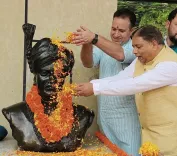
Chaudhary Charan Singh death anniversary: CM Yogi pays tribute in Lucknow
Synopsis
On the 38th death anniversary of former PM Chaudhary Charan Singh, CM Yogi Adityanath paid tribute at Lucknow's Vidhan Bhawan and announced the Chaudhary Charan Singh Seed Park as a living tribute to the Bharat Ratna awardee — signalling that agrarian politics in Uttar Pradesh remains as charged as ever.
Key Takeaways
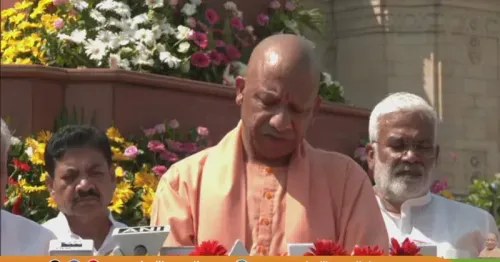
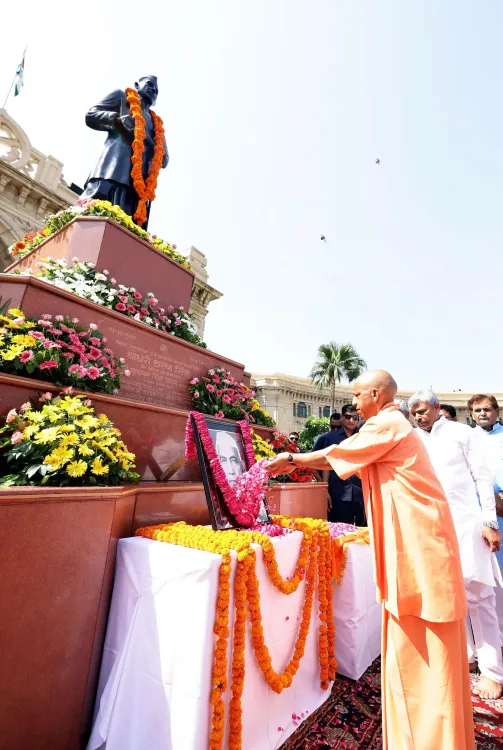
CM Yogi Adityanath paid floral tributes to Chaudhary Charan Singh at the Vidhan Bhawan complex, Lucknow on 29 May 2025 .
Yogi described Singh as a 'great son of Mother India and a messiah of farmers.' The Uttar Pradesh government is establishing the Chaudhary Charan Singh Seed Park in Lucknow to honour his legacy.
Chaudhary Charan Singh was born on 23 December 1902 and passed away on 29 May 1987 .
He was posthumously awarded the Bharat Ratna for his contributions to the nation and agrarian reform.
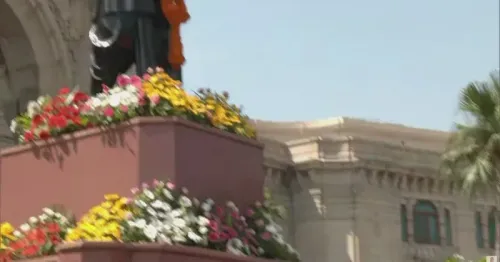
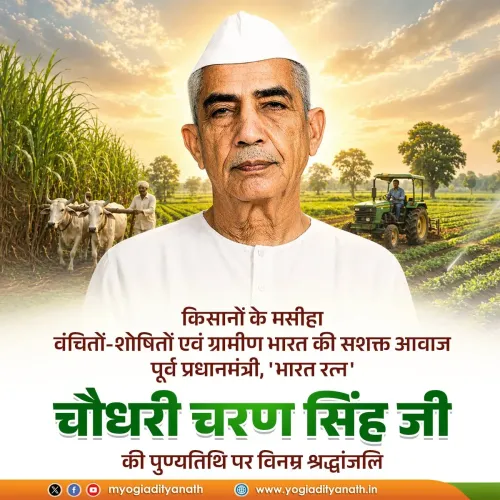
Uttar Pradesh Chief Minister Yogi Adityanath on Friday, 29 May paid floral tributes to former Prime Minister and Bharat Ratna Chaudhary Charan Singh on his 38th death anniversary, honouring his legacy at the statue within the Vidhan Bhawan complex in Lucknow. The Chief Minister described Singh as a 'great son of Mother India and a messiah of farmers' — words that encapsulate the agrarian leader's enduring place in India's political memory.
Tributes at Vidhan Bhawan
Addressing a gathering at the Vidhan Bhawan complex, CM Yogi recalled Chaudhary Charan Singh's twin roles as a freedom fighter and an architect of agricultural reform. He noted that Singh not only participated actively in the independence movement but also drove structural changes in agriculture and revenue administration that shaped rural India for decades.
'It was because of his firm conviction that the path to the country's development relies on its villages and fields today,' Yogi said, underlining Singh's philosophy that national progress must be rooted in agrarian prosperity.
Farmers at the Centre of Policy
The Chief Minister stressed that farmers must remain a priority in governance and that government schemes should be designed with their interests at the core. He stated that the Uttar Pradesh government is actively implementing farmer-welfare initiatives to keep Singh's legacy alive.
Among the most prominent of these is the establishment of the Chaudhary Charan Singh Seed Park in Lucknow, which Yogi described as 'a significant highlight' of the state's efforts to honour the former Prime Minister's memory through tangible agricultural infrastructure.
Who Was Chaudhary Charan Singh
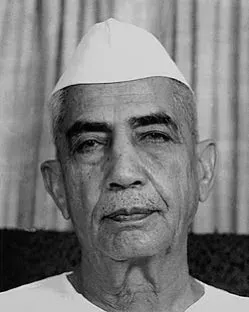
Born on 23 December 1902 into a farming family in Uttar Pradesh, Chaudhary Charan Singh received his education at Agra University before joining the freedom movement. Deeply influenced by the ideals of Mahatma Gandhi, he played an active role in multiple movements against British colonial rule.
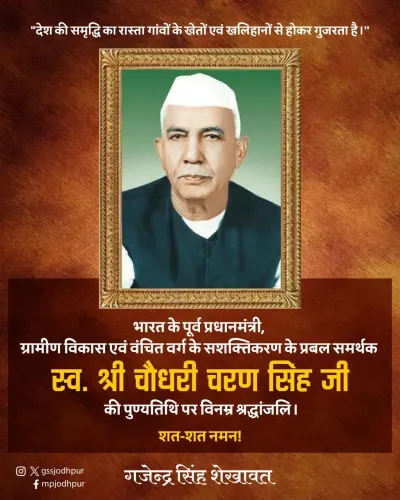
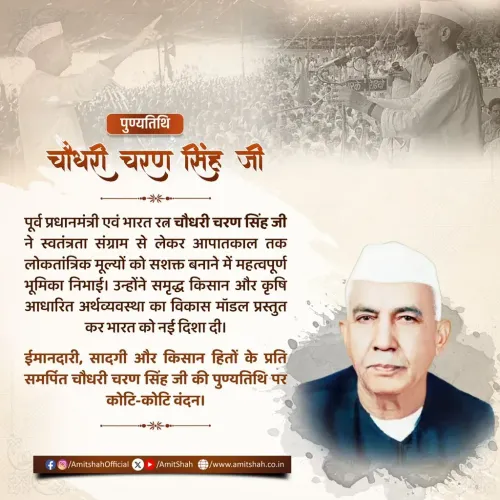
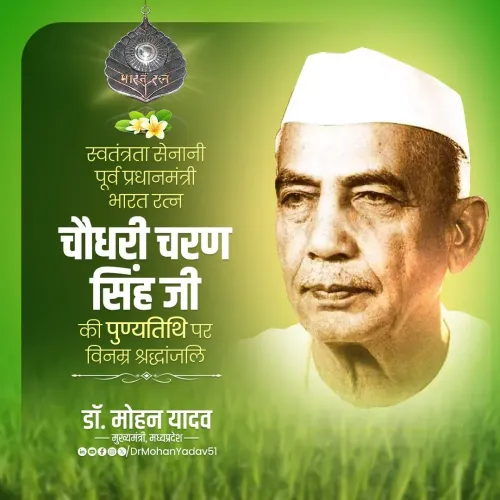
After independence, Singh devoted his political career to uplifting farmers, empowering the landless, and strengthening the rural economy. He served as Prime Minister of India and passed away on 29 May 1987. In recognition of his contributions, he was posthumously conferred the nation's highest civilian honour, the Bharat Ratna.
Legacy and What It Means Today
Singh's death anniversary is observed across party lines in Uttar Pradesh, reflecting the cross-cutting political weight his agrarian legacy carries in one of India's most electorally significant states. This comes amid continued national debate over farm policy, making the occasion politically resonant beyond ceremonial tribute.
As the state government moves to operationalise the Seed Park and other farmer-focused schemes, the anniversary serves as both a moment of remembrance and a policy signal ahead of upcoming electoral cycles.
Point of View
Or remain largely symbolic gestures timed to electoral calendars.
NationPress
23 Sept 2026
Frequently Asked Questions
Why is Chaudhary Charan Singh's death anniversary significant?
Chaudhary Charan Singh passed away on 29 May 1987 and is remembered as one of India's foremost champions of farmers' rights and rural development. His death anniversary is widely observed in Uttar Pradesh and nationally, particularly given his posthumous Bharat Ratna award.
What is the Chaudhary Charan Singh Seed Park in Lucknow?
The Chaudhary Charan Singh Seed Park is an agricultural infrastructure initiative being established by the Uttar Pradesh government in Lucknow as a tribute to the former Prime Minister's legacy. CM Yogi Adityanath described it as a flagship effort to keep Singh's memory alive through farmer-focused development.
What was Chaudhary Charan Singh's contribution to Indian agriculture?
Chaudhary Charan Singh drove structural reforms in agriculture and revenue administration after independence, focusing on empowering landless farmers and strengthening the rural economy. He believed that India's development path ran through its villages and fields.
When was Chaudhary Charan Singh awarded the Bharat Ratna?
Chaudhary Charan Singh was posthumously conferred the Bharat Ratna, India's highest civilian honour, in recognition of his immense contributions to the nation, agrarian reform, and the freedom movement.
Who was Chaudhary Charan Singh?
Chaudhary Charan Singh was a former Prime Minister of India, born on 23 December 1902 in Uttar Pradesh into a farming family. Educated at Agra University and inspired by Mahatma Gandhi, he became a key figure in the independence movement and later a leading voice for farmers' rights in independent India.