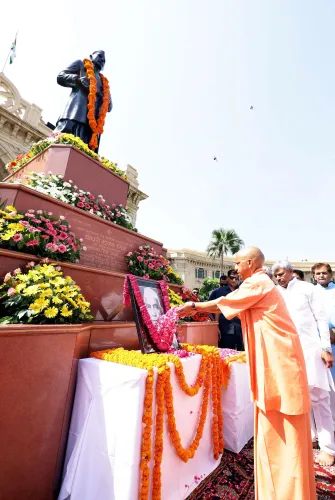
Amit Shah, Yogi pay tribute to Charan Singh on death anniversary
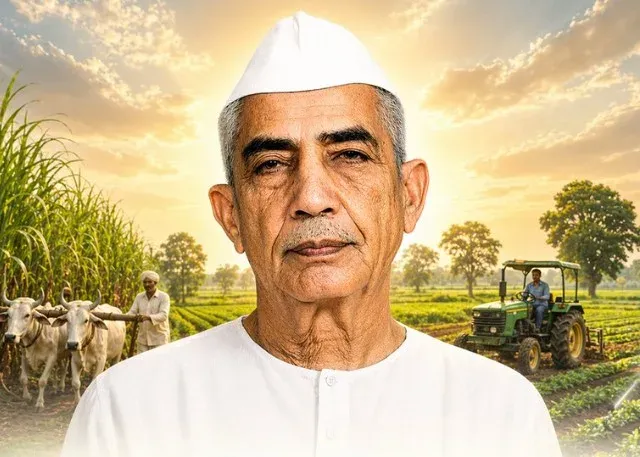
Synopsis
On Chaudhary Charan Singh's death anniversary, senior BJP leaders including Amit Shah, Yogi Adityanath, Nitin Gadkari, and Samrat Choudhary converged on X to honour the farmer-statesman — a rare display of cross-regional political reverence for a leader whose agrarian legacy still shapes India's rural vote arithmetic.
Key Takeaways
Union Home Minister Amit Shah paid tribute to former PM Chaudhary Charan Singh on his death anniversary on 29 May .
Yogi Adityanath , Nitin Gadkari , and Samrat Choudhary also posted tributes on X.
Charan Singh served as Prime Minister of India from July 1979 to January 1980 .
He was the architect of major land reform legislation including the Debt Redemption Bill (1939) and the Land Holding Act (1960) .
Charan Singh was posthumously awarded the Bharat Ratna , India's highest civilian honour.
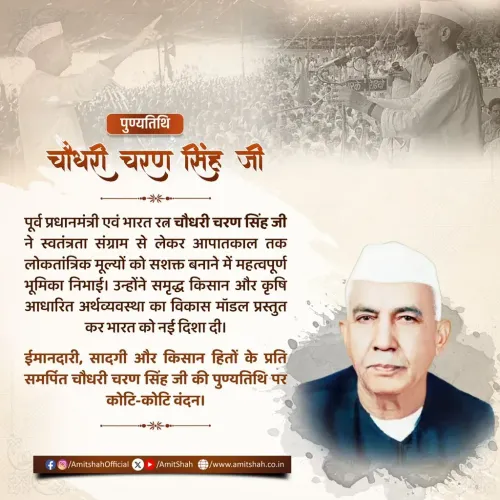
Union Home Minister Amit Shah on Friday, 29 May paid tribute to former Prime Minister and Bharat Ratna awardee Chaudhary Charan Singh on his death anniversary, honouring him as a leader who fortified democratic values and devoted his life to the welfare of farmers and rural India.
Amit Shah's tribute
In a post on X, Shah said that Chaudhary Charan Singh 'played a pivotal role in strengthening democratic values from the freedom struggle to the Emergency period' and 'presented a development model for prosperous farmers and an agriculture-based economy, giving India a new direction.' Shah extended 'millions of salutations' to the former Prime Minister, describing him as a leader devoted to 'honesty, simplicity, and the interests of farmers.'
Other leaders remember the farmer statesman
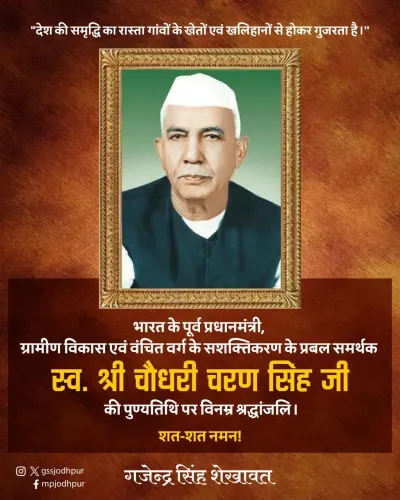
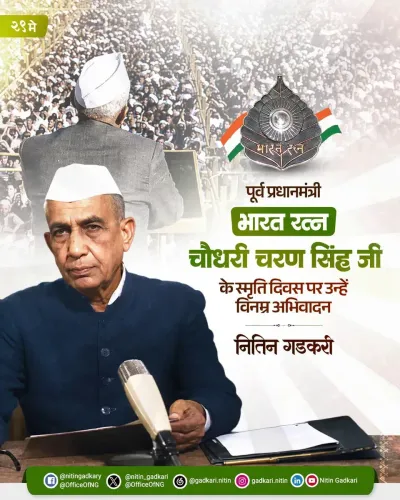
Union Minister Nitin Gadkari also offered homage on X, calling Charan Singh 'the fiery leader who amplified the voice of farmers' and paying 'humble salutations' on his death anniversary.
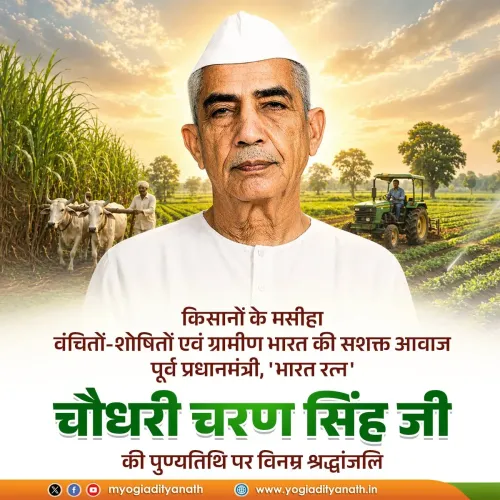
Uttar Pradesh Chief Minister Yogi Adityanath remembered Charan Singh for placing 'the voice of farmers, labourers, and rural India at the centre of national discourse,' adding that his 'simple life, dedication to farmers, and politics of public welfare will continue to inspire us all forever.'
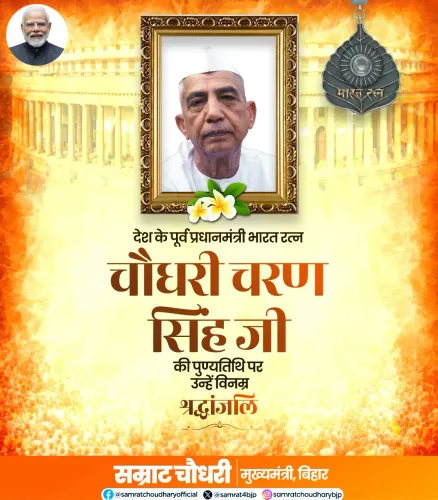
Bihar Chief Minister Samrat Choudhary also posted a tribute on X, stating that Charan Singh's 'dedication to farmers, rural India, and social justice will continue to inspire the nation forever.'
A legacy rooted in land and labour
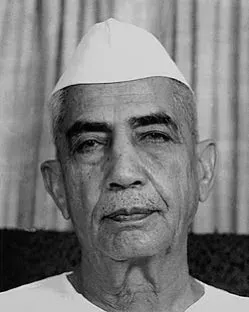
Chaudhary Charan Singh is widely regarded as one of India's foremost agrarian reformers and a defining voice for the farming community. Born in 1902 in Noorpur, Meerut district, Uttar Pradesh, to a middle-class peasant family, he was educated in science and law before entering politics with the Indian National Congress.
He was first elected to the Uttar Pradesh Legislative Assembly in 1937 and went on to hold key portfolios including Revenue, Agriculture, Home, and Local Self-Government, becoming Chief Minister of Uttar Pradesh in 1970. He served as Prime Minister of India from July 1979 to January 1980.
Architect of agrarian reform
Charan Singh was the driving force behind landmark legislation including the Debt Redemption Bill (1939) and the Land Holding Act (1960), which reshaped land ownership and debt relief for rural communities. He authored several influential works on agrarian reforms, cementing a legacy that continues to shape rural policy discourse in India. Notably, he was posthumously awarded the Bharat Ratna, India's highest civilian honour, in recognition of his contributions to the nation.
Point of View
Yogi, Gadkari, and Choudhary — reflects Charan Singh's enduring electoral symbolism among agrarian and OBC voter blocs in Uttar Pradesh and Bihar. This is not merely ceremonial remembrance; invoking Charan Singh is a calculated signal to the Jat and farmer communities ahead of any political cycle. What is often overlooked is that his actual policy architecture — land ceilings, debt relief, decentralised agriculture — remains largely unrealised at scale, even as his image is routinely claimed across party lines.
NationPress
22 Oct 2026
Frequently Asked Questions
Who was Chaudhary Charan Singh?
Chaudhary Charan Singh was a former Prime Minister of India who served from July 1979 to January 1980, and is widely regarded as the country's foremost farmer-statesman. Born in 1902 in Noorpur, Meerut district, Uttar Pradesh, he was a champion of agrarian reforms and rural welfare, and was posthumously awarded the Bharat Ratna, India's highest civilian honour.
Why did Amit Shah pay tribute to Charan Singh today?
29 May marks the death anniversary of Chaudhary Charan Singh, and Union Home Minister Amit Shah used the occasion to honour his legacy on X. Shah praised Charan Singh for strengthening democratic values and presenting a development model centred on farmers and an agriculture-based economy.
Which leaders paid tribute to Charan Singh on his death anniversary?
Union Home Minister Amit Shah, Union Minister Nitin Gadkari, Uttar Pradesh Chief Minister Yogi Adityanath, and Bihar Chief Minister Samrat Choudhary all posted tributes on X. Each highlighted Charan Singh's dedication to farmers, rural India, and social justice.
What were Charan Singh's major contributions to agrarian reform?
Charan Singh was the architect of the Debt Redemption Bill (1939) and the Land Holding Act (1960), which provided debt relief and reshaped land ownership for rural communities in Uttar Pradesh. He also authored several influential works on agrarian policy and held key state portfolios including Revenue and Agriculture.
When did Charan Singh serve as Prime Minister of India?
Chaudhary Charan Singh served as the Prime Minister of India from July 1979 to January 1980. Before his tenure as PM, he served as Chief Minister of Uttar Pradesh in 1970 and held multiple state ministerial portfolios.