Salim Wastik Arrested: YouTuber Held in 1995 Kidnapping & Murder Case
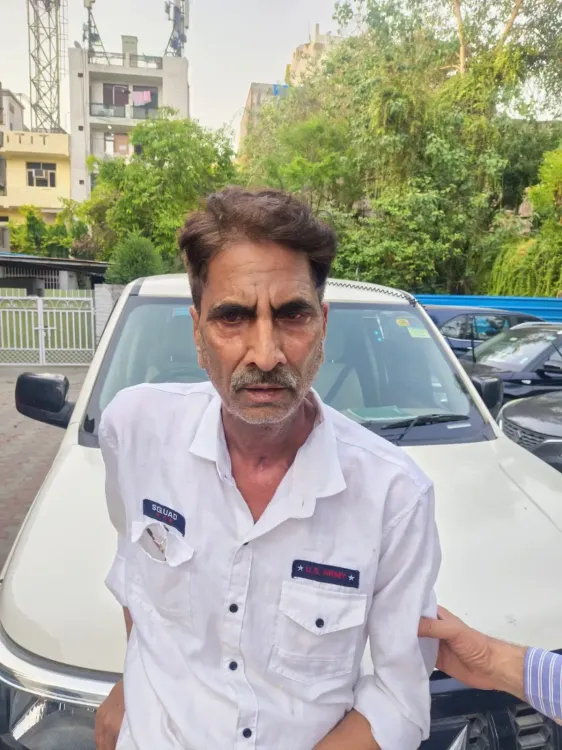
Synopsis
Salim Wastik, a YouTuber and social activist who gained national fame after the Pahalgam terror attack, has been arrested by Delhi Police's Crime Branch in a 31-year-old kidnapping and murder case. Convicted in 1997, he had been living under a false identity since jumping bail in 2000 — a fugitive hiding in plain sight.
Key Takeaways
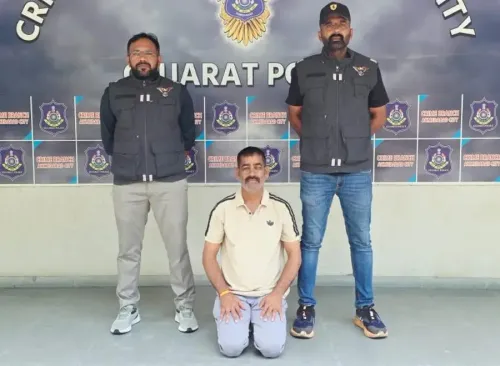
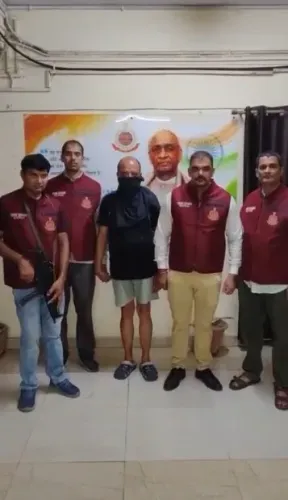
Salim Wastik , 54, was arrested on April 25, 2025 by the ARSC, Crime Branch, Delhi Police from Loni, Ghaziabad, Uttar Pradesh .
He was convicted in 1997 for the 1995 kidnapping and murder of 13-year-old Sandeep Bansal and sentenced to life imprisonment .
Wastik jumped bail granted by the Delhi High Court in 2000 and evaded law enforcement for over 24 years by changing his identity.
He gained national fame after the April 2025 Pahalgam terror attack , publicly condemning terrorism and supporting Operation Sindoor .
On February 27, 2025 , he survived a brutal stabbing attack in which he was stabbed 14 times ; both suspects were killed in subsequent police encounters in Ghaziabad .
Wastik is currently lodged in Tihar Jail , with further investigation ongoing by Delhi Police.
New Delhi, April 25: Salim Wastik, a 54-year-old social activist, YouTuber, and former Muslim known for his outspoken criticism of radical Islam, has been arrested by the Anti-Robbery Squad Cell (ARSC), Crime Branch, Delhi Police in connection with a 31-year-old kidnapping for ransom and murder case registered in 1995. He was apprehended from Loni, Ghaziabad, Uttar Pradesh, nearly three decades after allegedly jumping bail and living under a false identity. The arrest has sent shockwaves given his recent rise to national prominence following the Pahalgam terror attack.
The 1995 Crime: What Happened
The case traces back to January 20, 1995, when Sandeep Bansal, a 13-year-old student and son of a local businessman in North East Delhi, left home for school and never returned. His family launched a frantic search before receiving a phone call the following day confirming he had been abducted.
A subsequent call demanded a ransom of Rs 30,000 for the boy's safe release. The caller instructed the victim's father to deliver the money at a bus stand near the Loni Flyover, to be placed inside a bus bound for Baghpat. The family was explicitly warned against contacting the police, with threats made against the child's life.
A kidnapping case was formally registered at Police Station Gokulpuri under relevant sections of the Indian Penal Code. Investigators quickly zeroed in on Salim Khan — as Wastik was then known — who was employed as a martial arts instructor at Ramjas School, Daryaganj, the very institution the victim attended.
Body Recovered, Trial, and Conviction
A witness statement placed the child last seen leaving in a rickshaw accompanied by a tall man referred to as "Masterji" — a detail that pointed directly at the martial arts instructor. Upon detention, Salim Khan allegedly disclosed the location of the body, which was recovered from a drain near Mustafabad and subsequently identified by the victim's father.
Investigations further revealed a co-conspirator, identified only as Anil, who allegedly played a central role in planning and executing the crime. Anil surrendered before a court in February 1995. Investigators recovered the victim's personal belongings — a watch, school bag, and tiffin box — from the accused's possession.
Both accused were charged under Sections 302, 364A, and 34 of the IPC, covering murder, kidnapping for ransom, and common intention. Following completion of trial proceedings, both were convicted in 1997 and sentenced to life imprisonment.
However, Salim was granted interim bail in 2000 by the Delhi High Court and allegedly never surrendered thereafter, becoming a proclaimed offender. His conviction was subsequently upheld in 2011, but he remained at large for over two decades.
Three Decades on the Run: Identity Changes and Relocation
According to police, after jumping bail, Salim systematically rebuilt his identity — first adopting the name Salim Ahmed and later Salim Wastik. He reportedly moved across multiple states, including Haryana and Uttar Pradesh, before eventually settling in Loni, Ghaziabad, where he ran a small business.
During his years as a fugitive, he reportedly worked in carpentry and small-scale trade to sustain himself while evading law enforcement. Police sources noted that he had recently been approached for a biographical film project and had allegedly received an advance payment from a film producer — a claim currently under verification by authorities.
The breakthrough came after a tip-off received by HC Mintu Yadav, which led to the formation of a special team under Inspector Robin Tyagi. The team, in coordination with local police, confirmed his identity through fingerprint matching and old records before making the arrest.
Rise to National Spotlight: Pahalgam Attack and Public Activism
The timing of the arrest is particularly striking given that Salim Wastik had only recently emerged as a prominent national voice. Following the Pahalgam terror attack of April 2025, in which 26 tourists were killed, Wastik travelled to Pahalgam along with an associate to protest against terrorism and express solidarity with the victims.
He recorded videos at the site condemning the attack, jihad, and radical Islam. He subsequently claimed that he and his associate were detained by local authorities, and that his Facebook and Instagram channels were taken down following the visit. In podcast appearances post-attack, he openly blamed Pakistan for orchestrating cross-border terror and publicly endorsed India's Operation Sindoor, targeting terror infrastructure in Pakistan-occupied Kashmir and Pakistan.
Notably, just two months prior to his arrest, on February 27, two brothers allegedly entered his residence and stabbed him 14 times. Wastik survived after approximately a month of medical treatment. Both suspects were subsequently killed in separate police encounters — the first suspect, Zeeshan, was shot dead on March 1 in Loni, Ghaziabad by the UP Special Task Force, and the second suspect, Gulfam, was killed on March 3 in Vasundhara, Ghaziabad. Uttar Pradesh Police had announced a bounty of Rs 1 lakh each on the attackers.
Current Legal Status and What Comes Next
Following the completion of necessary legal formalities, Salim Wastik has been placed under judicial custody and lodged in Tihar Jail, Delhi. Further investigation into the case remains ongoing, according to police officials.
The case raises profound questions about systemic gaps in tracking convicted fugitives — Wastik evaded capture for over 24 years after jumping bail, even as he built a public profile and accumulated a significant online following. His arrest also comes at a moment of heightened national sensitivity around terrorism, religious identity, and free speech, making this a case that will likely attract intense legal and public scrutiny in the weeks ahead.
Point of View
Evading justice for over two decades. This case also exposes a systemic failure — how does a life-term convict jump bail, rebrand himself across states, build an online following, receive film offers, and remain undetected until 2025? The answer demands scrutiny not just of Wastik, but of the institutions that allowed this gap to persist for 24 years.
NationPress
2 Oct 2026
Frequently Asked Questions
Why was Salim Wastik arrested by Delhi Police?
Salim Wastik was arrested by the ARSC, Crime Branch of Delhi Police in connection with a 1995 kidnapping for ransom and murder case involving a 13-year-old boy named Sandeep Bansal. He had been convicted in 1997 and sentenced to life imprisonment but jumped bail in 2000 and remained a fugitive for over two decades.
Who is Salim Wastik and why is he famous?
Salim Wastik is a 54-year-old social activist and YouTuber who gained national prominence after the April 2025 Pahalgam terror attack, during which he travelled to Pahalgam to protest against terrorism and condemn radical Islam. He is a former Muslim known for his controversial public statements criticising Islam and cross-border terrorism.
What was the 1995 murder case involving Salim Wastik?
In January 1995, a 13-year-old student, Sandeep Bansal, was kidnapped for a ransom of Rs 30,000 and subsequently murdered in Delhi. Salim — then working as a martial arts instructor at Ramjas School, Daryaganj — was identified as the prime suspect, convicted in 1997 along with a co-accused named Anil, and sentenced to life imprisonment.
How long was Salim Wastik on the run before his arrest?
Salim Wastik was on the run for approximately 24 years after jumping bail granted by the Delhi High Court in 2000. During this period, he changed his identity from Salim Khan to Salim Ahmed and later Salim Wastik, relocating across Haryana and Uttar Pradesh before settling in Loni, Ghaziabad.
Where is Salim Wastik now after his arrest?
Following his arrest by Delhi Police's Crime Branch from Loni, Ghaziabad, Salim Wastik has been placed in judicial custody and lodged in Tihar Jail in New Delhi. Further investigation into the case is ongoing.