Delhi Police nabs 'Dr Jhatka', fugitive cop-killer who hid for 28 years

Synopsis
For 28 years, a man wanted for killing a Haryana Police officer slipped through the cracks — working as a fake doctor, marrying, raising two children, and collecting official documents under a false name. Delhi Police's Crime Branch finally caught up with him in a small Madhya Pradesh town, exposing how identity fraud can shelter even the most serious fugitives for decades.
Key Takeaways
Rajinder Bairagi alias 'Dr Jhatka' (53) was arrested from Mungaoli, Madhya Pradesh on 6 August after 28 years as a fugitive.
He is accused of murdering Haryana Police personnel Jai Bhagwan at a wedding in Sonipat on 10 May 1998 .
He escaped police custody on 14 February 1999 while handcuffed during transit from Ghaziabad Jail to a court in Sonipat.
He lived under the alias Rajender Singh Yadav , operated as an unregistered medical practitioner, and obtained official documents including Aadhaar, PAN, and voter ID .
The arrest was carried out by the Northern Range-1 team of the Delhi Police Crime Branch under ACP Suresh Kumar .
He is also wanted in multiple attempt-to-murder cases in Delhi and Haryana and under the Arms Act .
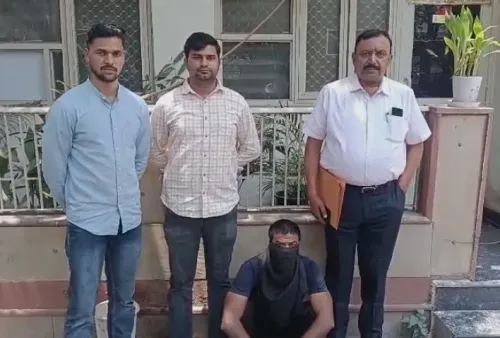
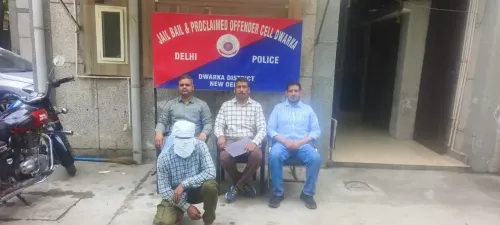
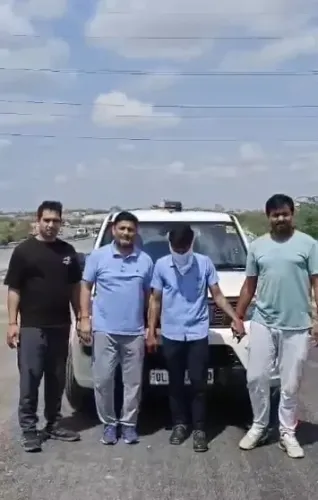
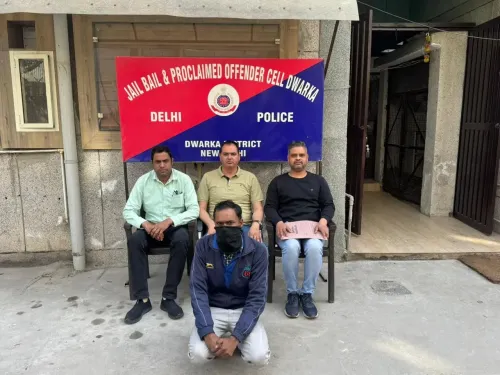
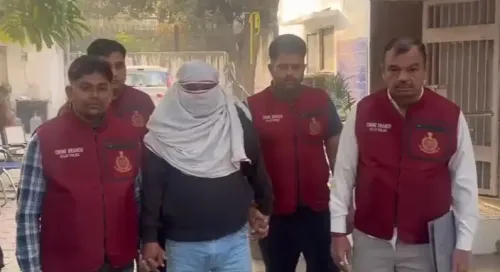
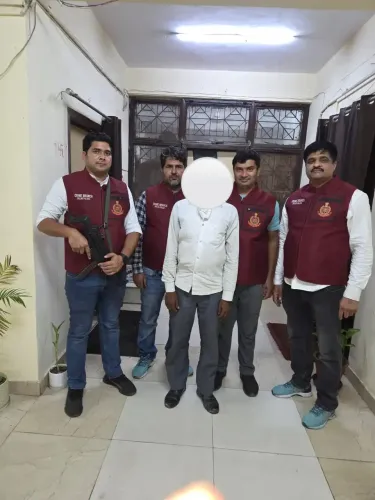
The Crime Branch of Delhi Police has arrested Rajinder Bairagi, alias Rajinder Singh Yadav, alias 'Dr Jhatka' (53), a proclaimed offender who evaded law enforcement for nearly 28 years after escaping police custody while handcuffed. The accused was wanted in connection with the murder of a Haryana Police personnel, multiple attempt-to-murder cases, and a brazen custody escape in 1999. He was finally apprehended from Mungaoli town in Ashok Nagar district, Madhya Pradesh, on 6 August.
The Crimes That Triggered a 28-Year Hunt
Investigators traced the accused's criminal record to at least June 1997, when two cases were registered against him at Janakpuri Police Station in Delhi — FIR No. 658/1997 (violent knife attack in Uttam Nagar) and FIR No. 659/1997 (attempt to murder) — both under the Indian Penal Code. He was subsequently declared a proclaimed offender by Rohini Courts in 2008.
The more serious charge, however, stems from the night of 10 May 1998. According to investigators, Rajinder and five armed associates were present at a wedding function in Saiyan Khera village, Sonipat district, Haryana, when a dispute broke out with the bride's family. The group allegedly opened indiscriminate fire, fatally wounding Haryana Police personnel Jai Bhagwan — the bride's uncle — who died on the spot. A second person was critically injured. A case was registered at Gannaur Police Station under Sections 148, 149, 307, 302, and 449 of the IPC, along with the Arms Act.
The Handcuffed Escape That Defined His Fugitive Life
Rajinder was arrested following the Haryana murder but managed a dramatic escape on 14 February 1999. While being escorted by Uttar Pradesh Police from Ghaziabad Jail to a court in Sonipat, he broke free despite being handcuffed — a separate criminal case was registered for the escape itself. That single act set in motion nearly three decades of life on the run.
How He Built a New Identity
After fleeing, Rajinder reportedly moved to Kolaba in Maharashtra, where he worked as a physical education teacher at a Kendriya Vidyalaya for approximately a year. He later relocated permanently to Mungaoli, Madhya Pradesh, and assumed the identity of Rajender Singh Yadav.
Over the following years, he embedded himself in the local community. He married Mamta Yadav in 2003; she currently serves as an Auxiliary Nurse Midwife (ANM) at a government hospital in Mungaoli. The couple has two children — a 17-year-old son in Class 12 and a 16-year-old daughter in Class 11.
Rajinder reportedly operated as an unregistered medical practitioner — earning him the nickname 'Dr Jhatka' — and was also involved in property dealing and contracting. He managed to obtain official documents including an Aadhaar card, voter identity card, PAN card, driving licence, and domicile certificate under his assumed identity.
How the Crime Branch Tracked Him Down
The arrest was executed by the Northern Range-1 (NR-1) team of the Crime Branch through a multi-state operation combining field intelligence, technical surveillance, and digital footprint analysis. A team led by Inspector Sanjay Kaushik, along with SI Deepak Kumar, ASI Ramesh Rana, HC Sanjeev Kumar, and HC Sanjeev Jakhar, conducted the raid under the supervision of ACP Suresh Kumar.
The accused was produced before the Judicial Magistrate Court in Mungaoli, transit remand was obtained, and he was subsequently brought to Delhi and produced before the Chief Judicial Magistrate Court in Dwarka. Interrogation is ongoing.
What the Arrest Signals
Officials described the operation as the culmination of a 28-year pursuit and a demonstration of sustained inter-state coordination among law enforcement agencies. Notably, the case highlights how a fugitive with a serious criminal record — including a cop killing and a custody escape — can exploit identity gaps in India's document ecosystem to remain undetected for decades. With fresh interrogation underway, investigators are likely to probe whether his criminal network extended beyond the known cases.
Point of View
PAN card, voter ID, driving licence, and domicile certificate under a fabricated name, and even ran a clinic. The question that goes unasked in the official narrative is how robust document verification can be if a proclaimed offender with a murder charge can build a parallel civic identity over nearly three decades. The Crime Branch deserves credit for the persistence, but the systemic gaps that made a 28-year disappearing act possible warrant equal scrutiny.
NationPress
20 Sept 2026
Frequently Asked Questions
Who is Rajinder Bairagi alias 'Dr Jhatka'?
Rajinder Bairagi (53) is a proclaimed offender from Delhi who was wanted for the 1998 murder of Haryana Police personnel Jai Bhagwan, multiple attempt-to-murder cases, and escaping police custody in 1999 while handcuffed. He lived under the alias Rajender Singh Yadav in Mungaoli, Madhya Pradesh for nearly three decades before being arrested by Delhi Police's Crime Branch on 6 August.
Why was Rajinder Bairagi on the run for 28 years?
He escaped from the custody of Uttar Pradesh Police on 14 February 1999 while being transported from Ghaziabad Jail to a court in Sonipat, despite being handcuffed. After the escape, he assumed a false identity, relocated to Madhya Pradesh, and built a new life, making him extremely difficult to trace.
Where and how was 'Dr Jhatka' finally arrested?
He was arrested from Mungaoli town in Ashok Nagar district, Madhya Pradesh, by the Northern Range-1 team of the Delhi Police Crime Branch. The operation used field intelligence, technical surveillance, and digital footprint analysis to confirm his identity and location before a raid was conducted under ACP Suresh Kumar.
What crimes is Rajinder Bairagi accused of?
He is accused of the murder of Haryana Police personnel Jai Bhagwan during a wedding in Sonipat on 10 May 1998, two attempt-to-murder cases registered at Janakpuri Police Station in Delhi in June 1997, escaping from police custody in 1999, and offences under the Arms Act and theft-related cases across Delhi, Haryana, and Uttar Pradesh.
How did the accused manage to hide his identity for so long?
After fleeing custody, he reportedly worked as a physical education teacher in Maharashtra before settling in Mungaoli, Madhya Pradesh under the name Rajender Singh Yadav. He married locally in 2003, operated as an unregistered medical practitioner, and obtained official documents — including Aadhaar, PAN card, voter ID, driving licence, and domicile certificate — under his assumed identity.