Is the Yunus Administration in Bangladesh Under the Influence of Radical Extremist Groups?
Synopsis
A recent report suggests that the Yunus administration in Bangladesh is heavily influenced by radical extremist groups. This raises serious concerns about the potential implications for the country's stability and governance. The assassination of a radical spokesperson further complicates the political landscape, indicating a troubling relationship with hardline elements. What does this mean for the future of Bangladesh?
Key Takeaways
Muhammad Yunus is allegedly facilitating hardline Islamic agendas.
The assassination of Sharif Osman Hadi raises serious concerns.
Overcrowded prisons and political influence on the judiciary are alarming.
The relationship between the Yunus administration and extremist groups is under scrutiny.
The political landscape in Bangladesh is increasingly complex and dangerous.
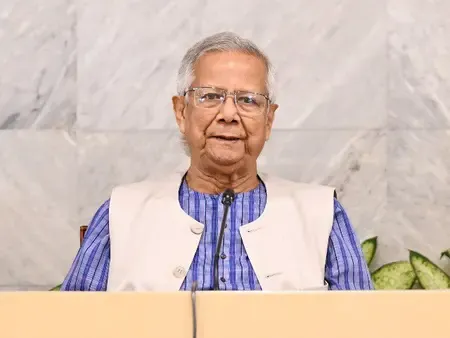
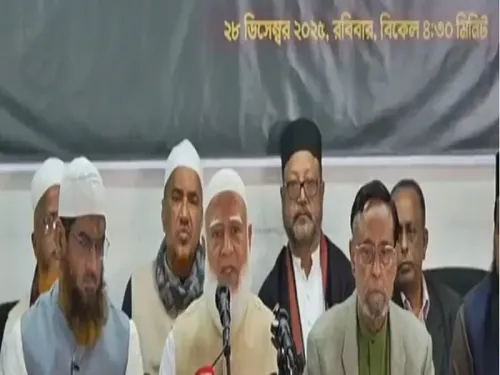
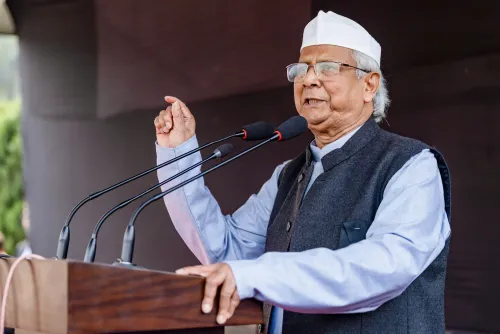
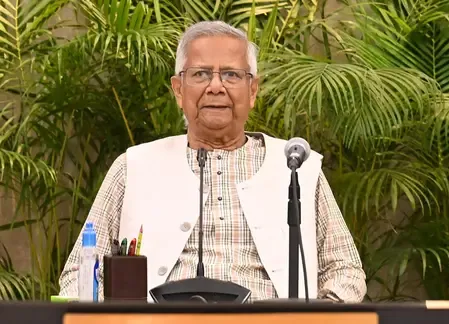
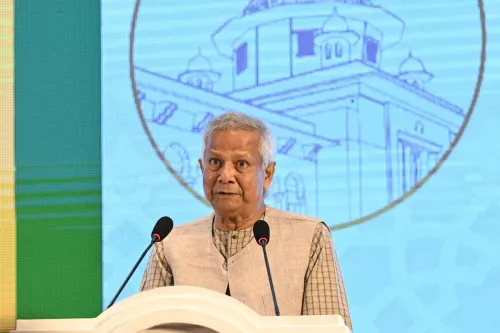
Dhaka, Dec 29 (NationPress) Muhammad Yunus, who serves as the Chief Advisor of the interim government in Bangladesh, seems to be facilitating or at least tolerating hardline Islamic agendas alongside ministers and bureaucrats. The report highlights how the administration is significantly swayed by extremist radical factions such as Jamaat-e-Islami and Hizb-ut-Tahrir.
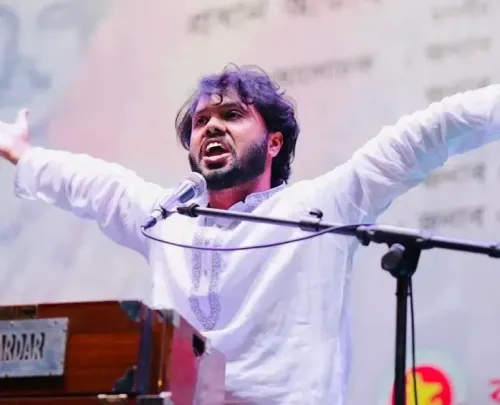
The report further mentions that the assassination of Sharif Osman Hadi, the spokesperson for the radical platform Inqilab Moncha, poses serious questions regarding the Yunus-led interim government, which stands to gain from the turmoil, as well as the potential loss of more lives in Bangladesh in the forthcoming months.
Hadi had a background in Islamic religious education and had generated media attention for over a year due to his hardline television appearances, incitement against journalists and political commentators, and attacks on the symbols of the Liberation War. He was also known for advocating a vision of a 'Greater Bangladesh' that would include parts of India, as highlighted in a report by Northeast News.
On December 11, the Yunus administration made public the election schedule for February 12, 2026. Following this, Hadi announced his intention to run as an Independent Candidate from Dhaka-8, a constituency under the representation of BNP leader Mirza Abbas. The very next day, he was shot point-blank in the head by a motorcycle-borne assailant in broad daylight.
According to video evidence, the shooter was linked to a group with which Hadi had previously been affiliated. However, police investigations later identified the assailant as a former low-level leader of the Awami League student wing, accused of armed robbery after the ousting of former Prime Minister Sheikh Hasina in August 2024, and subsequently released on bail. This raises troubling questions about the political dynamics at play.
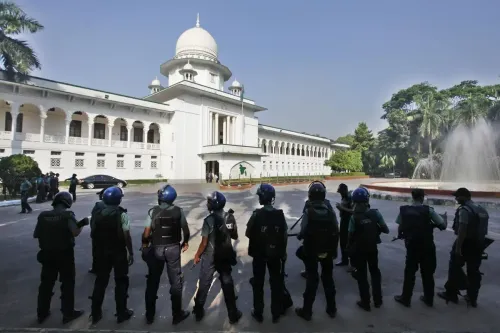
The report also notes that prisons are overcrowded with elderly inmates while courts operate under executive influence, granting bail only on directives. This leads to the pressing question of how an accused robber was able to secure bail.
Given the Yunus administration's history of granting bail or dropping charges against numerous convicted terrorists, the report raises concerns about whether the assailant was part of a faction trusted by the interim government.
At a moment when Awami League activists faced severe crackdowns, how could a party-affiliated individual risk committing armed robbery? Was the accusation fabricated, or was he an Islamist acting under the Awami umbrella, similar to many student leaders during the protests of July 2024? Furthermore, several leaders from the NCP previously belonged to the Awami student front. Jamaat activists, who later secured victories in university elections, also operated within Awami structures. Jamaat itself has acknowledged involvement in orchestrating the protests while working covertly.
Point of View
It is imperative to maintain an unbiased perspective while reporting on sensitive issues. The Yunus administration's alleged ties to extremist groups warrant scrutiny, but it is crucial to approach the subject with balanced journalism. Our commitment lies in uncovering the truths while being mindful of potential ramifications for Bangladesh's socio-political fabric.
NationPress
30 Sept 2026
Frequently Asked Questions
What is the role of Muhammad Yunus in the current government?
Muhammad Yunus is the Chief Advisor of the interim government in Bangladesh and is reportedly influencing the administration's policies.
Who was Sharif Osman Hadi?
Sharif Osman Hadi was a spokesperson for the radical platform Inqilab Moncha and was known for his extremist views and media presence.
What does the assassination of Hadi signify?
Hadi's assassination raises critical questions about the political dynamics in Bangladesh and the potential influence of extremist groups within the government.
How are radical groups operating in Bangladesh?
Radical groups like Jamaat-e-Islami and Hizb-ut-Tahrir are reportedly influencing the current administration and its policies.
What implications does this have for Bangladesh's future?
The growing influence of radical groups could pose significant threats to democracy and stability in Bangladesh.