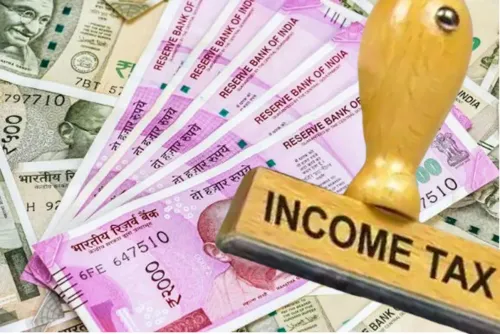
ITR filings cross 7.3 crore for AY2026, surpassing last year's count

Synopsis
India has crossed 7.3 crore ITR filings for AY2026 ahead of last year's pace — and the numbers behind the headline are equally striking: tax appeals up 30%, grievance disposal at 95%, and a new Income-tax Act that slashes sections from 819 to 536. The Centre's bet on automation and faceless assessment is showing early returns.
Key Takeaways
More than 7.3 crore ITRs have been filed for Assessment Year 2026 , exceeding the previous year's comparable count.
Revenue Secretary Arvind Shrivastava said the Income Tax Department must act as a facilitator, not just an enforcer.
Around 2.24 lakh tax appeals were disposed of in FY26 — up nearly 30 per cent year-on-year.
Close to 4 lakh taxpayer grievances were resolved, with a disposal rate of about 95 per cent .
Gross and net direct tax collections grew around 4–5 per cent in FY26 despite economic headwinds.
The new Income-tax Act reduces sections from 819 to 536 , simplifying compliance for individuals and businesses.
More than 7.3 crore income tax returns (ITRs) have been filed for Assessment Year 2026, already exceeding the total filed in the corresponding period last year, Revenue Secretary Arvind Shrivastava said on Friday, 24 July. The milestone reflects the government's push toward a technology-driven, taxpayer-friendly direct tax administration.
Key Developments
Addressing a gathering on direct tax reforms, Shrivastava said the Income Tax Department must increasingly be seen as a facilitator for honest taxpayers rather than an enforcement body. He underlined that technology should make tax administration smarter, more efficient, and less intrusive — with greater automation, reduced human interface, and faster services for taxpayers as core objectives.
Deepening the faceless tax ecosystem, improving tax certainty, and easing compliance burdens will remain among the department's foremost priorities, he added.
Performance Highlights for FY26
Shrivastava cited several operational milestones for FY26. Around 2.24 lakh tax appeals were disposed of during the year — a nearly 30 per cent rise over the previous year. The department also resolved close to 4 lakh taxpayer grievances, achieving a disposal rate of approximately 95 per cent.
On the revenue front, both gross and net direct tax collections recorded growth of around 4–5 per cent in FY26, despite what Shrivastava described as a challenging economic environment.
The New Income-Tax Act: Simpler by Design
A significant element of the overhaul is the new Income-tax Act, which Shrivastava described as a landmark step toward simplifying India's tax framework. The number of sections has been reduced from 819 to 536, making the legislation more accessible for individual taxpayers and businesses alike.
The legislative restructuring is part of a broader effort to create a transparent, technology-driven, and taxpayer-centric system that promotes voluntary compliance while lowering the compliance burden.
What This Means for Taxpayers
The record ITR filing numbers suggest growing participation in the formal tax base, which analysts have attributed in part to pre-filled return forms, improved digital infrastructure, and simplified filing processes. Notably, the surge in filings comes even as the government has expanded the scope of the new tax regime, which offers lower rates in exchange for fewer exemptions.
With the new Income-tax Act in place and faceless assessment now the norm, the Centre appears to be doubling down on a compliance-first approach — one that relies on data and automation rather than discretionary enforcement. How effectively this translates into sustained revenue growth will be closely watched in the months ahead.
Point of View
But the more consequential data point is the 30 per cent jump in appeal disposals — it signals the department is finally clearing a backlog that has long frustrated taxpayers and clogged tribunals. The reduction of Income-tax Act sections from 819 to 536 is structurally meaningful, but simplification on paper must translate to simplification in practice; India's tax litigation rate remains among the highest globally. The real test of this 'facilitator' framing will come when a large taxpayer faces a dispute — and whether the faceless system holds up under pressure or reverts to old habits of over-assessment.
NationPress
23 Oct 2026
Frequently Asked Questions
How many ITRs have been filed for Assessment Year 2026?
More than 7.3 crore income tax returns have been filed for Assessment Year 2026, surpassing the number filed during the same period in the previous year, according to Revenue Secretary Arvind Shrivastava.
What changes has the new Income-tax Act introduced?
The new Income-tax Act reduces the total number of sections from 819 to 536, making the law simpler to understand and comply with. The overhaul is aimed at creating a more transparent and taxpayer-friendly direct tax framework.
How did the Income Tax Department perform on grievance resolution in FY26?
The department resolved close to 4 lakh taxpayer grievances in FY26, achieving a disposal rate of approximately 95 per cent. It also disposed of around 2.24 lakh tax appeals — a nearly 30 per cent increase over the previous year.
What was the direct tax collection growth in FY26?
Both gross and net direct tax collections recorded growth of around 4–5 per cent in FY26, according to Revenue Secretary Arvind Shrivastava, despite a challenging economic environment.
What is the government's broader vision for tax administration?
The government aims to build a transparent, technology-driven, and taxpayer-centric direct tax system that promotes voluntary compliance and reduces the compliance burden. Key pillars include greater automation, reduced human interface, and a deepened faceless tax ecosystem.