ADB: Asia-Pacific's GVC trade share doubled to 18% since 2000, but gaps widen
Synopsis
Asia-Pacific's developing economies have doubled their GVC trade share in two decades — but the ADB warns that rising geoeconomic fragmentation, uneven benefits skewed toward large firms, and SME exclusion now threaten to lock lower-income economies into low-value roles just as the global production order is being redrawn.
Key Takeaways
Asia and the Pacific accounts for a third of global GVC trade , with developing economies' share doubling from 9% to 18% between 2000 and 2023 .
ADB Chief Economist Albert Park warned that geoeconomic fragmentation risks stifling industrialisation in economies stuck in low-value GVC roles.
East and Southeast Asian economies dominate regional production networks; smaller and lower-income economies remain largely excluded.
SMEs face persistent barriers including high compliance costs and limited capabilities, limiting their GVC participation.
The ADB identified three policy priorities: resilience , environmental sustainability , and inclusion .
The Asian Development Bank (ADB) on Wednesday, 6 May 2025, warned that geopolitical tensions, supply chain disruptions, and rapid technological changes are fundamentally reshaping how economies participate in global value chains (GVCs) — even as the region's developing economies have doubled their share of GVC trade over the past two decades. The findings are part of the bank's flagship 'Asian Development Outlook Report 2026', released in New Delhi.
According to the report, greater specialisation in the stages of global production has helped Asia and the Pacific achieve economic growth, create jobs, and reduce poverty over the past quarter century. The region now accounts for a third of global value chain trade, with its developing economies doubling their share from 9 per cent to 18 per cent between 2000 and 2023.
Key Findings on Regional Integration
Some economies — particularly in East and Southeast Asia — have become deeply embedded in regional and global production networks, occupying central positions that allow them to capture significant value addition. These hubs have leveraged GVC participation to drive industrialisation and export-led growth over multiple decades.
Others, including many smaller, lower-income, or geographically remote economies, have participated far less and remain largely excluded from these networks. The report notes that while the ability to specialise in narrow segments of the production process has enabled rapid integration into global markets, the benefits of GVCs remain uneven — mainly benefiting large, productive firms.
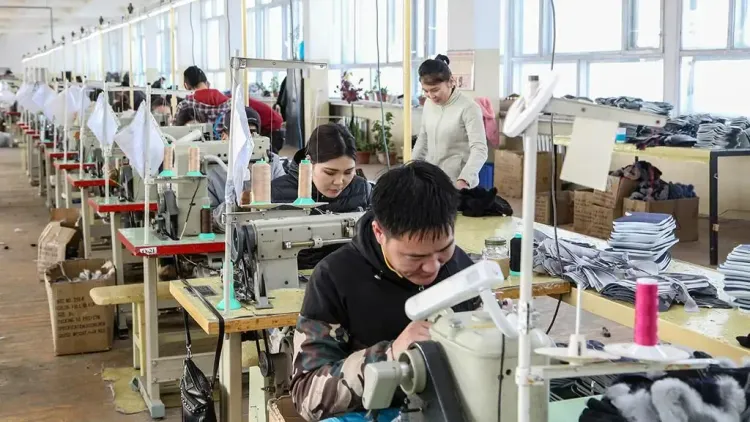
Meanwhile, small and medium-sized enterprises (SMEs) face persistent barriers due to high compliance costs and limited organisational capabilities, the report said.
Warning on Geoeconomic Fragmentation
ADB Chief Economist Albert Park struck a cautionary note on the risks posed by rising geopolitical fault lines.
Point of View
But the more consequential finding is the divergence within that number. East and Southeast Asian hubs have captured value; everyone else has largely not. The report's three-pillar framework (resilience, sustainability, inclusion) is sensible, but the hard question it sidesteps is sequencing: can a lower-income, geographically remote economy simultaneously build resilience infrastructure, meet tightening EU sustainability standards, and expand SME finance? The risk is that the policy menu reads as comprehensive on paper but remains unaffordable in practice for the economies that need it most. Geoeconomic fragmentation, meanwhile, is not a temporary headwind — it is the new operating environment, and the ADB's call for 'coordinated improvements' will require political will that multilateral recommendations alone cannot generate.
NationPress
21 Sept 2026
Frequently Asked Questions
What did the ADB's Asian Development Outlook Report 2026 find about global value chains?
The report found that Asia and the Pacific accounts for a third of global GVC trade, with developing economies in the region doubling their share from 9% to 18% between 2000 and 2023. Greater specialisation in global production has helped the region achieve economic growth, create jobs, and reduce poverty over the past 25 years.
What is geoeconomic fragmentation and why does the ADB consider it a risk?
Geoeconomic fragmentation refers to the splintering of global trade and investment ties along geopolitical lines. ADB Chief Economist Albert Park warned it reduces opportunities for firms to benefit from GVCs, risking stifled industrialisation and growth — particularly for economies already stuck in low-value production roles.
Why are SMEs struggling to benefit from global value chains?
According to the ADB report, small and medium-sized enterprises face barriers including high compliance costs and limited organisational capabilities. The benefits of GVC participation have mainly accrued to large, productive firms, leaving SMEs at a structural disadvantage.
What are the three policy priorities the ADB recommends for GVC integration?
The ADB identifies resilience, environmental sustainability, and inclusion as the three key policy priorities. These involve building robust infrastructure and risk management frameworks, meeting evolving environmental standards, and reducing trade costs while expanding SME access to finance and digital platforms.
Which Asia-Pacific economies are most integrated into global value chains?
Economies in East and Southeast Asia are the most deeply embedded in regional and global production networks, occupying central positions that allow them to capture significant value addition. Smaller, lower-income, or geographically remote economies remain largely excluded from these networks.