India's Growth Set to Surpass China Amid Slowed Development in Asia-Pacific, Says ADB
Synopsis
India is forecasted to outperform China and the wider Asian market, with growth rates remaining robust amidst a general slowdown in developing Asia, according to an ADB report. Find out what factors are driving this economic resilience.
Key Takeaways
India's growth is projected at 6.9% in 2026 and 7.3% in 2027.
Overall economic growth in developing Asia is expected to slow to 5.1% .
China's growth is forecast to decline to 4.6% this year.
Robust domestic demand and infrastructure spending are bolstering India's economy.
Geopolitical tensions pose significant risks to the region's economic outlook.
New Delhi, April 10 (NationPress) India is poised to surpass both the wider Asian landscape and China as growth in developing Asia and the Pacific is anticipated to decelerate in the upcoming two years due to geopolitical challenges, as per a report from the Asian Development Bank (ADB) released on Friday.
The ADB's report reveals that economic expansion in developing Asia and the Pacific is expected to drop to 5.1 percent in 2026 and 2027, down from 5.4 percent last year, impacted by geopolitical tensions and ongoing trade uncertainties.
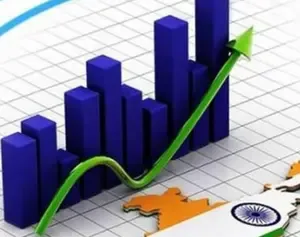
In stark contrast, India's growth is projected to remain strong at 6.9 percent in 2026, with an increase to 7.3 percent in 2027, driven by robust domestic consumption.
The report emphasized that, "Most economies within developing Asia and the Pacific are likely to see a decline in their growth forecasts this year and in 2027," which underscores India’s relative resilience.
Additionally, the ADB noted that the region is entering a period of global uncertainty from a position of strength, supported by strong domestic demand, stable labor markets, and increased public infrastructure investments. Nonetheless, risks are still leaning toward the downside.
The report indicated that growth in the People’s Republic of China (PRC) is anticipated to fall to 4.6 percent this year and 4.5 percent next year, a decrease from 5 percent last year, primarily due to ongoing weaknesses in the property market and sluggish export growth.
An extended conflict in the Middle East could lead to rising energy and food prices and tighter financial conditions, representing a significant risk to the region’s outlook, according to ADB Chief Economist Albert Park.
Furthermore, the report highlighted that ongoing fluctuations in global trade policies could negatively impact growth prospects throughout the region.
Despite these hurdles, strong private consumption and a heightened demand for artificial intelligence-related products are expected to provide some support to regional economies.
Moreover, while oil prices are predicted to remain high in the short term, they may gradually stabilize if geopolitical tensions diminish.
Frequently Asked Questions
What is the projected growth rate for India in 2026?
India's growth is forecasted at 6.9 percent in 2026.
How does India's growth compare to China's?
India's growth is expected to surpass China's, which is projected to decline to 4.6 percent this year.
What factors are contributing to the slowdown in the Asia-Pacific region?
The slowdown is attributed to geopolitical tensions and persistent trade uncertainties.
What risks are highlighted in the ADB report?
The report highlights risks from prolonged conflicts, trade policy volatility, and economic weaknesses in other countries.
How is private consumption affecting the economy?
Resilient private consumption is expected to support regional economies despite external challenges.