Is India's Economic Growth Projected at 7.2 Percent for FY25-26?
Synopsis
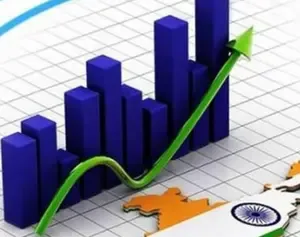
Discover the World Bank's latest forecast, predicting that India's economy will grow by 7.2 percent in FY25-26, driven by strong domestic demand. As global trade tensions rise, find out how India continues to be a key player in South Asia's economic landscape.
Key Takeaways
India's growth is projected at 7.2 percent for FY25-26.
Strong domestic demand is a key driver of this growth.
South Asia's growth strengthened to 7.1 percent in 2025, largely due to India's performance.
India's growth is expected to slow slightly to 6.5 percent in FY26-27.
Importance of reforms to sustain long-term growth in developing economies.
Washington, Jan 13 (NationPress) India's economic outlook remains bright as it is expected to be one of the world's fastest-growing major economies, with a projected growth rate of 7.2 percent for FY2025-26. This growth is bolstered by strong domestic demand, despite the challenges posed by escalating global trade tensions, according to the World Bank.
In its recent Global Economic Prospects report, the World Bank emphasized that India's resilience plays a crucial role in propelling overall growth in South Asia in 2025, counteracting the negative effects of increased policy uncertainty and international trade disputes.
The report highlighted that growth in South Asia is set to strengthen to 7.1 percent in 2025, primarily due to robust economic activities in India.
It is important to note that the World Bank does not categorize Pakistan and Afghanistan as part of South Asia; instead, their economies fall under the Middle East and North Africa division.
India's growth is driven mainly by solid domestic demand, particularly strong private consumption, which has been supported by previous tax reforms and improvements in the real earnings of households in rural regions.
Looking ahead, India's growth is anticipated to decelerate slightly to 6.5 percent in FY2026-27, assuming that higher import tariffs from the US continue to be enforced, before recovering to 6.6 percent in FY2027-28. This recovery is attributed to vigorous services activity, a rebound in exports, and enhanced investment flows.
The World Bank noted that despite the imposition of higher tariffs on specific exports to the United States, India's growth forecast remains unchanged due to the expectation that the negative effects of these tariffs will be mitigated by stronger domestic demand than previously anticipated.
In South Asia, India continues to be the region's primary economic driver. Excluding India, growth in South Asia is forecast to strengthen to 5.0 percent in 2026 and 5.6 percent in 2027, while the region overall is expected to slow to 6.2 percent in 2026 before experiencing a rebound.
On a global scale, the World Bank indicated that easing financial conditions and fiscal expansion in major economies are helping to cushion the effects of declining trade and demand. However, it cautioned that the 2020s are likely to be the weakest decade for global growth since the 1960s.
Indermit Gill, the World Bank Group’s Chief Economist and Senior Vice President for Development Economics, stated, "With each passing year, the global economy has become less capable of generating growth and seemingly more resilient to policy uncertainty. However, economic dynamism and resilience cannot diverge for long without straining public finances and credit markets."
Gill also warned that the global economy is expected to grow at a slower pace than it did in the 1990s, even while carrying unprecedented levels of public and private debt, emphasizing the necessity for reforms to sustain long-term growth.
For developing nations like India, the report underscored the importance of enhancing productivity and generating employment. It projected that per capita income growth in developing economies will reach 3 percent in 2026, which is significantly below long-term averages, thereby limiting convergence with advanced economies.
Point of View
It is crucial to acknowledge India's pivotal role in the South Asian economy. The World Bank's forecast reinforces the importance of domestic demand in driving growth, especially in the face of global uncertainties. Supporting policies and reforms will be essential for sustaining this momentum and ensuring long-term economic stability.
NationPress
27 Sept 2026
Frequently Asked Questions
What is the projected growth rate for India's economy in FY25-26?
The World Bank estimates India's economy will grow by 7.2 percent in FY25-26.
What factors are driving India's economic growth?
Strong domestic demand, robust private consumption, and earlier tax reforms are key factors driving India's economic growth.
How does India's growth impact South Asia's economy?
India's growth is a major contributor to overall South Asia's economic growth, lifting the region's growth rate.
What challenges does India face in maintaining its growth?
Challenges include rising global trade tensions and potential impacts from higher US import tariffs.
What is the significance of the World Bank's report?
The report highlights India's resilience and its role as a primary growth engine in South Asia amidst global economic uncertainties.