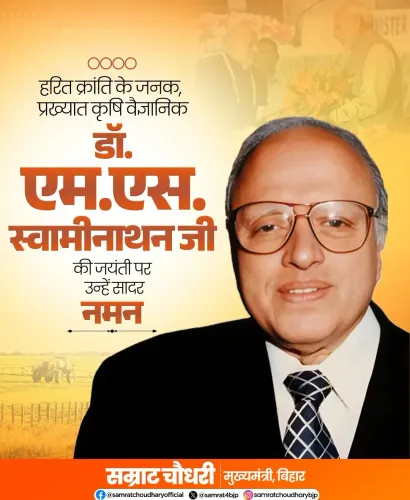
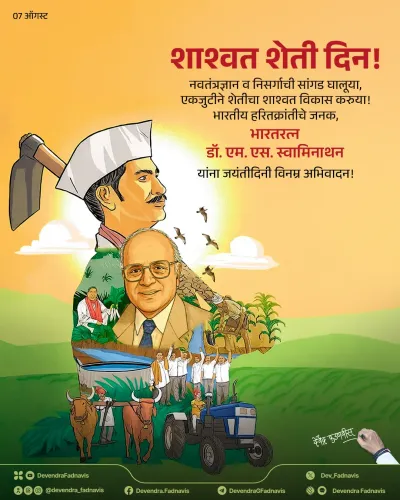
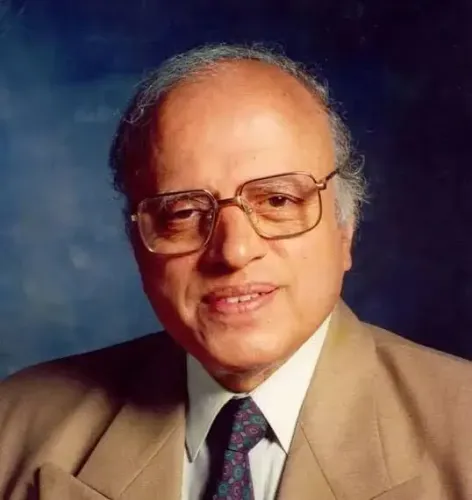
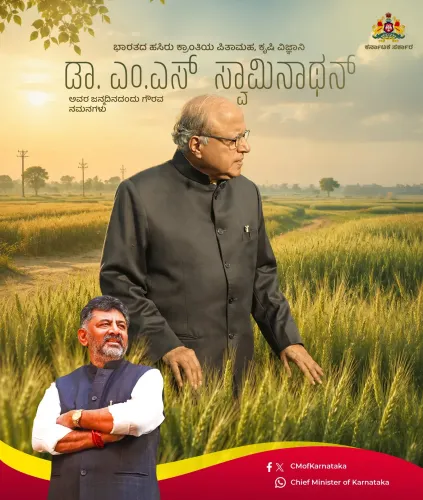
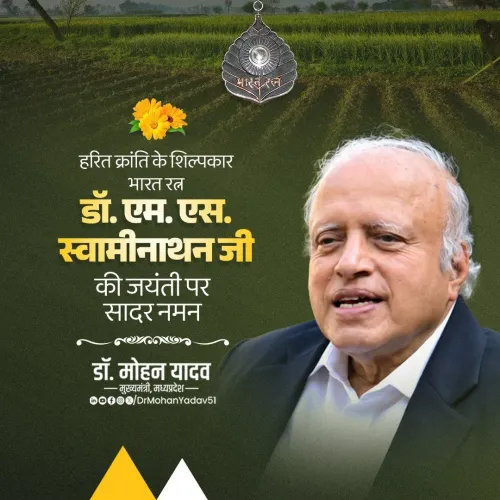
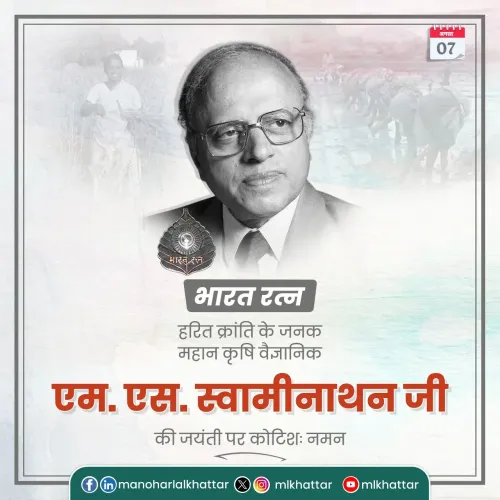
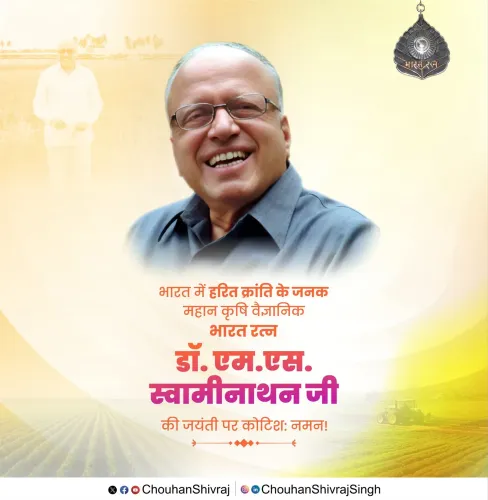
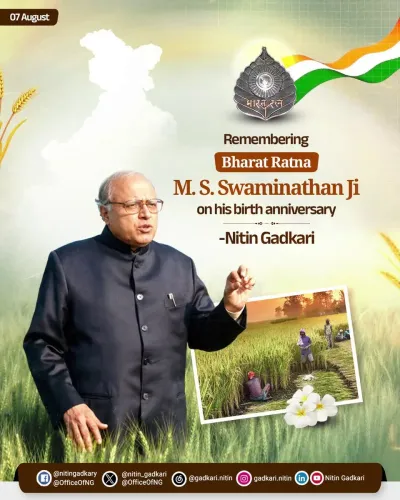
CM Bhajan Lal Sharma pays tribute to Dr. M.S. Swaminathan on birth anniversary
Synopsis
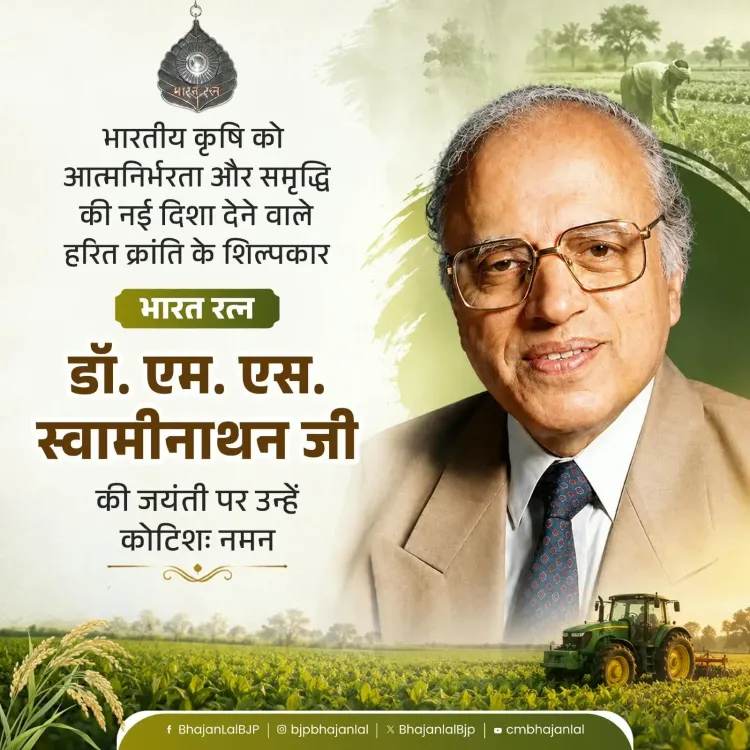
Rajasthan Chief Minister Bhajan Lal Sharma marked the birth anniversary of Bharat Ratna Dr. M.S. Swaminathan on August 7, 2026, saluting the Green Revolution architect's lasting contributions to Indian agriculture, farmer welfare, and food security.
Key Takeaways
Rajasthan CM Bhajan Lal Sharma posted a tribute to Dr.
Swaminathan on his birth anniversary, August 7, 2026 .
Sharma described Swaminathan as the one who gave Indian agriculture 'a new direction of self-reliance and prosperity.' Dr.
Swaminathan is credited as the father of India's Green Revolution , introducing high-yielding wheat and rice varieties in the 1960s .
Swaminathan was awarded the Bharat Ratna , India's highest civilian honour, for his contributions to agriculture and food security.
His work through the Indian Council of Agricultural Research ended India's dependence on food grain imports.
On the birth anniversary of Dr. M.S. Swaminathan — the scientist whose work in the 1960s pulled India back from the brink of famine — Rajasthan Chief Minister Bhajan Lal Sharma offered a tribute on Friday, August 7, 2026, honouring the architect of India's Green Revolution with the words 'kotishah naman' (a millionfold salute).
Sharma wrote that Swaminathan gave Indian agriculture 'a new direction of self-reliance and prosperity,' describing his contribution to agricultural science, farmer welfare, and food security as 'priceless, ever-memorable, and inspiring.' The tribute comes as India continues to build on the food-grain self-sufficiency that Swaminathan's science made possible more than half a century ago.
The man who rewrote India's hunger story
Dr. Mankombu Sambasivan Swaminathan, awarded the Bharat Ratna — India's highest civilian honour — is widely regarded as the father of India's Green Revolution. Working through the Indian Council of Agricultural Research in the 1960s, he championed the introduction of high-yielding varieties of wheat and rice that transformed a nation dependent on food imports into one capable of feeding itself. The shift was not merely agricultural; it was existential.
His legacy extended well beyond seed science. Swaminathan became a persistent voice for farmer welfare, sustainable agriculture, and equitable food systems — causes that remain at the centre of Indian policy debates decades after his most celebrated work.
Tributes as a political and policy signal
Indian leaders across the political spectrum mark Swaminathan's birth anniversary through public statements, a tradition that reflects the enduring national consensus around food security and agrarian welfare. For a BJP-governed state like Rajasthan — where farming communities form a significant electoral and social constituency — the tribute also signals continued alignment with the broader Central government focus on farmer welfare schemes and agricultural productivity targets.
Point of View
But they carry quiet policy weight — each one reaffirms the ruling establishment's alignment with agrarian welfare as a core governance priority. For the BJP in Rajasthan, where rural distress has periodically shaped electoral outcomes, invoking Swaminathan's legacy is also a soft signal of intent toward farming communities. The persistence of these tributes across party lines reflects how deeply food security is woven into India's political identity — a consensus Swaminathan's science helped create.
NationPress
7 Aug 2026
Frequently Asked Questions
Who is Dr. M.S. Swaminathan and why is he famous?
Dr. M.S. Swaminathan is known as the father of India's Green Revolution. He championed high-yielding varieties of wheat and rice in the 1960s that transformed India from a food-importing nation into one capable of feeding itself, and was awarded the Bharat Ratna for his contributions.
When is M.S. Swaminathan's birth anniversary?
Dr. M.S. Swaminathan's birth anniversary falls on August 7. In 2026, tributes were paid on Friday, August 7.
What did Rajasthan CM Bhajan Lal Sharma say about Swaminathan?
CM Bhajan Lal Sharma described Swaminathan as the architect of the Green Revolution who gave Indian agriculture a new direction of self-reliance and prosperity, calling his contributions to agricultural science, farmer welfare, and food security 'priceless and ever-inspiring.'
What was the Green Revolution in India?
The Green Revolution was an agricultural transformation beginning in the 1960s that introduced modern high-yielding crop varieties and farming inputs, leading India to self-sufficiency in food grains and ending its dependence on food imports.
What award did M.S. Swaminathan receive?
Dr. M.S. Swaminathan was awarded the Bharat Ratna, India's highest civilian honour, recognising his extraordinary contributions to agricultural science and food security.