Indian Railways Enhances Affordable Travel with New Non-AC Coaches and 45% Fare Subsidy
Synopsis
Indian Railways is committed to making travel more affordable by expanding its non-AC capacity and offering a 45% subsidy. This initiative aims to lower travel costs significantly for passengers, ensuring greater accessibility and convenience.
Key Takeaways
Indian Railways is expanding non-AC general and sleeper capacity.
Average fare concession of 45% aims to lower travel costs.
Annual passenger subsidy is around Rs 60,000 crore.
Electrification and track construction are rapidly progressing.
Safety measures are being prioritized through infrastructure improvements.
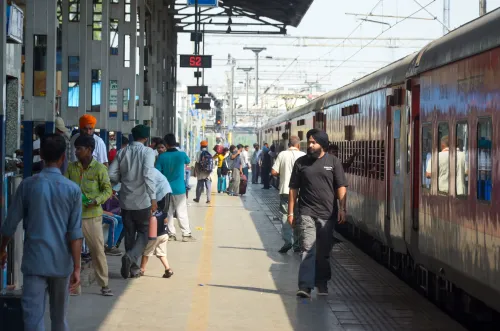
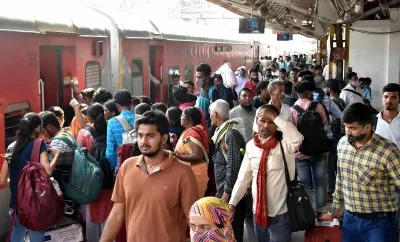
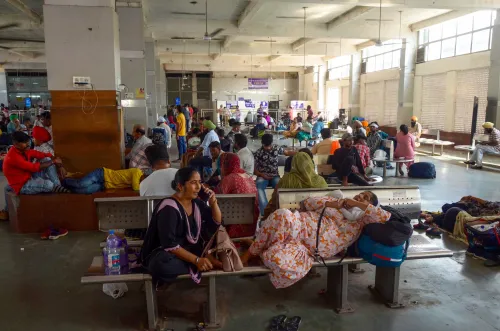
New Delhi, March 18 (NationPress) The Indian Railways is focusing on affordable travel by enhancing its non-AC general and sleeper class capacity. The government has announced an average concession of approximately 45% per passenger, aimed at maintaining low fare prices.
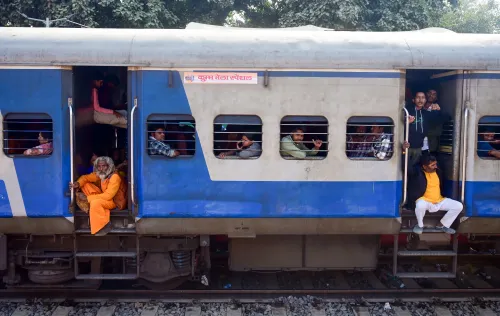
Currently, around 70% of the coaches are designated for general and sleeper classes. In the fiscal year 2024-25, approximately 1,250 new general coaches will be added, followed by around 860 in 2025-26, as reported by the Ministry of Railways.
Indian Railways allocates an estimated Rs 60,000 crore annually for passenger subsidies, which includes an additional Rs 3,000 crore specifically for suburban areas such as Mumbai.
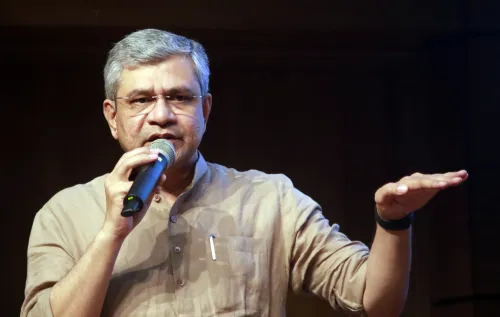
Freight transportation has surged from about 1,055 million tonnes in 2013-14 to nearly 1,650 million tonnes, positioning Indian Railways as the second-largest freight carrier in the world, according to Railways Minister Ashwini Vaishnaw.
The minister further noted that electrification efforts are progressing rapidly, nearing 47,000 km, with over 99% of the network now electrified.
“Track construction has significantly accelerated, with roughly 35,000 km of new tracks laid, compared to around 15,000 km previously,” he stated.
In terms of safety infrastructure, the number of Road Over Bridges (ROBs) and Road Under Bridges (RUBs) has increased from around 4,000 to nearly 14,000. The automatic signaling system has expanded from approximately 1,500 km to over 4,000 km.
Vaishnaw reiterated that safety continues to be a top priority, with targeted measures in track maintenance, rolling stock upkeep, technology integration, and workforce training.
The minister also highlighted that the production of safer Linke-Hofmann-Busch (LHB) coaches has surged, with about 48,000 new coaches introduced in recent years. Furthermore, locomotive production has reached around 12,000 units, and wagon induction has surpassed 2 lakh units.
The government has implemented enhanced transparency and institutional oversight, with project evaluations conducted through systems involving the Ministry of Finance and NITI Aayog.
Additionally, the Dedicated Freight Corridors (DFCs) have made remarkable advancements, with approximately 2,800 km completed and around 480 freight trains operating daily on these corridors.
aar/na
Point of View
The initiative aims to cater to a broader demographic, ensuring that train travel remains a viable option for all citizens.
NationPress
16 Oct 2026
Frequently Asked Questions
What is the subsidy amount provided by Indian Railways?
Indian Railways provides an average passenger subsidy of approximately Rs 60,000 crore annually, with an additional Rs 3,000 crore for suburban sections.
How many new non-AC coaches will be added?
Around 1,250 new general coaches will be introduced in the fiscal year 2024-25, followed by about 860 in 2025-26.
What is the current electrification status of Indian Railways?
Indian Railways has achieved nearly 47,000 km of electrification, with over 99% of its network now electrified.
How has freight transportation changed over the years?
Freight loading has increased from about 1,055 million tonnes in 2013-14 to around 1,650 million tonnes, making it the second-largest freight carrier globally.
What safety measures are being implemented?
Safety measures include increasing the number of Road Over Bridges and Road Under Bridges, as well as expanding automatic signaling systems.