AI and green energy can drive India's future, say Summer Davos leaders
Synopsis
At Summer Davos in Dalian, WEF's Jorgen Sandstrom pointed to Gujarat's Khavda solar fields and Hyderabad's pumped storage projects as blueprints for a green industrial revolution — one that could yield green ammonia, green steel, and cleaner shipping at scale. Meanwhile, Solinas Integrity's Divanshu Kumar showed the other side of the coin: AI robots quietly fixing India's crumbling sewer networks, city by city.
Key Takeaways
Industry leaders at Summer Davos, Dalian on 24 June said AI and collective action can drive India's sustainable development.
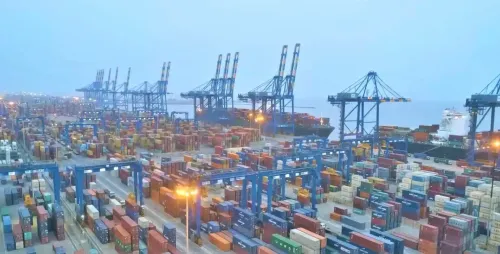
Jorgen Sandstrom of the WEF cited vertical integration projects in Mundra and the Kutch desert as models for green steel and green ammonia production.
Large-scale solar installations in Gujarat's Khavda region and pumped storage in Hyderabad were highlighted as evidence of India's energy transition commitment.
Sandstrom said the projects could eventually enable green hydrogen and green ammonia supply chains for transport and agriculture.
Divanshu Kumar , CEO of Solinas Integrity , said AI-powered robots are already transforming sewer and pipeline maintenance in Indian cities, cutting costs and improving efficiency.
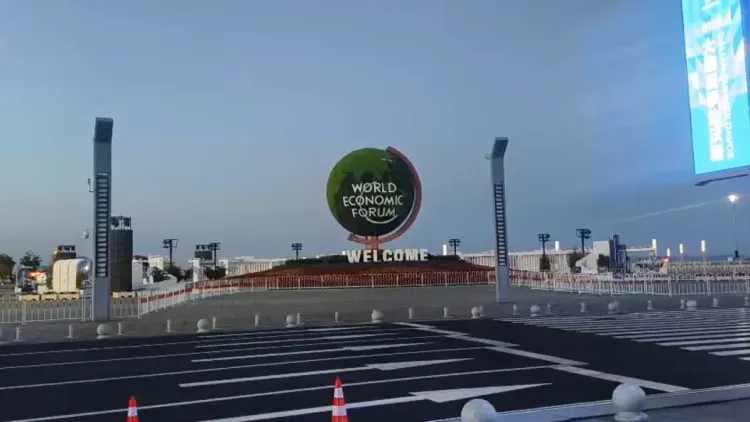
Industry leaders at the World Economic Forum's Annual Meeting of the New Champions — commonly known as Summer Davos — said on Wednesday, 24 June that AI-powered technologies and coordinated collective action can accelerate India's sustainable development and modernise critical infrastructure. The meeting is being held in Dalian, China.
India's Green Energy Potential
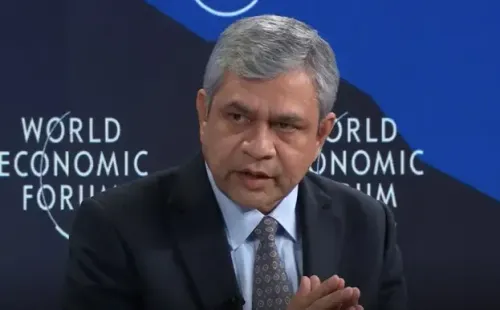
Jorgen Sandstrom, Head of the Transforming Industrial Ecosystem Programme at the World Economic Forum (WEF), said India holds significant untapped opportunities in renewable energy and sustainable industrial development. Drawing on his visits to projects in Mundra, Gujarat and energy facilities in Hyderabad, Sandstrom noted that several Indian initiatives are already strongly oriented toward green energy and sustainability.
He argued that such projects must be replicated across regions and sectors to sustain long-term economic growth. 'The projects I've seen in and around Mundra and in the Kutch desert are about vertical integration — where you have clean power from one end and on the other side comes green ammonia, for example, or green steel or other types of cleaner products or cleaner services,' he said.
'There could be cleaner shipping, cleaner transport, and electrification of industry. That is, of course, the way forward, and there are different ways of doing this,' Sandstrom added.
Collective Action Over Individual Efforts
On the broader policy landscape, Sandstrom emphasised that economic growth requires attention to multiple areas beyond industry alone. He noted that the WEF is actively encouraging companies and institutions to collaborate rather than operate in silos — a model he described as essential for the scale of transition India is pursuing.
Sandstrom pointed to large-scale solar installations in Gujarat's Khavda region and pumped storage projects in Hyderabad as evidence of India's commitment to the energy transition. According to him, these developments could eventually support the production of green hydrogen and green ammonia, with downstream applications in transportation, agriculture, and manufacturing. He cautioned, however, that the shift from traditional systems to sustainable models requires extensive planning, coordination, and a systemic approach.
AI Transforming Urban Infrastructure
Divanshu Kumar, Founder and Chief Executive Officer of Solinas Integrity, highlighted a parallel transformation underway in India's urban infrastructure. Kumar said AI-powered robotic solutions are already being deployed to overhaul sewer and pipeline maintenance across Indian cities.
He explained that artificial intelligence helps identify blockages, leaks, and structural defects in underground sewer and water networks — work that has historically been hazardous, slow, and expensive. Robotic inspections, Kumar said, allow municipal corporations to maintain ageing infrastructure more efficiently while significantly reducing operational costs.
What This Means for India
Taken together, the perspectives from Summer Davos point to a convergence of two powerful forces — clean energy and artificial intelligence — that could redefine India's industrial and urban trajectory. This comes amid growing global pressure on emerging economies to decouple growth from carbon emissions, and as India positions itself as a hub for green manufacturing and smart infrastructure. How quickly these technologies scale beyond pilot projects will be the defining test of the ambition on display in Dalian.
Point of View
But they remain concentrated in a handful of states with enabling infrastructure and political will. The harder question — how these models travel to energy-deficient districts in Bihar, Jharkhand, or the Northeast — went unaddressed. On the AI-infrastructure side, Solinas Integrity's robotic sewer inspections solve a genuine problem, but municipal adoption at scale requires procurement reform and budget allocation that most Indian cities still lack. The gap between Davos ambition and ground-level execution is where India's green and AI transition will actually be won or lost.
NationPress
23 Sept 2026
Frequently Asked Questions
What did industry leaders say about AI and sustainable development at Summer Davos?
Leaders at the World Economic Forum's Summer Davos in Dalian said on 24 June that AI-powered technologies and collective action can accelerate India's sustainable development and transform critical infrastructure. WEF's Jorgen Sandstrom and Solinas Integrity's Divanshu Kumar both highlighted specific Indian projects as evidence of this potential.
Which Indian projects did WEF's Jorgen Sandstrom highlight?
Sandstrom cited vertical integration projects in Mundra and the Kutch desert in Gujarat, large-scale solar installations in Gujarat's Khavda region, and pumped storage projects in Hyderabad as models for India's green energy transition. He said these could eventually support green hydrogen and green ammonia production.
How is AI being used in India's urban infrastructure?
According to Divanshu Kumar of Solinas Integrity, AI-powered robotic solutions are being deployed for sewer and pipeline maintenance across Indian cities. The technology identifies blockages, leaks, and structural defects in underground networks, helping municipal corporations reduce costs and improve efficiency.
What is green ammonia and why does it matter for India?
Green ammonia is produced using renewable energy and green hydrogen, making it a low-carbon alternative to conventionally produced ammonia. According to Sandstrom, it has applications in transportation, agriculture, and manufacturing, and India's expanding clean energy base could position it as a significant producer.
What is the World Economic Forum's Annual Meeting of the New Champions?
The Annual Meeting of the New Champions, informally called Summer Davos, is a World Economic Forum event focused on innovation, technology, and emerging economies. The 2025 edition is being held in Dalian, China, and brings together business leaders, policymakers, and technology innovators.