Can India Attract $350 Billion in Clean Energy Investments at Davos?

Synopsis
At the World Economic Forum 2026 in Davos, India boldly presented itself as a prime investment destination in the clean energy sector, with a projected capital need of $300-350 billion by 2030. With a robust strategy focusing on affordability and sustainability, India is ready to lead the global clean energy revolution.
Key Takeaways
India seeks to attract $300–$350 billion in clean energy investments by 2030.
Pralhad Joshi emphasizes speed, scale, and stability in energy transition.
India’s renewable tariffs are rapidly falling, making clean energy more affordable.
States play a crucial role in driving the energy transition.
India aims to establish itself as a global hub for clean energy investment.
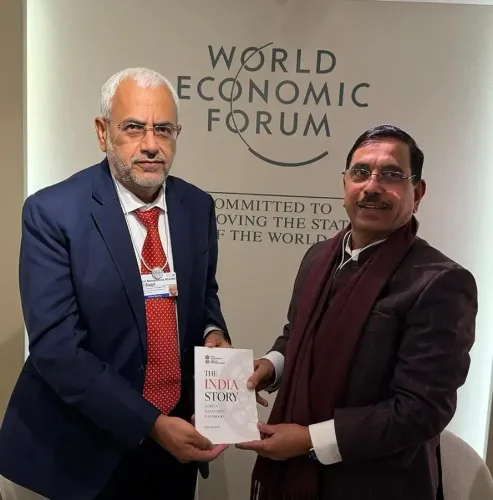
New Delhi, Jan 22 (NationPress) India leveraged the 'World Economic Forum 2026' in Davos to directly appeal to global investors, positioning itself as one of the largest and most investment-ready clean energy markets in the world, with an estimated capital requirement of $300–$350 billion by 2030, as stated in an official announcement on Thursday.
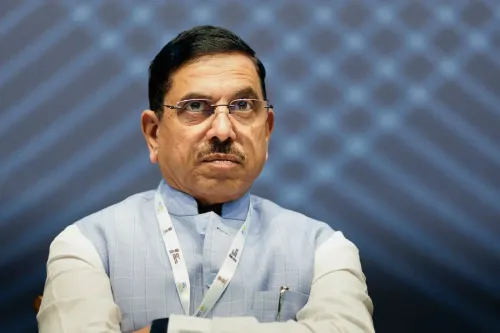
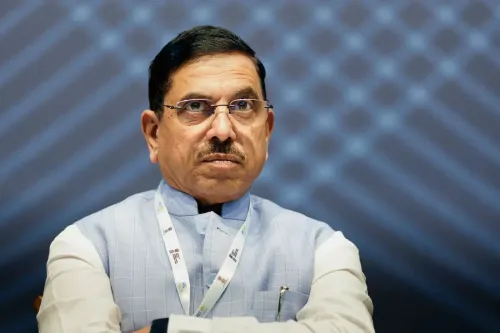
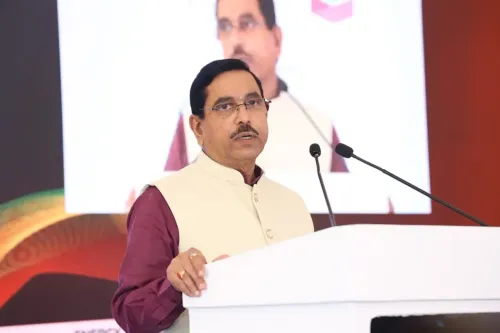
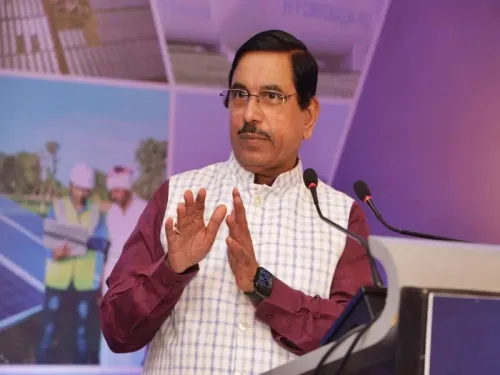
Leading the country's outreach, Union Minister for New and Renewable Energy, Pralhad Joshi, emphasized that India's energy transition presents speed, scale, stability, and long-term returns, coinciding with a time when global investors are pursuing predictable growth opportunities.
During various sessions and investor meetings at the World Economic Forum (WEF), Joshi pointed out that India has already developed 267 GW of non-fossil fuel capacity (as of December 2025) and is on a firm trajectory to achieve its 2030 clean energy goals.
India's appeal is grounded in affordability, reliability, and energy security. The rapidly declining renewable tariffs, modernization of the grid, and competitive pricing for storage and green hydrogen have made clean energy a cornerstone of India's economic growth strategy.
Joshi highlighted that India merges substantial demand with policy certainty, a burgeoning manufacturing base, and robust state-level execution—essential factors for attracting long-term global investments.
During bilateral discussions at the forum, Joshi engaged with international investors and energy firms to explore avenues for investing in the renewable energy sector, including infrastructure linked to green hydrogen, renewable energy paired with battery storage, and grid modernization.
The minister advocated for patient capital and blended finance to enable large-scale deployment.
India also underscored the pivotal role of states in facilitating the energy transition, particularly states like Maharashtra and Madhya Pradesh, which are delivering globally competitive solar and storage projects and emerging as centers for green hydrogen development.
At 'WEF 2026' in Davos, India established itself as a stable and future-ready destination for clean energy investment, according to the statement.
Point of View
It is evident that India's proactive stance at the World Economic Forum reflects its commitment to becoming a leader in clean energy. This initiative not only shows India's readiness to attract foreign investment, but it also emphasizes the importance of sustainable development in the current global climate.
NationPress
24 Sept 2026
Frequently Asked Questions
What is India’s clean energy investment requirement by 2030?
India requires approximately $300–$350 billion in capital for its clean energy sector by 2030.
Who is leading India’s outreach at the World Economic Forum?
Union Minister for New and Renewable Energy, Pralhad Joshi, is spearheading India's outreach at the WEF.
What is India’s current non-fossil fuel capacity?
As of December 2025, India has developed 267 GW of non-fossil fuel capacity.
Which states are highlighted for their role in energy transition?
Maharashtra and Madhya Pradesh are noted for delivering competitive solar and storage projects.
What strategies does India propose to attract investment?
India proposes patient capital and blended finance structures to support large-scale deployment in the renewable sector.