IMF raises South Korea 2026 growth forecast to 3.3% on AI boom
Synopsis
The IMF has lifted South Korea's 2026 growth forecast to 3.3% — a full 0.7 percentage points above its July estimate — with a senior official in Bangkok saying the AI data-centre investment cycle could run for a decade. It is a rare case of an economy using a technology supercycle to carve out fiscal room rather than face consolidation pressure.
Key Takeaways
The IMF raised its 2026 growth forecast for South Korea to 3.3% , up 0.7 percentage points from its July projection.
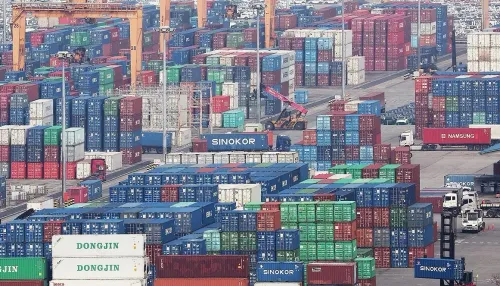
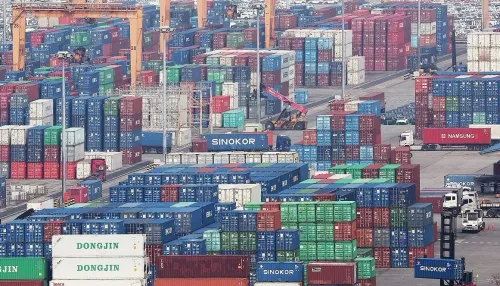
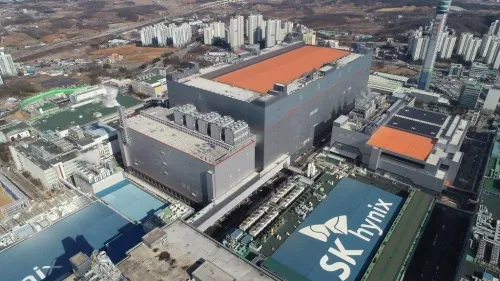
The upgrade was driven by strong semiconductor exports fuelled by global AI infrastructure demand .
Choi Ji-young , IMF Asia and Pacific Executive Director, said AI data-centre investment could sustain growth for up to 10 years .
The IMF flagged downside risks including a potential stock market correction and current account adjustment if the AI boom falters.
The IMF advised South Korea to prioritise innovation investment over strict debt-to-GDP management, recognising its unique economic circumstances.
The International Monetary Fund (IMF) has raised its 2026 growth forecast for South Korea to 3.3%, crediting surging semiconductor exports driven by robust artificial intelligence (AI) infrastructure demand — a revision of 0.7 percentage points above its July projection. A senior IMF official said on Thursday, 17 October 2026, in Bangkok that the AI-led technology investment cycle is unlikely to lose momentum in the near term, even as global headwinds persist.
What the IMF Official Said
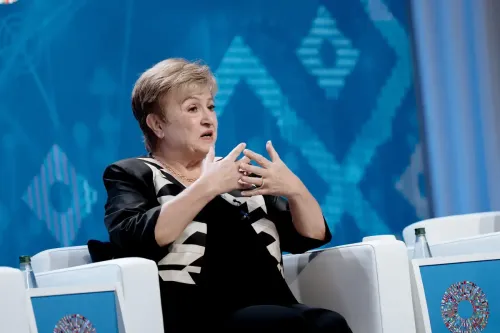
Choi Ji-young, Executive Director of the IMF Asia and the Pacific Constituency Office, made the remarks during a press interaction in Bangkok, where he was attending the 2026 Annual Meetings of the IMF and the World Bank Group. He acknowledged that trade tensions, the Middle East crisis, and the ongoing Russia-Ukraine war continue to weigh on the global economy, but stressed that South Korea's growth trajectory stands apart.
'Trade tensions among countries are putting negative pressure on the global economy,' Choi said, before pointing to South Korea's upward revision as evidence that AI-driven demand is more than offsetting the broader uncertainty.
Why the AI Investment Cycle Could Last a Decade
Choi argued that the AI boom is structurally durable, not a short-term spike. 'Building AI data centres takes a long time, potentially around 10 years. Investment has only just begun, and these projects are unlikely to falter in a couple of years and make that investment meaningless,' he said.
This perspective is significant for South Korea, whose semiconductor sector — anchored by companies supplying chips for AI data centres — has emerged as one of the country's primary growth engines. The AI infrastructure build-out has translated directly into stronger export revenues, widening South Korea's current account position and, according to Choi, expanding its fiscal space for future investment.
Downside Risks the IMF Flagged
Despite the optimistic near-term outlook, Choi acknowledged meaningful downside scenarios. 'South Korea could face a stock market correction, an adjustment in its current account and adverse effects on businesses should the AI boom falter,' he said. The caveat is notable given how concentrated South Korea's export recovery is in a single technology theme.
Notably, the IMF internally still expects AI investment to continue for an extended period, which Choi said underpins the fund's confidence in the revised forecast.
IMF's Tailored Advice for South Korea
Choi also flagged a nuanced divergence between standard IMF policy prescriptions and what the fund recommends for South Korea specifically. He advised the country not to be overly focused on its debt-to-GDP ratio, but to instead prioritise investment in innovation and future growth potential.
'In discussions with IMF staff, we point out that the fund's general policy advice does not fit South Korea's circumstances,' Choi said, adding that IMF staff recognise the country's unique economic position. 'IMF staff share the view that South Korea should continue investing to enhance its growth potential,' he said.
This comes amid a broader global conversation about whether fiscal consolidation frameworks developed in a pre-AI era remain appropriate for technology-intensive export economies. South Korea's case may increasingly serve as a test of how multilateral institutions adapt their guidance to structural shifts in global technology investment.
What to Watch Next
The durability of South Korea's AI-driven growth will hinge on whether global demand for semiconductors and data centre infrastructure holds through 2027. Any significant cooling in US or European AI capital expenditure — the primary demand source for South Korean chips — could quickly alter the IMF's outlook. The fund's next review of the forecast is expected ahead of its World Economic Outlook update early next year.
Point of View
However, is real: South Korea's recovery rests heavily on a single technology theme, and any plateau in global AI capex could expose the degree to which the improvement was cyclical rather than structural. The IMF's own hedging on downside scenarios suggests the institution is well aware that its optimism carries a significant single-point-of-failure assumption.
NationPress
18 Oct 2026
Frequently Asked Questions
Why did the IMF raise South Korea's 2026 growth forecast?
The IMF raised South Korea's 2026 growth forecast to 3.3% — up 0.7 percentage points from its July estimate — primarily because of strong semiconductor exports driven by surging global AI infrastructure demand, which more than offset the drag from the Middle East conflict and other global uncertainties.
How long does the IMF expect the AI investment boom to last?
IMF Asia and Pacific Executive Director Choi Ji-young said the AI investment cycle could continue for a considerable period, noting that building AI data centres takes around 10 years and that such projects are unlikely to become stranded in the near term. The IMF internally expects AI investment to keep flowing for an extended time.
What are the downside risks the IMF flagged for South Korea?
The IMF warned that South Korea could face a stock market correction, an adjustment in its current account, and adverse effects on businesses if the AI boom falters. The risks are linked to the economy's concentrated dependence on semiconductor exports tied to AI demand.
How is the IMF's advice to South Korea different from its standard guidance?
The IMF recommended that South Korea not focus excessively on its debt-to-GDP ratio and instead prioritise investment in innovation and growth potential — a departure from the fund's usual fiscal consolidation advice. IMF staff acknowledged that standard policy prescriptions do not fit South Korea's unique economic circumstances.
Where were these remarks made and in what context?
Choi Ji-young made the remarks during a media interaction in Bangkok on 17 October 2026, on the sidelines of the 2026 Annual Meetings of the IMF and the World Bank Group, which were being held in the Thai capital.