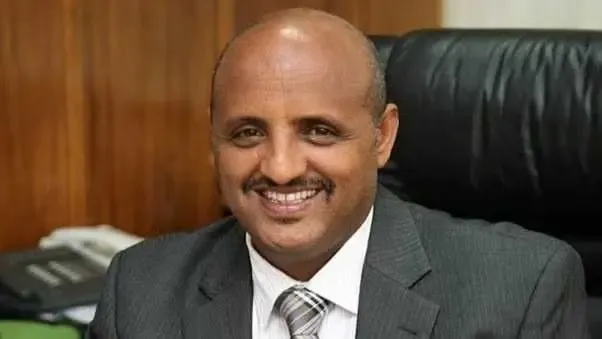
Air India CEO-designate Tewolde flags fuel costs, airspace curbs in first employee address
Synopsis
Air India's incoming CEO Tewolde Gebremariam used his first-ever employee townhall to set a clear agenda: safety first, growth only if it pays. With airspace curbs, high fuel costs, and geopolitical uncertainty complicating the airline's global ambitions, Tewolde's message is that the Tata-era transformation must now shift from expansion mode to profitable consolidation.
Key Takeaways
Tewolde Gebremariam addressed Air India's 24,000+ employees for the first time at a company-wide townhall on 28 September .
He cited geopolitical developments , airspace restrictions , high fuel prices , and international market uncertainty as key external challenges.
Safety was named the airline's 'foremost priority' , with employees encouraged to report concerns freely.
Tewolde stressed that growth must be profitable and sustainable , signalling a shift from pure expansion to margin discipline.
He credited the Air India–Vistara merger and four years of transformation under the Tata Group as a strong foundation for what comes next.
His appointment as CEO and MD is pending receipt of all necessary regulatory approvals.
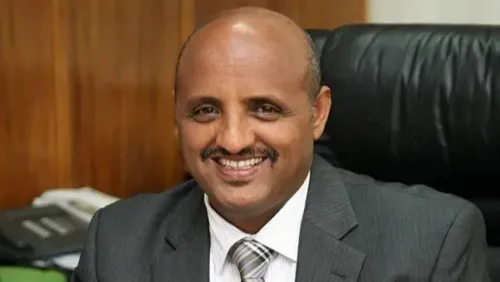
Air India's incoming chief executive, Tewolde Gebremariam, on Monday, 28 September addressed the airline's workforce for the first time at a company-wide townhall in New Delhi, outlining safety, operational reliability, and profitability as the three pillars guiding the carrier's next phase of transformation. Tewolde, who has been proposed as CEO and Managing Director of Air India pending regulatory approvals, acknowledged a difficult operating environment while striking an optimistic tone about the airline's long-term trajectory.
External Headwinds Facing the Airline
Tewolde was candid about the pressures confronting Air India, citing geopolitical developments, airspace restrictions affecting Indian carriers, elevated fuel prices, and uncertainty in key international markets as significant near-term challenges. The airspace restrictions — a consequence of ongoing regional geopolitical tensions — have added route complexity and cost for Indian airlines broadly, and Air India is no exception. This comes amid a broader period of turbulence for global aviation, with fuel costs remaining stubbornly high even as demand recovers post-pandemic.
The Transformation So Far
Tewolde acknowledged the work of Air India's more than 24,000 employees worldwide, crediting them with driving the airline's transformation over the past four years — a period that included the landmark merger and integration of Air India and Vistara. Describing it as a privilege to lead an airline with strong heritage and global recognition, he said substantial progress had been made since Air India returned to the Tata Group, while noting that significant opportunity remains ahead. "Over the past four years, a great deal has been achieved. At the same time, there remains significant opportunity ahead of us. That is what makes this an exciting moment for Air India and for all of us," he said.
Growth Must Be Profitable, Not Just Fast
Tewolde's framing of growth as something that must be both profitable and sustainable signals a deliberate recalibration. Air India has aggressively expanded its fleet and network since the Tata Group takeover, but profitability has remained elusive amid high capital expenditure and intense competition. The incoming CEO's emphasis on disciplined growth suggests the airline may temper expansion ambitions in favour of margin improvement — a shift that analysts have long called for.
Safety as a Non-Negotiable Priority
On safety, Tewolde was unequivocal, calling it the airline's 'foremost priority and guiding principle.' He urged all employees to report concerns and issues without hesitation, framing safety as a collective responsibility. "Everything we do must be safe. Safety is a shared responsibility, and every Air Indian has a role to play," he said. Notably, the emphasis on a speak-up culture around safety reflects global best practices following high-profile aviation incidents worldwide in recent years.
India's Structural Advantages as a Growth Base
On a more positive note, Tewolde pointed to India's favourable demographics, strong economic growth, geographic position, and a large global diaspora as structural tailwinds underpinning Air India's long-term growth case. India is among the world's fastest-growing aviation markets, with domestic passenger volumes consistently setting records. For an airline seeking to establish itself as a world-class global carrier, these fundamentals offer a compelling runway — provided the operational and financial challenges can be managed. Tewolde is expected to formally assume the CEO and MD role once all necessary regulatory approvals are in place.
Point of View
But the balance sheet has not kept up. The harder question is whether Air India can hold its nerve on discipline while Indigo and Gulf carriers continue to press on both domestic and international routes. Tewolde brings credibility — he built Ethiopian Airlines into Africa's largest carrier — but the Indian market's structural dynamics are distinctly different, and regulatory approval timelines add an element of uncertainty to the leadership transition itself.
NationPress
29 Sept 2026
Frequently Asked Questions
Who is Tewolde Gebremariam and what is his role at Air India?
Tewolde Gebremariam has been proposed as the CEO and Managing Director of Air India, pending all necessary regulatory approvals. He is widely known for his tenure leading Ethiopian Airlines, which he built into Africa's largest carrier.
What challenges did Air India's incoming CEO highlight?
Tewolde flagged geopolitical developments, airspace restrictions affecting Indian carriers, elevated fuel prices, and uncertainty in key international markets as the primary external headwinds facing Air India. He described the operating environment as challenging but not insurmountable given India's structural growth advantages.
What did Tewolde say about Air India's safety culture?
Tewolde called safety Air India's foremost priority and guiding principle, urging all employees to report concerns without hesitation. He said, 'Everything we do must be safe. Safety is a shared responsibility, and every Air Indian has a role to play.'
How has Air India transformed since the Tata Group takeover?
Over the past four years, Air India underwent significant transformation under the Tata Group, including the merger and integration of Air India and Vistara. Tewolde acknowledged the contribution of more than 24,000 employees to this process while noting that substantial opportunities for further growth remain.
What is Air India's growth strategy going forward?
Tewolde signalled that Air India's growth must be profitable and sustainable rather than purely volume-driven. He pointed to India's demographics, economic growth, geographic position, and large global diaspora as long-term tailwinds, but emphasised operational reliability and financial discipline as prerequisites for becoming a world-class global airline.