Dr. Jitendra Singh Advocates for AI in Governance as a Complement to Human Intelligence
Synopsis
In a pivotal address, Union Minister Dr. Jitendra Singh emphasized the necessity of integrating AI into governance while ensuring it complements human intelligence. He also highlighted India's strides in energy, startups, and education reforms, urging youth to leverage these advancements for national growth.
Key Takeaways
AI must enhance human intelligence in governance.
Prototype Fast Breeder Reactor is crucial for energy independence.
India is a leading startup hub, with growth in tier-2 and tier-3 cities .
The National Education Policy provides flexibility in education .
Initiatives like VAIBHAV support scientific collaboration.
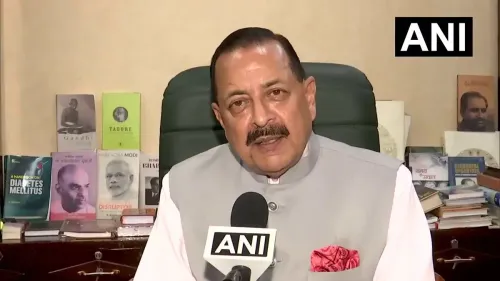
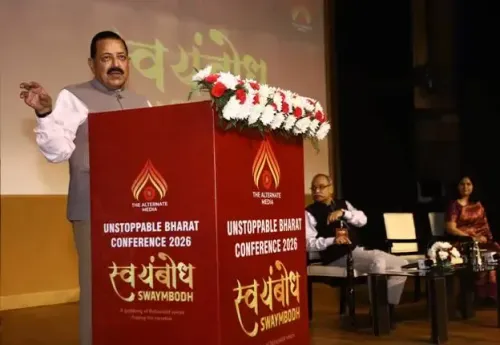
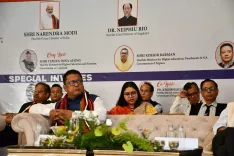
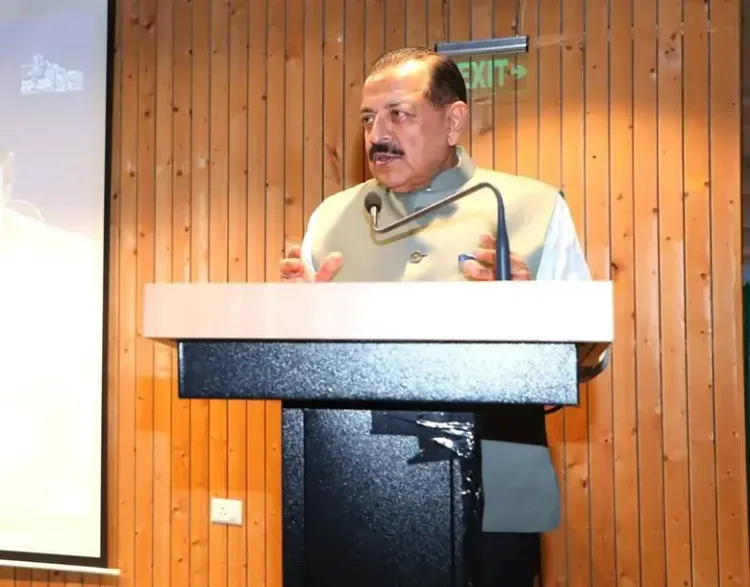
New Delhi, April 10 (NationPress) Artificial intelligence is set to play a crucial role in governance and daily life. However, according to Union Minister of State Dr. Jitendra Singh, it should serve as a supportive tool rather than a substitute for human intelligence. Speaking at VAKTAVYA 2026, Singh underscored the increasing significance of emerging technologies, asserting that AI is now a necessity, not an option.
He emphasized that while AI can greatly enhance research, analysis, and decision-making processes, it should function in tandem with human intelligence within a "hybrid model," rather than overshadowing it.
Additionally, the minister discussed India’s advancements in the energy sector, particularly highlighting the indigenously developed Prototype Fast Breeder Reactor (PFBR) as a landmark achievement towards achieving energy security.
"This reactor utilizes plutonium as fuel and liquid sodium as a coolant, enabling higher energy production with reduced input, and sets the stage for future thorium-based reactors, capitalizing on India's extensive thorium resources," he stated.
Regarding the startup landscape, Singh noted that India is now one of the world's foremost startup hubs, with over two hundred thousand startups currently operational.
"Nearly fifty percent of these startups originate from tier-2 and tier-3 cities such as Sonipat, Panipat, and Surat, demonstrating how innovation is flourishing beyond major urban areas," he added.
Furthermore, he highlighted the increasing involvement of women in entrepreneurship.
On education reform, Singh remarked that the National Education Policy has instigated a significant transformation by providing students with greater flexibility in selecting subjects and embracing interdisciplinary learning.
"This enables students to tailor their education to align with their interests and career aspirations," he remarked.
The minister also referred to initiatives like the VAIBHAV programme, which connects Indian scientists abroad with domestic institutions, and the Pratibha Setu portal, which assists UPSC aspirants in finding potential employers if they do not succeed in the final selection.
During his dialogue with students, Singh encouraged a broader mindset and the exploration of opportunities beyond conventional career paths.
He stated that the current era presents exceptional opportunities due to technological advancements and policy reforms, urging the youth to seize these opportunities and contribute to India's growth.
Point of View
The insights shared by Dr. Jitendra Singh highlight the essential balance between technological advancement and human intellect in governance. His remarks on India's energy progress and the flourishing startup ecosystem reflect a forward-thinking vision that champions innovation, inclusivity, and education reform in shaping the future.
NationPress
19 Sept 2026
Frequently Asked Questions
What role will AI play in governance?
AI is expected to become integral to governance, serving as a tool to enhance decision-making rather than replace human intelligence.
What is the Prototype Fast Breeder Reactor?
It is an indigenously developed reactor that uses plutonium as fuel and liquid sodium as a coolant, marking a significant advancement in energy security.
How many startups are operational in India?
India has over two lakh startups, with a notable number emerging from tier-2 and tier-3 cities.
What changes has the National Education Policy introduced?
The policy allows students more flexibility in choosing subjects and promotes interdisciplinary learning.
What initiatives support Indian scientists abroad?
The VAIBHAV programme connects Indian scientists overseas with domestic institutions to foster collaboration.