Anand Mahindra lauds state govt sports investment
Synopsis
Mahindra Group chairman Anand Mahindra on 12 July 2026 commended an unnamed state government on X for its sustained sports investment, arguing that long-term commitment to athletics by state administrations produces real, measurable results for athletes and the country.
Key Takeaways
Mahindra Group chairman Anand Mahindra posted praise on 12 July 2026 for a state government's long-term sports investment.
He described the outcome as 'evidence that long term commitment to sports by a State Govt. does indeed bear fruit.' India's National Sports Policy 2001 first called for coordinated central and state action to build a sports culture.
Several Indian states with consistent multi-year sports budgets have recorded measurable gains in national and international medal tallies.
India's 2028 Los Angeles Olympics and 2030 Asian Games preparation cycles make current state-level investment decisions especially consequential.
Mahindra's endorsement adds a prominent business-community voice to calls for treating state sports spending as strategic, long-term investment.
Mahindra Group chairman Anand Mahindra on Sunday, 12 July 2026 praised a state government's long-term commitment to sports, calling it evidence that sustained public investment in athletics yields tangible results. The industrialist posted his remarks on X, commending the unnamed state's consistent approach to building a sports culture over the years.
In his post, Mahindra wrote: 'Kudos... Evidence that long term commitment to sports by a State Govt. does indeed bear fruit!' The brief but pointed remark underscores a view he has consistently championed — that patient, multi-year institutional backing, rather than one-off spending, is what drives lasting outcomes in any domain, including competitive sport.
Context
India's sporting landscape has shifted considerably since the early 2000s, when the National Sports Policy 2001 first called for coordinated action between the central government and state administrations to build a genuine sports culture. Several states responded by establishing dedicated academies, upgrading district-level infrastructure, and creating talent-identification pipelines. The cumulative effect of these programmes has been visible in rising state-level medal tallies at national games and improved representation at international competitions.
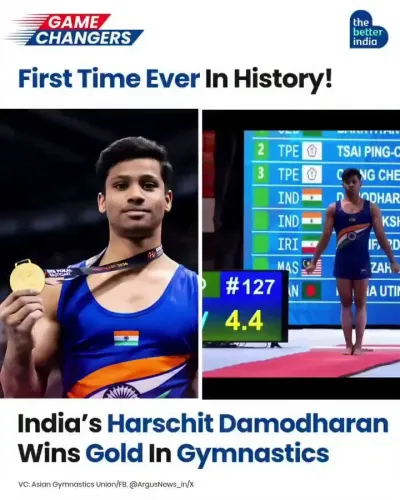
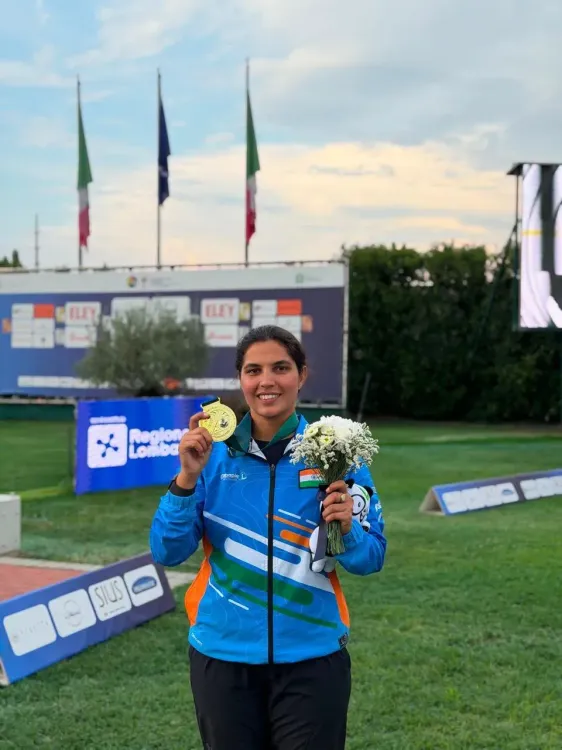
Mahindra's post, accompanied by an image, appears to celebrate a specific achievement by a state government — the details of which the chairman left to speak for themselves. His framing, however, points to a broader argument: that consistency of policy and funding matters more than episodic attention.
Policy Backdrop
State sports budgets across India have grown unevenly over the past two decades. A handful of states — notably those with strong wrestling, athletics, and hockey traditions — have maintained sustained allocations for coaching staff, competition exposure, and athlete welfare. Others have treated sports spending as discretionary, cutting it during fiscal stress. The divergence in outcomes between the two groups has become increasingly apparent at national-level competitions.
With India's 2028 Los Angeles Olympics preparation cycle now underway and the 2030 Asian Games on the horizon, state-level investment decisions taken today will directly shape the national medal count in those events. Policymakers and sports administrators have repeatedly flagged the need for states to treat sports infrastructure on par with education and health in their budget priorities.
Stakeholders and Impact
The primary beneficiaries of sustained state sports investment are the athletes themselves — young men and women from districts and towns who would otherwise lack access to quality coaching, nutrition support, or competitive exposure. State sports departments, coaching academies, and the Sports Authority of India all play interlocking roles in this ecosystem. When any link in that chain is consistently funded, the results compound over time.
Mahindra's public endorsement carries weight beyond a simple congratulatory note. As one of India's most-followed business voices, his framing of state sports spending as a long-term investment — analogous to the kind of patient capital he champions in industry — adds a business-community perspective to a conversation usually dominated by sports administrators and politicians.
What's Next
State budget cycles over the next two years will be closely watched by sports bodies and athlete associations seeking to lock in multi-year commitments ahead of the 2028 Olympics. Mahindra's post adds to growing public pressure on state governments to treat sports funding not as a line item to be trimmed but as a strategic investment with measurable returns. If more business leaders echo this view, it could influence how state finance ministries prioritise sports allocations in upcoming budgets.
Point of View
' he imports the language of patient capital from the business world into a policy conversation that rarely attracts corporate voices. This matters because state finance ministries are more likely to protect discretionary spending when it carries reputational backing from industry leaders. The timing — midway through India's Olympic preparation cycle — amplifies the signal. If the business community begins treating sports infrastructure the way it treats education or digital infrastructure, the political calculus around state sports budgets could shift meaningfully ahead of the 2028 Games.
NationPress
12 Jul 2026
Frequently Asked Questions
What did Anand Mahindra say about state government sports investment?
Anand Mahindra posted on X on 12 July 2026 that a state government's long-term commitment to sports 'does indeed bear fruit,' offering his congratulations for the results achieved.
Which state government did Anand Mahindra praise for sports?
Mahindra did not name the specific state in his post. The research background confirms the identity of the state cannot be independently verified from available information.
Why is state government investment in sports important for India?
Sustained state-level funding for coaching, infrastructure and talent identification directly feeds into India's national medal tallies and Olympic preparation, as athletes from districts and towns depend on state systems for their development.
How does India's National Sports Policy relate to state sports funding?
The National Sports Policy 2001 called for coordinated action between central and state governments to build a sports culture, making state administrations key partners in developing athletic talent across the country.
What are India's upcoming major sporting targets that make sports investment relevant now?
India is currently in its preparation cycle for the 2028 Los Angeles Olympics and the 2030 Asian Games , making state-level investment decisions taken today directly consequential for the country's international medal prospects.