Assocham urges LTCG, STT rationalisation in Union Budget 2027-28

Synopsis
Assocham's pre-Budget memo is an early shot across the bow ahead of Budget 2027-28 — pushing for a LTCG rate cut to 10%, a nil rate for two-year-plus holdings, and a ₹1.5 lakh crore customs amnesty scheme. The recommendations signal that industry patience with the current dual LTCG-STT burden is wearing thin, and that digital infrastructure tax clarity has become as urgent as old-economy incentives.
Key Takeaways
Assocham released its pre-Budget memorandum for Union Budget 2027-28 on 5 November 2026 .
It has recommended reducing LTCG tax to 10% for securities held 1–2 years, and a nil or ~5% rate for holdings beyond two years.
A credit of STT paid against LTCG tax liability has been proposed as an alternative measure.
Reintroduction of a concessional regime akin to Section 115BAB for new manufacturing companies, including defence , has been sought.
A one-time Customs Amnesty Scheme to resolve legacy disputes worth approximately ₹1.5 lakh crore has been proposed.
The Dispute Resolution Committee eligibility threshold should be raised from ₹10 lakh to ₹10 crore , Assocham said.
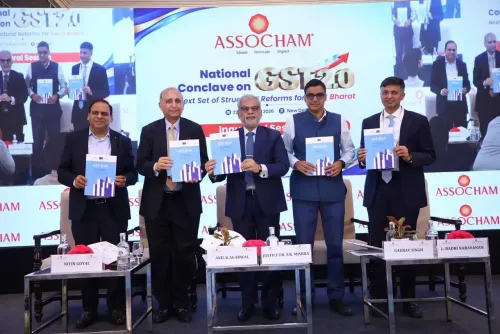
Apex industry chamber Assocham on Thursday, 5 November 2026 released its pre-Budget memorandum for Union Budget 2027-28, calling for a stable tax environment, reduced litigation, rationalised capital gains provisions, and stronger positioning of India as a global investment and manufacturing hub. The recommendations span both Direct Tax and Indirect Tax reforms, with the overarching goal of creating a predictable, transparent and investment-friendly regime.
Key Capital Gains Recommendations
On the capital markets front, Assocham has proposed reducing the Long-Term Capital Gains (LTCG) tax rate to 10% for securities held between one and two years, and introducing a nil or reduced rate of approximately 5% for holdings exceeding two years. As an alternative, the chamber has suggested allowing a credit for Securities Transaction Tax (STT) paid to be offset against LTCG tax liability on long-term holdings.
The industry body argued that rationalising the combined burden of LTCG and STT would encourage patient capital, strengthen investor confidence and support the depth of India's capital markets. This comes amid persistent concerns from institutional investors that the current dual-levy structure disincentivises long-duration equity exposure.
Direct Tax: Manufacturing and Technology Sectors
Assocham has recommended introducing a concessional tax regime for new manufacturing companies, with specific coverage for strategic sectors including defence. It has proposed reintroducing a framework along the lines of Section 115BAB of the Income-tax Act, 1961, with reasonable eligibility conditions and a longer operational window to incentivise long-term investment, employment generation and export competitiveness.
Separately, the chamber called for distinct asset classification and accelerated depreciation benefits for data centre buildings, fibre-optic infrastructure, cooling systems, and energy-efficient 5G infrastructure — a signal of the industry's push to anchor India's digital economy ambitions in a supportive tax architecture. The body also sought clarity on tax treatment for foreign companies procuring data centre services through Indian reseller entities, including a reasonable de-minimis threshold for limited direct sales.
Reforms in the Minimum Alternate Tax (MAT) regime were also flagged, particularly for companies that transitioned to concessional tax regimes before 31 March 2026 and units of foreign companies operating in International Financial Services Centres (IFSCs).
Dispute Resolution and Penalty Framework
Assocham proposed a revamp of the penalty framework, recommending separate proceedings for penalty orders, issue-wise specification of charges, expanded immunity provisions, and a stay on penalty demand until disposal by the Income Tax Appellate Tribunal (ITAT). It also called for strengthening the Dispute Resolution Committee by raising its eligibility threshold from ₹10 lakh to ₹10 crore, and revamping the Board for Advance Rulings to ensure time-bound and conclusive decisions — steps the chamber argues are critical to reducing tax litigation that has historically tied up capital and deterred foreign investors.
Indirect Tax: Customs Amnesty and FTA Facilitation
On the Indirect Tax side, the chamber called for a one-time Customs Dispute Resolution (Amnesty) Scheme to resolve legacy disputes, estimated at approximately ₹1.5 lakh crore. It has also proposed automatic refunds following favourable appellate orders, a uniform pre-deposit mechanism, and consolidated assessment and adjudication for multiple Bills of Entry involving identical issues.
With India's growing network of Free Trade Agreements (FTAs), Assocham emphasised rationalising origin verification procedures under Section 28DA and CAROTAR, 2020. It recommended risk-based security requirements, time-bound verification, and acceptance of digitally signed Certificates of Origin to facilitate smoother international trade. As India deepens trade linkages with partners across the Indo-Pacific and beyond, streamlining FTA compliance has taken on fresh urgency.
The pre-Budget memorandum is among the first major industry submissions ahead of the Budget 2027-28 cycle, and sets the tone for a wider lobbying effort that is expected to intensify through December and January.
Point of View
And the LTCG-STT double-taxation argument is its strongest card — the combined levy genuinely does compress after-tax returns for long-term equity holders and complicates India's pitch against competing Asian markets. The ₹1.5 lakh crore customs dispute estimate, if accurate, underscores how much productive capital remains locked in legacy litigation rather than deployed in growth. Less certain is whether the government, managing a fiscal consolidation path, will accept simultaneous revenue give-ups on capital gains and customs duties. The real test of Budget 2027-28 will be how selectively Finance Ministry picks from this menu — and whether any LTCG relief comes with the sunset provisions and measurement rigour that past manufacturing concessions conspicuously lacked.
NationPress
5 Nov 2026
Frequently Asked Questions
What has Assocham recommended for LTCG tax in Budget 2027-28?
Assocham has recommended reducing the LTCG tax rate to 10% for securities held between one and two years, and introducing a nil or approximately 5% rate for holdings exceeding two years. As an alternative, it has proposed allowing a credit for STT paid to be set off against LTCG tax liability on long-term holdings.
What is the Customs Dispute Resolution Amnesty Scheme proposed by Assocham?
Assocham has called for a one-time amnesty scheme to resolve legacy customs disputes, which it estimates at approximately ₹1.5 lakh crore. The scheme is intended to clear a backlog of unresolved cases and free up capital currently locked in prolonged litigation.
What manufacturing tax concessions has Assocham sought?
The chamber has recommended reintroducing a concessional tax regime for new manufacturing companies on the lines of Section 115BAB of the Income-tax Act, 1961, covering strategic sectors such as defence. It has asked for reasonable eligibility conditions and a longer operational window to encourage long-term investment and employment generation.
What changes to the Dispute Resolution Committee has Assocham proposed?
Assocham has proposed raising the Dispute Resolution Committee's eligibility threshold from ₹10 lakh to ₹10 crore and revamping the Board for Advance Rulings to ensure time-bound, conclusive decisions. These steps are aimed at reducing tax litigation and improving certainty for businesses operating in India.
Why is Assocham seeking tax clarity on data centres and digital infrastructure?
The chamber has called for distinct asset classification and accelerated depreciation for data centre buildings, fibre-optic infrastructure, cooling systems, and 5G networks. It has also sought clarity on tax treatment for foreign companies using Indian reseller entities for digital content and cloud services, arguing that current ambiguity discourages investment in India's digital infrastructure.