GST 2.0 reforms: Simplicity, tech compliance and faster dispute resolution key, says ASSOCHAM-LKS report
Synopsis
A new ASSOCHAM-LKS report is pushing for a second-generation GST overhaul — proposing a 24-month refund window for capital goods, a ₹10,000 floor on tax notices, and a technology-first compliance architecture. With GSTAT now functional and the GST Council in reform mode, India's indirect tax system may be on the cusp of its most significant redesign since 2017.
Key Takeaways
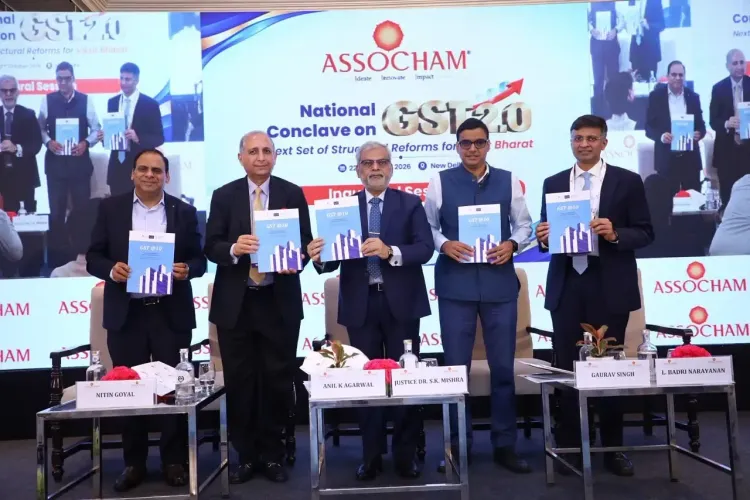
A joint report by ASSOCHAM and Lakshmikumaran & Sridharan Attorneys (LKS) outlines a roadmap for GST 2.0 reforms, released on 22 October 2026 .
Key proposals include a 24-month timeline for capital-goods refunds and no tax notices below ₹10,000 .
Balasubramanian K , Joint Secretary, Ministry of Finance, called for technology-driven anomaly detection to ease burden on genuine taxpayers.
GSTAT was highlighted as India's only tribunal catering to dispute resolution for both the Union and state governments.
ASSOCHAM framed reform around four pillars: simplicity, technology, fast dispute resolution, and manufacturing competitiveness.
Compliance challenges for MSMEs , penalty proceedings under Section 122 , and recent GST judgments were also discussed at the technical session.
India's next phase of Goods and Services Tax (GST) reforms must centre on simplicity, technology-driven compliance, and swift dispute resolution, according to a report released on Thursday, 22 October 2026. The report, jointly prepared by ASSOCHAM and Lakshmikumaran & Sridharan Attorneys (LKS), lays out a structured roadmap for what industry insiders are calling GST 2.0 — the second generation of reforms to the tax system that transformed India's indirect taxation landscape in 2017.
Key Recommendations from the Report
The ASSOCHAM-LKS report proposes a 24-month timeline for capital-goods refunds, a threshold of no tax notices below ₹10,000, and faster appellate mechanisms. It argues that the next stage of GST reform must simultaneously boost competitiveness for manufacturing and exports while reducing the compliance burden on businesses, particularly MSMEs and small traders.
The report also stressed the importance of digitisation and accessible information in helping businesses understand and comply with GST requirements — a persistent pain point since the tax's rollout.
What the Government Said
Balasubramanian K, Joint Secretary, Department of Revenue, Ministry of Finance, emphasised the need for swift and effective implementation of GST 2.0 recommendations. He called for technology-driven systems capable of detecting anomalies at an early stage, easing the burden on compliant taxpayers. 'The objective is that we will have a system-based, technology-based system which would detect anomalies early enough so that we can have the ease shown to the genuine taxpayer,' he said.
Spotlight on the GST Appellate Tribunal
Dr. Justice (Retd) Sanjaya Kumar Mishra, President, Principal Bench, New Delhi of the Goods & Services Tax Appellate Tribunal (GSTAT), highlighted the tribunal's unique role in the dispute resolution framework. 'GSTAT is the first and the only tribunal today which caters to the needs of dispute resolution for both the Union government and the state governments,' he said. The tribunal's establishment has been seen as a long-overdue step in reducing litigation backlogs under GST.
Industry's Four-Pillar Vision
Anil K. Agarwal, Past President, ASSOCHAM, articulated the reform priorities clearly: 'As India advances towards Viksit Bharat, the next stage of GST reform must rest on four pillars: simplicity, technology that makes compliance easier, effective and speedy dispute resolution, and competitiveness for manufacturing and exports.'
A technical session during the event further examined the evolving GST landscape following the GST Council's latest recommendations. Discussions covered key compliance challenges faced by MSMEs and traders, perspectives on penalty proceedings under Section 122, and an analysis of recent GST judgments — reflecting the breadth of unresolved issues still facing the tax system nearly a decade after its launch.
Why GST Reform Matters Now
India's GST framework, now in its ninth year, has significantly broadened the tax base and integrated the country's fragmented indirect tax structure. However, compliance complexity, frequent rate changes, and a slow dispute resolution pipeline have drawn persistent criticism from businesses. This comes amid heightened government focus on easing the cost of doing business as India targets higher manufacturing output and export competitiveness. The report's release signals that the conversation around structural GST reform is gaining renewed urgency.
With GSTAT now operational and the GST Council actively deliberating on rate rationalisation, the next twelve to twenty-four months could prove pivotal for the tax system's long-term architecture.
Point of View
Not incremental patches. The proposal to eliminate notices below ₹10,000 is a direct acknowledgement that low-value litigation is consuming disproportionate administrative bandwidth on both sides. More importantly, the 24-month capital-goods refund window, if implemented, would provide meaningful working-capital relief to manufacturers — a segment the government says it wants to turbocharge. The four-pillar framework is sound, but the harder question is execution: previous GST simplification promises have stalled in inter-ministerial and Centre-state coordination. The real test of GST 2.0 will not be the report's ambition, but whether the GST Council can build consensus across 28 states on contentious structural changes.
NationPress
22 Oct 2026
Frequently Asked Questions
What is the ASSOCHAM-LKS GST 2.0 report about?
The report, jointly released by ASSOCHAM and Lakshmikumaran & Sridharan Attorneys (LKS) on 22 October 2026, outlines a reform roadmap for India's next phase of GST changes. It recommends simplification, technology-driven compliance, a 24-month capital-goods refund timeline, and no tax notices below ₹10,000.
What is the proposed 24-month capital-goods refund timeline?
The report recommends that refunds on capital goods under GST be processed within a 24-month window, providing businesses — particularly manufacturers — with greater working-capital certainty. This is intended to reduce the financial strain caused by delayed refunds under the current system.
What is GSTAT and why is it significant?
The Goods & Services Tax Appellate Tribunal (GSTAT) is India's dedicated tribunal for resolving GST disputes for both the Union and state governments. Its President, Dr. Justice (Retd) Sanjaya Kumar Mishra, called it the first and only such tribunal catering to both levels of government, marking a significant step toward reducing GST litigation backlogs.
How does this report affect MSMEs and small traders?
The report specifically addresses compliance challenges faced by MSMEs and traders, recommending lower compliance burdens, accessible information, and faster dispute resolution. The proposal to eliminate tax notices below ₹10,000 is expected to directly reduce harassment of small businesses.
What are the four pillars of GST reform proposed by ASSOCHAM?
ASSOCHAM's Past President Anil K. Agarwal outlined four pillars for GST 2.0: simplicity, technology that makes compliance easier, effective and speedy dispute resolution, and competitiveness for manufacturing and exports — framed as essential to India's Viksit Bharat goals.