GST Council scraps arrest powers of tax officers, raises prosecution threshold to ₹5 crore
Synopsis
In its most business-friendly move in years, the GST Council has stripped tax officers of arrest powers and raised the prosecution bar fivefold to ₹5 crore — while committing to refund 90% of eligible claims in just three working days. With the rate structure declared 'settled', India's GST regime is now pivoting from revenue design to execution quality.
Key Takeaways
The GST Council at its 57th meeting on 8 October 2026 removed arrest powers from GST tax officers.
The prosecution threshold was raised fivefold — from ₹1 crore to ₹5 crore .
90% of eligible refund claims will now be processed within 3 working days ; acknowledgement period cut from 15 days to 10 days .
Input tax credit (ITC) expanded to cover telecom towers and employer-provided insurance .
Routine GST registration changes will be accepted automatically, reducing administrative delays.
Finance Minister Nirmala Sitharaman confirmed no rate changes: 'The rate structure is settled.'
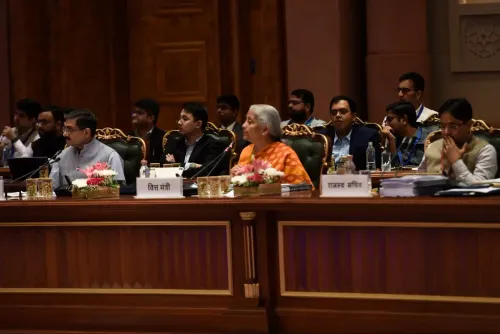
The Goods and Services Tax (GST) Council on Thursday, 8 October 2026, approved a sweeping set of taxpayer-friendly reforms at its 57th meeting in New Delhi, including the removal of arrest powers from GST tax officers and a fivefold increase in the prosecution threshold — from ₹1 crore to ₹5 crore. The decisions, taken under the chairmanship of Union Finance Minister Nirmala Sitharaman, prioritise ease of doing business over rate restructuring.
What the Council Decided
The headline reform strips GST officers of their arrest powers, a move businesses and industry groups have sought for years, arguing that the threat of arrest was being used disproportionately in tax disputes. Alongside this, the prosecution threshold has been raised to ₹5 crore, meaning cases involving tax evasion below that amount will no longer attract criminal prosecution. Finance Minister Sitharaman confirmed both decisions at a post-meeting press conference, stating: 'GST Council scraps arrest power of tax officers; raises prosecution threshold to ₹5 crore from ₹1 crore.'
Faster Refunds and Easier Registration
In a significant liquidity boost for exporters and businesses, the Council mandated that 90 per cent of eligible refund claims will be processed within three working days. The acknowledgement period for refund applications has also been cut from 15 days to 10 days, streamlining a process that had long been a pain point. Additionally, routine changes to GST registration will now be accepted automatically, reducing administrative delays for businesses updating their filings.
Expanded Input Tax Credit
The Council also broadened the scope of input tax credit (ITC), allowing businesses to claim credits on additional expenditure categories. These newly covered categories include telecom towers and employer-provided insurance cover — items previously excluded, leaving companies unable to offset those costs against their GST liability. This is expected to reduce the effective tax burden for sectors with significant infrastructure and workforce expenditure.
No Rate Changes — Procedures in Focus
Finance Minister Sitharaman was unambiguous that the 57th GST Council meeting was deliberately not about rate changes. 'No rate changes have been made. The rate structure is settled,' she told reporters, noting that last year's work had concentrated on simplifying the rate framework, while this year's agenda shifted entirely to procedural reform. This is a notable pivot — and a signal to industry that the government views the current rate architecture as largely stable.
Who Attended the Meeting
The 57th meeting, rescheduled from Wednesday due to unavoidable circumstances, was attended by representatives from both the Centre and state governments. Chief Ministers of Delhi, Goa, Haryana, Jammu and Kashmir, Karnataka, Kerala, Maharashtra, and Meghalaya were present, along with Deputy Chief Ministers of Manipur and Telangana, state Finance Ministers, senior officials of the Ministry of Finance, the Department of Revenue, and the Chairman and Members of the Central Board of Indirect Taxes and Customs (CBIC). The broad representation underscores the political consensus behind this round of compliance reform. All eyes now turn to implementation timelines and whether these changes translate into measurable relief for India's 1.4 crore-plus registered GST taxpayers.
Point of View
But the real question is whether it will be matched by tougher enforcement at the top end, where revenue leakage is genuinely material. The refund-speed commitment is welcome, but India has made similar promises before; the credibility test will come in Q1 of the next financial year when exporters file in volume. Declaring the rate structure 'settled' is also a significant signal — it suggests the government is confident enough in GST revenue buoyancy to stop tinkering, which, if it holds, would itself reduce compliance uncertainty for businesses.
NationPress
8 Oct 2026
Frequently Asked Questions
What did the GST Council decide at its 57th meeting on 8 October 2026?
The GST Council approved the removal of arrest powers from GST tax officers, raised the prosecution threshold from ₹1 crore to ₹5 crore, mandated faster refund processing, and expanded input tax credit to cover telecom towers and employer-provided insurance. Finance Minister Nirmala Sitharaman confirmed there were no changes to GST rates.
Why were arrest powers removed from GST officers?
The Council decided to scrap arrest powers for GST officers as part of a broader drive to reduce compliance burdens and ease doing business in India. Businesses had long argued that the power was being applied disproportionately in tax disputes, creating undue pressure on taxpayers.
How quickly will GST refunds be processed after the new rules?
Under the new rules, 90 per cent of eligible GST refund claims will be issued within three working days. The acknowledgement period for refund applications has also been reduced from 15 days to 10 days, improving liquidity for businesses and exporters.
What is the new GST prosecution threshold and what does it mean?
The prosecution threshold has been raised from ₹1 crore to ₹5 crore, meaning GST cases involving alleged tax evasion below ₹5 crore will no longer attract criminal prosecution. This provides significant relief to small and mid-sized businesses that were exposed to criminal liability under the earlier, lower threshold.
Which new expenditure categories are now eligible for GST input tax credit?
The GST Council expanded input tax credit coverage to include telecom towers and employer-provided insurance cover — categories previously excluded. This allows businesses in infrastructure-heavy and large-workforce sectors to offset these costs against their GST liability, reducing their effective tax burden.