GST Council 57th meet: No rate changes, major compliance and ITC reforms unveiled
Synopsis
The 57th GST Council meeting delivered something rare: no rate changes, but a comprehensive overhaul of how the tax actually works day to day. From revoking officers' arrest powers to automating 90% of refunds and expanding ITC to employee insurance, the Council has sent a clear signal — the era of constant rate churn is giving way to a sustained push for systemic ease.
Key Takeaways
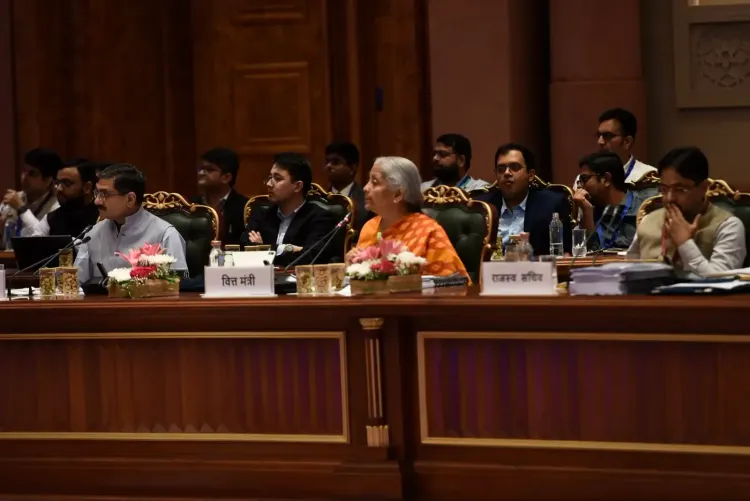
The 57th GST Council , chaired by Finance Minister Nirmala Sitharaman , met on 8 October 2026 in New Delhi and retained existing GST rates.
GST rate changes will now be reviewed only once a year , signalling greater policy predictability for businesses.
Low-risk GST registrations will receive automatic approval within three working days ; around 61% already are.
Refund acknowledgement timelines cut from 15 days to 10 days ; 90% of claims to be sanctioned via system-based risk assessment.
ITC relief expanded to employee health and life insurance , telecom towers, pipelines, free samples, and expired stocks.
GST officers' arrest powers proposed to be revoked ; prosecution threshold raised from ₹1 crore to ₹5 crore ; notices for ₹10,000 or below to be withdrawn.
The 57th GST Council meeting, chaired by Finance Minister Nirmala Sitharaman in New Delhi on 8 October 2026, kept the existing Goods and Services Tax rate structure intact while rolling out a sweeping package of reforms targeting faster registrations, quicker refunds, expanded input tax credit (ITC) relief, and sharply reduced litigation exposure for businesses across the country.
Rate Stability and Annual Review
In a significant policy signal, the Finance Ministry announced that GST rate changes will henceforth be considered only once a year, moving away from ad hoc revisions. This is expected to give businesses greater predictability when planning investments and pricing. The Council explicitly chose to prioritise systemic improvements over rate tinkering at this meeting.
Faster Registrations and Automatic Approvals
The Council has proposed further automation of the GST registration and amendment process. Low-risk applications are expected to receive automatic approval within three working days. According to the Finance Ministry, around 61 per cent of GST registrations are already cleared within three working days without officer intervention, while nearly 66 per cent of amendment applications are proposed to be processed automatically going forward.
Registrations suspended due to procedural lapses could also be restored automatically once the underlying issue is corrected. The process for cancelling registrations following business closure is also proposed to be simplified, reducing administrative friction for exiting businesses.
Refunds Overhauled: Faster and More Automated
The timeline for acknowledging refund applications has been cut from 15 days to 10 days. Around 90 per cent of refund claims are expected to be sanctioned through a system-based risk assessment, minimising manual processing. Refunds from the cash ledger will be made fully automatic.
On the inverted duty structure front, refund of input services will be allowed from 1 November 2026, while a similar facility for plant and machinery is proposed from 1 April 2027, with the adjustment spread over 60 months. This is a significant relief for manufacturers operating under the inverted duty structure, many of whom have had refund claims locked up for extended periods.
ITC Relief Expanded Across Key Categories
The Council has broadened Input Tax Credit relief to cover GST paid on employee health and life insurance in eligible cases — a long-standing demand from the corporate sector. Relief has also been extended to telecom towers and pipelines located outside factory premises, as well as free samples and certain expired stocks that must be destroyed.
Importantly, a Committee of Officers has been tasked with examining safeguards for genuine buyers who risk losing ITC due to a supplier's tax default or fraud. The committee will focus on cases where buyers hold valid invoices, have received the goods, and have made full payment to their suppliers. It is expected to submit its report within three months.
Enforcement Eased: Arrest Powers Revoked, Prosecution Threshold Raised
Among the most consequential reforms for businesses, the Council has proposed revoking GST officers' powers of arrest. The threshold for launching prosecution has been raised fivefold — from ₹1 crore to ₹5 crore. The minimum mandatory punishment for offences has been removed, leaving courts to determine whether a fine, imprisonment, or both are warranted on a case-by-case basis.
The general penalty for cases where no specific penalty is prescribed has been reduced to ₹10,000 from ₹25,000. The Council has also proposed common standards for GST notices and proceedings. Notably, no new notices will be issued for monetary amounts of ₹10,000 or below, and pending notices under that threshold are also proposed to be withdrawn — a measure that could clear a significant backlog of minor disputes.
This is the first GST Council meeting in recent memory to simultaneously address registration, refunds, ITC, and enforcement in one reform package, signalling a deliberate shift from revenue maximisation to ease of doing business. The next phase of implementation timelines and guidelines is expected to be notified in the coming weeks.
Point of View
But the real test is execution: automated approvals and risk-based refunds are only as good as the IT infrastructure and officer accountability behind them. The ITC safeguard committee for fraud-victim buyers is a welcome acknowledgment of a structural injustice, but a three-month report timeline means businesses remain exposed in the interim. Annual rate reviews sound predictable in principle — but the Council has made such commitments before without sticking to them.
NationPress
8 Oct 2026
Frequently Asked Questions
What decisions were taken at the 57th GST Council meeting?
The 57th GST Council meeting, held on 8 October 2026, retained the existing GST rate structure and announced a broad package of reforms covering faster registrations, automated refunds, expanded ITC relief, and reduced enforcement powers. GST rate changes will henceforth be reviewed only once a year.
How will GST registration change after the 57th Council meeting?
Low-risk GST registration applications will now receive automatic approval within three working days, and around 66 per cent of amendment applications are proposed to be processed automatically. Registrations suspended due to procedural lapses can also be restored automatically once the issue is resolved.
What ITC relief has the GST Council announced for businesses?
The Council has expanded Input Tax Credit relief to cover GST paid on employee health and life insurance in eligible cases. Relief also extends to telecom towers and pipelines outside factory premises, as well as free samples and expired stocks that need to be destroyed.
Why has the GST prosecution threshold been raised to ₹5 crore?
The Council raised the prosecution threshold from ₹1 crore to ₹5 crore to reduce litigation risk and address concerns that lower thresholds were being used to harass businesses. GST officers' arrest powers have also been proposed to be revoked, and courts will now decide penalties on a case-by-case basis.
When will the new GST refund rules under the inverted duty structure take effect?
Refund of input services under the inverted duty structure will be allowed from 1 November 2026. A similar facility for plant and machinery is proposed from 1 April 2027, with the adjustment spread over 60 months.