South Korea's top general calls DMZ mine blast a North Korean 'provocation'
Synopsis
South Korea's top general has publicly labelled the 21 September DMZ mine blast a North Korean 'provocation' — but only after opposition lawmakers exposed that the military's own briefings had avoided the word. With a joint US-UN investigation confirming Pyongyang planted the mines, Seoul now faces a triple pressure: a live border incident, partial US intelligence cut-offs, and a scaled-back joint exercise regime under Trump.
Key Takeaways
Jin Yong-sung told a parliamentary audit on 8 October 2026 the 21 September DMZ mine blast was unambiguously a North Korean 'provocation.' A joint JCS–U.N.
Command investigation confirmed resin antipersonnel mines deliberately planted by Pyongyang south of the MDL caused the blast, injuring three soldiers , two seriously.
South Korea launched its first-ever mine-removal mission inside the DMZ buffer zone following the confirmation.
The US has partially restricted intelligence sharing with Seoul since April over the disclosure of a nuclear facility in Kusong by Unification Minister Chung Dong-young .
Six of seven postponed live drills from the scaled-back Ulchi Freedom Shield exercise have been rescheduled to begin this week or next.
Seoul pledged a 'stern' response and plans to upgrade DMZ surveillance to AI -driven systems in the mid-term.
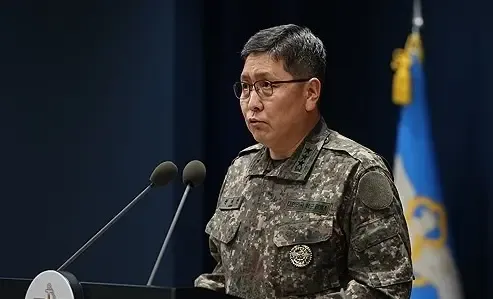
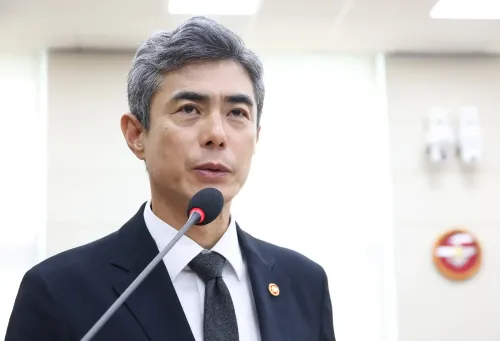
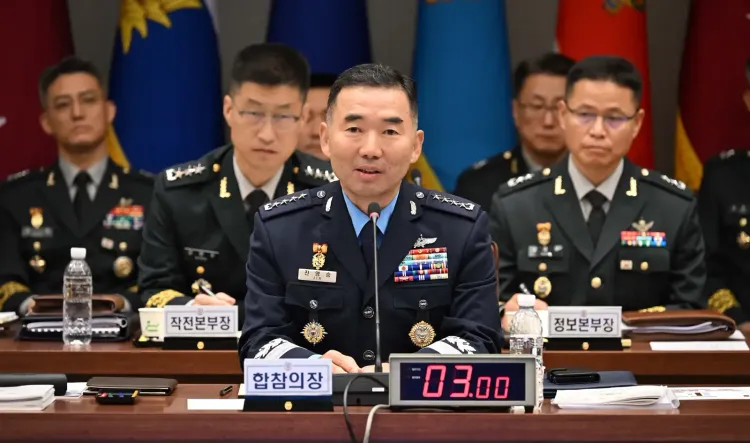
South Korea's top military commander, Joint Chiefs of Staff (JCS) Chairman General Jin Yong-sung, declared on Thursday, 8 October 2026 that he had never considered the 21 September mine blast near the inter-Korean border anything other than a deliberate 'provocation' by North Korea, while pledging to review further response measures. His remarks came during a parliamentary audit in Seoul, where opposition lawmakers had pressed the military on why it had avoided using the word 'provocation' in its public briefings.
What the General Said
'There was not a single moment when I thought it was anything other than a provocation when one of my men was seriously injured,' Gen. Jin said. He acknowledged, however, that 'I had not paid close attention to the fact that the term 'provocation' was not included in the announcement' — a gap that drew sharp criticism from opposition parliamentarians.
When asked whether the mine-removal operation at the blast site constituted a 'corresponding' response, Jin described it as 'highly significant,' saying it demonstrated the military's resolve. 'At the very least, we need to eliminate ourselves the threat that caused serious injuries to our comrades near the MDL,' he said.
Findings of the Joint Investigation
The JCS concluded a joint investigation with the U.N. Command on Monday, confirming earlier preliminary findings: resin antipersonnel mines deliberately planted by Pyongyang south of the Military Demarcation Line (MDL) caused the explosion. The blast left three South Korean soldiers injured, two of them seriously.
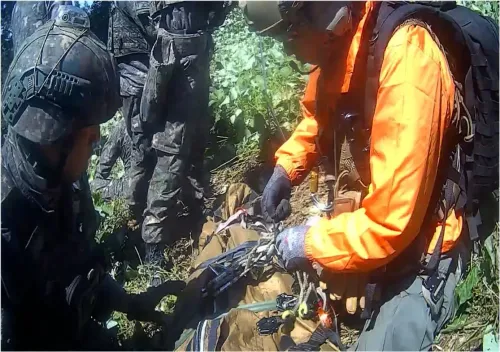
Following the investigation's conclusion, the South Korean military launched an operation to remove any remaining North Korean-planted land mines at the site — the first such mission conducted inside the buffer zone between the two Koreas. In the mid-term, the military has outlined plans to strengthen capabilities in the Demilitarised Zone (DMZ), including minimising surveillance blind spots and transitioning outpost surveillance systems to artificial intelligence (AI)-driven platforms.
Intelligence-Sharing Tensions with the US
The parliamentary session also surfaced a separate strain in the Seoul-Washington alliance. Gen. Jin confirmed that the United States has partially restricted South Korea's access to intelligence on North Korea-related technology since April, following the disclosure by Unification Minister Chung Dong-young of classified information about one of the North's nuclear facilities. At a parliamentary session in March, Chung identified North Korea's Kusong region as an additional uranium enrichment site beyond the previously known locations in Yongbyon and Kangson.
Jin sought to reassure lawmakers, stating that the restrictions — believed to relate to satellite-collected technology intelligence — do not compromise operational readiness. 'There are no problems or limitations in carrying out our missions related to North Korea's nuclear and missile programs,' he said, adding that Seoul is working to fully restore the sharing arrangement.
US-South Korea Drills Scaled Back Under Trump
Separately, Gen. Jin confirmed that six of the seven live military drills postponed in August have been rescheduled and will begin 'either this week or next.' The drills were deferred after US President Donald Trump ordered a scaling back of the annual Ulchi Freedom Shield (UFS) exercise — one of the two major theatre-level combined exercises the allies conduct each year. The exercise was cut from 11 days to five, with field manoeuvres reduced by half to seven.
Trump cited cost concerns and his personal relationship with North Korean leader Kim Jong-un, saying the exercises could send an 'inappropriate and hostile' message to Pyongyang. Critics argue the reduction undercuts deterrence precisely when North Korean mine-planting incidents are escalating tensions along the MDL.
Seoul's Pledge on Future Provocations
The South Korean military vowed to respond 'sternly' to the damage suffered by its troops, using both physical and non-physical means, and pledged to strengthen its overall readiness posture to deter further provocations. The combination of a confirmed North Korean mine-planting operation, partial US intelligence restrictions, and a curtailed joint exercise schedule means the Korean peninsula's security calculus is under pressure from multiple directions simultaneously.
Whether Seoul's reviewed response measures will extend beyond mine clearance into broader deterrent action remains to be seen, with Gen. Jin declining to elaborate on specific next steps.
Point of View
And Gen. Jin admits he did not notice. That gap between the commander's private assessment and the institution's public language is a transparency problem, and opposition lawmakers were right to press it. Meanwhile, the dual pressure of partial US intelligence restrictions and a Trump-ordered drawdown in joint exercises creates a deterrence vacuum precisely when Pyongyang appears to be testing the border's physical limits. Seoul's vow to respond 'sternly' rings hollow if the tools — shared intelligence, full-scale drills — are simultaneously being trimmed by its primary ally.
NationPress
8 Oct 2026
Frequently Asked Questions
What caused the DMZ mine blast on 21 September?
A joint investigation by South Korea's Joint Chiefs of Staff and the U.N. Command confirmed that resin antipersonnel mines deliberately planted by North Korea south of the Military Demarcation Line caused the 21 September explosion. Three South Korean soldiers were injured, two of them seriously.
Why did South Korea's military avoid calling the mine blast a 'provocation'?
JCS Chairman Gen. Jin Yong-sung acknowledged during a parliamentary audit that the term 'provocation' was not included in the military's Monday briefing, saying he had not paid close attention to its omission. The oversight drew criticism from opposition lawmakers, prompting Jin to state publicly that he had always viewed the incident as a provocation.
What has South Korea done in response to the mine blast?
Seoul launched an operation to remove any remaining North Korean-planted land mines at the blast site — the first such mission inside the DMZ buffer zone. The military has also pledged a 'stern' response using physical and non-physical means, and plans to upgrade DMZ surveillance to AI-driven systems.
Why has the US restricted intelligence sharing with South Korea?
Washington has partially limited Seoul's access to North Korea-related intelligence since April, after Unification Minister Chung Dong-young disclosed the location of a uranium enrichment facility in North Korea's Kusong region during a parliamentary session in March. The restricted intelligence is believed to relate to satellite-collected technology data.
What is the Ulchi Freedom Shield exercise and why was it cut back?
The Ulchi Freedom Shield (UFS) is one of two major annual theatre-level combined exercises between South Korea and the United States designed to train for contingencies against North Korea. US President Donald Trump ordered it scaled back from 11 days to five, with field manoeuvres halved, citing cost concerns and his personal relationship with North Korean leader Kim Jong-un.