GST Council 57th meeting on Sept 12 to take up registration reforms for large businesses

Synopsis
For the first time in over a year, the GST Council convenes — and the agenda signals a shift from rate reform to administrative overhaul. With no uniform registration process for large businesses passing ₹2.5 lakh-plus in monthly input tax credit, the 12 September meeting could finally close a compliance gap that has quietly burdened multi-state enterprises.
Key Takeaways
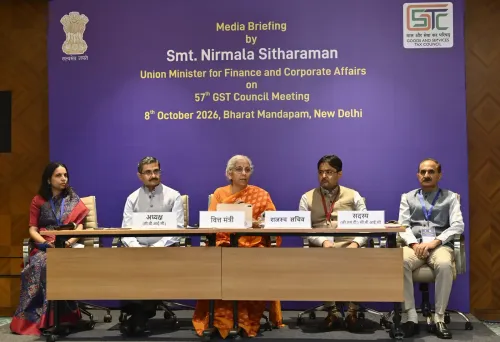
The 57th GST Council meeting is scheduled for 12 September in New Delhi , chaired by Finance Minister Nirmala Sitharaman .
Simplification of GST registration for businesses passing input tax credit of over ₹2.5 lakh per month is likely on the agenda.
Automation of GST registration cancellation processes is also expected to be considered.
The Council last met on 3-4 September 2025 — over a year ago — when it approved a major GST rate restructuring effective 22 September 2025 .
A simplified scheme for small and low-risk businesses has been in force since 1 November 2025 ; the new reforms would extend rationalisation to larger businesses.
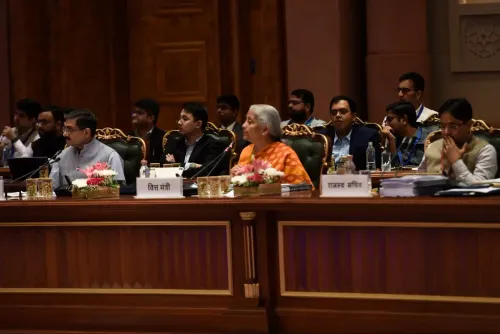
The 57th meeting of the GST Council, chaired by Union Finance Minister Nirmala Sitharaman, is scheduled for 12 September in New Delhi, with simplification of GST registration procedures for large businesses expected to top the agenda, according to an office memorandum circulated by the GST Council secretariat. A preparatory meeting of officers will precede it on 11 September.
Key Developments on the Agenda
The Council is likely to deliberate on standardising GST registration procedures for businesses that pass on input tax credit of more than ₹2.5 lakh per month. Currently, no uniform process exists across central GST formations and various state formations when granting registration to such large businesses — a gap that reportedly creates compliance uncertainty for taxpayers.
Automation of GST registration cancellation processes is also expected to be on the table, as part of a broader push to reduce procedural inconsistencies and improve ease of compliance.
Why This Meeting Matters
The Council — comprising the Union Finance Minister and state finance ministers — is convening after a gap of over a year. Its 56th meeting, held on 3-4 September 2025, approved a sweeping restructuring of GST rate slabs. The new structure, which came into effect from 22 September 2025, replaced the long-standing four-tier framework of 5%, 12%, 18%, and 28% — in place since GST's launch in July 2017 — with two standard rates of 5% and 18%, plus a 40% rate for select sin and ultra-luxury goods.
The upcoming meeting is therefore the first major policy session since that landmark restructuring took effect, making its agenda closely watched by industry and tax practitioners.
Background: The Small-Business Scheme Already in Place
At the September 2025 meeting, the Council had approved a simplified registration scheme for small and low-risk businesses. Rolled out from 1 November 2025, the scheme allows applicants identified as small and low-risk by the GST system — through data analysis — or those who self-assess that their monthly output tax liability does not exceed ₹2.5 lakh (including CGST, SGST/UTGST, and IGST) to opt for the streamlined facility.
The proposed September 12 reforms would extend a similar rationalisation logic to the large-business segment, which currently sits outside that simplified framework.
What Businesses Can Expect
If the Council approves the proposed changes, large businesses passing on significant input tax credit would benefit from a uniform, predictable registration process regardless of which central or state GST formation handles their application. Analysts note that procedural harmonisation at this scale could meaningfully reduce compliance costs for mid-to-large enterprises operating across multiple states.
The September 12 meeting will be a critical indicator of how far the Centre and states are willing to push administrative reform in the post-restructuring GST regime.
Point of View
The Centre and states are now turning to the plumbing: registration processes that remain fragmented across formations. The lack of uniformity for large businesses is not a minor technical glitch; it is a structural compliance risk that disproportionately affects multi-state operators. If the September 12 session delivers standardisation and automation, it would mark a quiet but consequential maturation of GST administration — moving the system from rate-setting to process-building, where the real ease-of-doing-business gains lie.
NationPress
13 Oct 2026
Frequently Asked Questions
When is the 57th GST Council meeting scheduled?
The 57th GST Council meeting is scheduled for 12 September in New Delhi, preceded by a preparatory officers' meeting on 11 September. It is the first Council session in over a year, following the 56th meeting held on 3-4 September 2025.
What is the GST Council expected to discuss on 12 September?
The Council is expected to discuss simplification of GST registration procedures for businesses that pass on input tax credit exceeding ₹2.5 lakh per month. Automation of GST registration cancellation processes is also likely to be considered.
Why is there a problem with GST registration for large businesses?
Currently, no uniform procedure exists across central and state GST formations for granting registration to large businesses that pass on input tax credit of over ₹2.5 lakh per month. This inconsistency reportedly creates compliance uncertainty and unpredictability for taxpayers operating across multiple states.
What was decided at the last GST Council meeting?
The 56th GST Council meeting, held on 3-4 September 2025, approved a major restructuring of GST rates. The new two-tier standard rate structure of 5% and 18% — with a 40% rate for sin and ultra-luxury goods — replaced the earlier four-tier system and came into effect from 22 September 2025.
Who is eligible for the simplified GST registration scheme already in place?
The simplified scheme, rolled out from 1 November 2025, is available to applicants identified as small and low-risk by the GST system through data analysis, or those who self-assess that their monthly output tax liability — including CGST, SGST/UTGST, and IGST — does not exceed ₹2.5 lakh.