GST next phase to ease compliance, boost refunds: PM Modi ahead of Oct 7 Council meet
Synopsis
With the GST Council meeting on 7 October just days away, Modi and Sitharaman have jointly signalled a compliance-first reform agenda — but the more consequential proposal is the possible scrapping of Section 69 arrest powers, which would strip tax officials of the ability to detain taxpayers during GST investigations. Serious fraud cases would shift to prosecution under the Bharatiya Nyaya Sanhita instead.
Key Takeaways
PM Modi on 5 October 2026 said the next phase of GST reforms will simplify compliance and improve the refund process.
Finance Minister Nirmala Sitharaman published an article outlining reforms targeting registration, returns, refunds, dispute resolution, and ITC flow .
The GST Council meeting on 7 October is expected to consider removing arrest powers under Section 69 of the CGST Act due to reported misuse.
Serious fraud cases — including fake invoicing and fraudulent ITC — would instead be prosecuted under the Bharatiya Nyaya Sanhita (BNS) .
The proposals come from the GST Council's Law Committee , which comprises officials from the Centre and states.
GST rate rationalisation took effect on 22 September 2025 ; Sitharaman cited improved collection and taxable supplies since then.
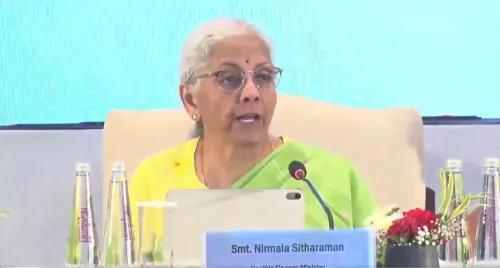
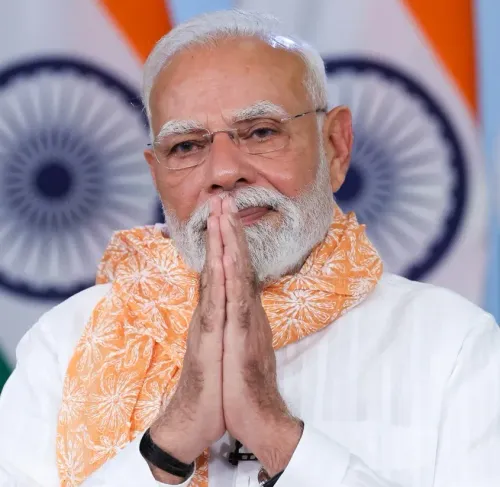
Prime Minister Narendra Modi on Monday, 5 October 2026 underscored that the forthcoming phase of Goods and Services Tax (GST) reforms will simplify compliance and improve the refund process, giving businesses greater confidence to invest and expand. The remarks came as Finance Minister Nirmala Sitharaman published a detailed article laying out the government's case for next-generation GST, ahead of the GST Council meeting on 7 October.
What Modi and Sitharaman Said
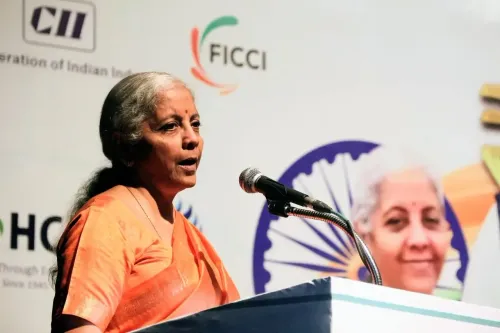
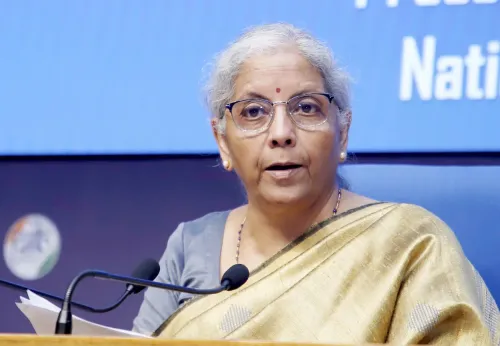
Modi, responding to Sitharaman's article, said the next phase of reform would 'strengthen the foundation for a Viksit Bharat.' Sitharaman, in a post on X, stated that next-gen GST is 'delivering the twin objectives of relief for taxpayers and greater momentum for our economy.' Her article argued that the reforms are expanding economic activity, strengthening revenues, and creating more opportunities for enterprises across India.
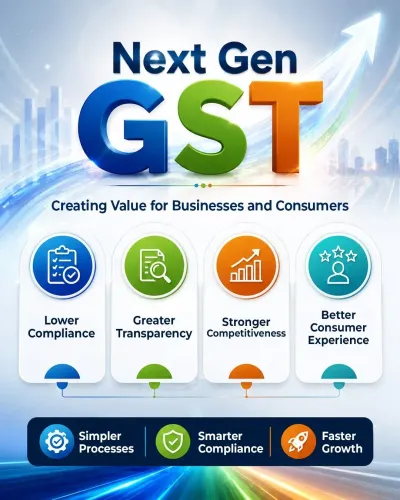
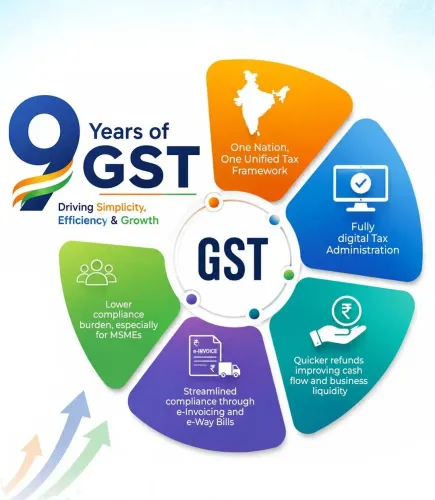
The Finance Minister outlined that the next reform phase will target five specific areas: registration, returns, refunds, dispute resolution, and the flow of input tax credit (ITC) — with the stated aim of reducing both the time and cost of compliance for taxpayers.
Rate Rationalisation and Revenue Performance
Sitharaman also highlighted GST collection performance and reported taxable supplies following the rate rationalisation that took effect on 22 September 2025. The government has pointed to these figures as evidence that simplification and revenue buoyancy can be pursued simultaneously — a key argument in its case for further reform.
Arrest Powers Under Section 69 May Be Removed
One of the more significant proposals likely to be taken up at the 7 October GST Council meeting is the potential removal of the stand-alone provision under Section 69 of the CGST Act, which currently empowers the Commissioner to authorise the arrest of a taxpayer under investigation for specified serious offences under Section 132. A senior official confirmed that misuse of this provision has come to the fore, prompting a review.
The proposal is part of broader decriminalisation suggestions by the GST Council's Law Committee, which comprises officials from both the Centre and states. The committee's reasoning, according to reports, is that on several occasions, failure to pay tax has not been deliberately intended — making criminal-level arrest powers disproportionate.
Under the current thinking, serious cases — involving fake invoicing, fraudulent input tax credit, and claiming fake refunds — would instead be pursued through criminal prosecution under the Bharatiya Nyaya Sanhita (BNS), rather than through GST-specific arrest powers. This would mean tax officials lose the ability to arrest a taxpayer during a GST investigation under Section 69.
Role of the GST Council's Law Committee
The Law Committee examines legal provisions under GST laws and recommends statutory amendments and clarifications to the full Council. Its decriminalisation proposals, if accepted at the October 7 meeting, could mark a significant shift in how tax disputes — and alleged fraud — are handled under the indirect tax regime. The committee's recommendations, however, require Council approval before they can be enacted.
What Comes Next
The GST Council meeting on 7 October is expected to deliberate on the Law Committee's decriminalisation package alongside the broader compliance-simplification agenda. Industry bodies and tax practitioners have long called for rationalisation of arrest and prosecution powers under GST, arguing that the current framework creates undue uncertainty for businesses operating in good faith. The outcome of the meeting will signal how far the government is willing to go in rebalancing enforcement with ease of doing business.
Point of View
But the Section 69 arrest-power proposal is genuinely consequential — and its framing reveals a tension the government has not fully resolved. Removing GST-specific arrest powers while routing serious fraud through the BNS is a sensible structural correction, but it risks being read as a softening on evasion at a time when the government is simultaneously claiming GST revenues are at record highs. The deeper question is whether decriminalisation will be matched by faster civil enforcement, or whether it simply reduces deterrence without improving speed of resolution. The Law Committee's record suggests careful drafting; the Council's political calculus will determine whether those drafts survive intact on 7 October.
NationPress
5 Oct 2026
Frequently Asked Questions
What are the next-phase GST reforms announced by PM Modi?
PM Modi on 5 October 2026 said the upcoming GST reform phase will make compliance easier and improve the refund process, giving businesses greater confidence. Finance Minister Nirmala Sitharaman elaborated that reforms will focus on registration, returns, refunds, dispute resolution, and input tax credit flow.
What is the GST Council meeting on 7 October expected to decide?
The GST Council meeting on 7 October 2026 is expected to discuss the decriminalisation of GST laws, including the possible removal of Section 69 arrest powers, alongside broader compliance-simplification measures. Any approved proposals would require statutory amendments before taking effect.
What is Section 69 of the CGST Act and why may it be removed?
Section 69 of the CGST Act empowers the Commissioner to authorise the arrest of a taxpayer being investigated for specified serious offences under Section 132. A senior official confirmed that instances of misuse have come to light, and the GST Council's Law Committee has proposed its removal as part of a broader decriminalisation package.
How will serious GST fraud cases be handled if Section 69 is removed?
Under the current thinking, serious offences such as fake invoicing, fraudulent input tax credit claims, and fake refund claims would be prosecuted under the Bharatiya Nyaya Sanhita (BNS) — the general criminal law — rather than through GST-specific arrest powers.
When did the GST rate rationalisation take effect and what has it achieved?
The GST rate rationalisation took effect on 22 September 2025. Finance Minister Sitharaman cited improved GST collections and higher reported taxable supplies since then as evidence that simplification and revenue growth can be pursued together.