GST Council meeting Oct 7: Rate cuts unlikely, focus on process reforms
Synopsis
No rate cuts on the table at the October 7 GST Council meeting — Finance Minister Nirmala Sitharaman has confirmed the session will focus on GST 2.0 process reforms, including e-invoicing and input tax credit rules. The bigger signal: she is already flagging AI, gig economy, and virtual digital assets as the next frontier for Indian tax policy.
Key Takeaways
The GST Council meets on 7 October 2026 with no major rate changes expected.
Finance Minister Nirmala Sitharaman confirmed the agenda will centre on GST 2.0 process reforms, including e-invoicing and input tax credit (ITC) rules.
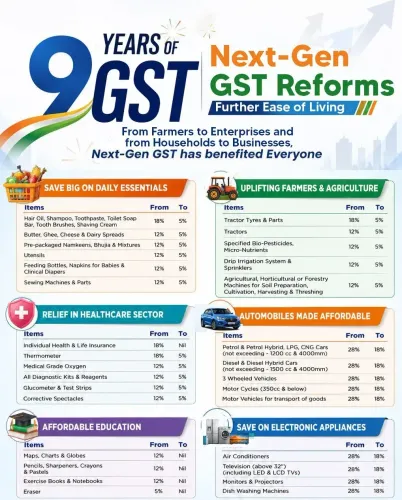
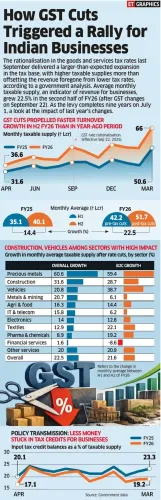
The Council will review implementation of the rate rationalisation undertaken over the past year.
Sitharaman has invited industry to flag anomalies and submit proposals on digital transaction classification under GST and income tax.
Emerging areas flagged for future tax policy include AI and robotics , the gig economy , virtual digital assets , and global capability centres .
No major GST rate changes are expected at the upcoming GST Council meeting on 7 October 2026, with the panel set to prioritise 'process reforms' and a review of the recently completed rate rationalisation exercise, according to Finance Ministry sources. The meeting marks a deliberate shift in the Council's agenda — from adjusting tax rates to fixing how existing rates are being applied on the ground.
What the October 7 Meeting Will Cover
Finance Minister Nirmala Sitharaman has indicated that the forthcoming meeting will centre on reforms under what the government has termed 'GST 2.0' — a second-generation overhaul focused on improving compliance infrastructure rather than the rate structure itself. Areas flagged for discussion include e-invoicing norms and input tax credit (ITC) rules, two areas where industry has flagged persistent ambiguities.
The Council is also expected to conduct a structured review of how the rate rationalisation measures adopted over the past year have been implemented, with the emphasis on resolving teething issues rather than initiating a fresh round of broad-based rate cuts.
Why Rate Cuts Are Off the Table — For Now
The previous GST Council session was devoted heavily to rate rationalisation, with process-reform items deferred to the October meeting. That sequencing, sources suggest, has effectively locked the agenda: the October session is meant to close the loop on implementation, not open a new round of rate negotiations. Sitharaman also invited industry to submit specific representations on any remaining anomalies in the GST framework that the government may not have addressed — signalling that the channel remains open but the forum for rate changes is not the immediate next meeting.
Emerging Issues: AI, Gig Economy, Digital Assets
Looking beyond the October meeting, Sitharaman flagged a set of structurally new challenges that tax policy will increasingly need to confront. These include the taxation of artificial intelligence and robotics, the gig economy, global mobility, virtual digital assets, global capability centres (GCCs), and the treatment of goods and services in digital transactions.
She also pointed to concepts such as significant economic presence and virtual permanent establishments — frameworks that have grown in importance as businesses operate across jurisdictions with minimal physical footprint in any one country.
Goods vs Services in Digital Transactions: A Key Grey Area
One specific area where Sitharaman invited institutional clarity was the classification of digital transactions — whether they should be treated as goods or services under both GST and income tax laws. The Finance Minister said the government was open to establishing a formal mechanism to provide greater certainty on this question, and invited industry bodies and researchers to submit proposals and suggestions.
The distinction has become increasingly contested as cross-border digital commerce grows, with different interpretations leading to disputes over applicable rates and credits.
A Broader Call to Industry
Sitharaman also used the occasion to challenge tax professionals, industry associations and academic researchers to move beyond the traditional demand for lower rates, exemptions and concessions. She urged them instead to contribute to evidence-based tax policy by identifying provisions that may have outlived their purpose within the current GST architecture.
The October 7 meeting will be closely watched by businesses still absorbing the previous round of rate changes — and by those hoping for eventual clarity on digital taxation.
Point of View
Gig workers and virtual assets — these are not hypothetical edge cases anymore, and the absence of a clear classification framework is already creating litigation risk for businesses. The call for evidence-based submissions from industry is welcome, but the government will need to show it is willing to act on those submissions rather than use them as a consultation ritual.
NationPress
25 Sept 2026
Frequently Asked Questions
Will there be any GST rate changes at the October 7 GST Council meeting?
No major GST rate changes are expected at the October 7 meeting. According to Finance Ministry sources, the Council will focus on process reforms under GST 2.0 and review the implementation of the rate rationalisation already undertaken, rather than initiating a fresh round of rate cuts.
What is GST 2.0 and what does it cover?
GST 2.0 is the government's term for a second phase of GST reforms focused on improving compliance infrastructure rather than adjusting tax rates. Key areas under discussion include e-invoicing norms and input tax credit rules, both of which have been flagged by industry as sources of ambiguity.
What new tax challenges did Finance Minister Sitharaman flag?
Sitharaman identified several emerging issues that future tax policy must address, including the taxation of artificial intelligence and robotics, the gig economy, virtual digital assets, global capability centres, global mobility, and significant economic presence in cross-border digital transactions.
What is the government's position on taxing digital transactions as goods or services?
The Finance Minister said the government is open to an institutional mechanism to provide greater clarity on whether digital transactions should be treated as goods or services under GST and income tax laws. Industry bodies and researchers have been invited to submit proposals on the issue.
Why has the GST Council deferred process reforms to the October meeting?
The previous GST Council session was devoted primarily to rate rationalisation, and process reforms were explicitly deferred to the October 7 meeting. That sequencing means the upcoming session is designed to close out implementation issues from the rate changes, not to open new rate negotiations.