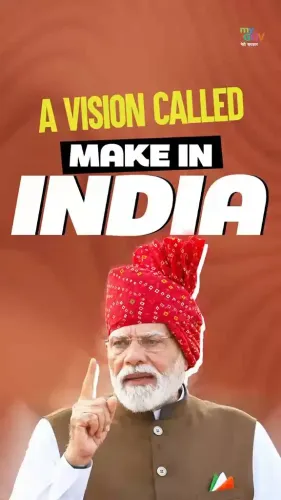
Nadda marks 12 years of Make in India, cites PLI-led growth
Synopsis
Union Health Minister J. P. Nadda marked 12 years of Make in India on 25 September 2026, citing PLI schemes across 14 sectors driving ₹23.8 lakh crore in production, ₹15.5 lakh crore in exports, and over 2.5 lakh startups generating 25 lakh-plus jobs.
Key Takeaways
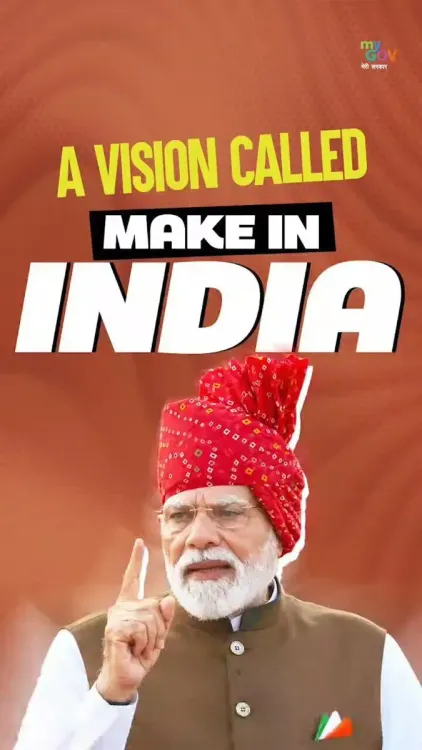
Make in India turned 12 years old on 25 September 2026 , launched originally by PM Modi on the same date in 2014 .
PLI schemes across 14 sectors have generated ₹23.8 lakh crore in production and sales as of March 2026 .
Exports driven by PLI schemes have crossed ₹15.5 lakh crore , according to figures cited by Nadda.
India's startup ecosystem now counts more than 2.5 lakh startups , creating over 25 lakh jobs .
PLI schemes were rolled out from 2020 across sectors including electronics, pharmaceuticals, and automobiles.
Upcoming Economic Survey data and Union Budget announcements on scheme extensions will be the next key watchpoints for the programme's trajectory.
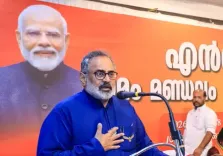
Twelve years after Prime Minister Narendra Modi unveiled the Make in India initiative on 25 September 2014, the programme has grown from an ambitious branding exercise into a policy architecture that now shapes how India manufactures, exports, and competes globally. Union Health Minister J. P. Nadda marked the anniversary on Friday, 25 September 2026, posting a pointed accounting of what the decade-plus push has produced.
PLI schemes: ₹23.8 lakh crore in production and ₹15.5 lakh crore in exports
The centrepiece of Nadda's post is a hard-number stocktake of the Production Linked Incentive (PLI) schemes — the financial backbone of Make in India. Spread across 14 sectors including electronics, pharmaceuticals, and automobiles, the PLI framework has driven ₹23.8 lakh crore in combined production and sales and ₹15.5 lakh crore-plus in exports as of March 2026, according to figures cited in the post.
PLI schemes were rolled out from 2020 onward, offering direct production-linked subsidies to qualifying manufacturers — a deliberate pivot from tariff walls alone toward active output incentives. The logic: reward companies for what they actually produce on Indian soil, not merely for what they import-substitute.
2.5 lakh startups, 25 lakh jobs — and a broadening ecosystem
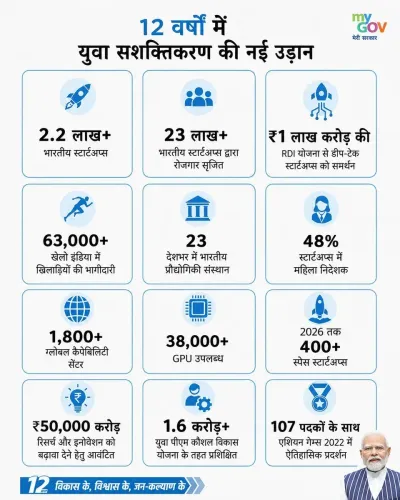
Beyond heavy industry, Nadda points to India's startup landscape as proof that Make in India has moved from assembly lines into innovation. More than 2.5 lakh startups have been registered, generating over 25 lakh jobs — a figure that underscores how the policy umbrella now covers not just factory floors but founder-led enterprises competing for global capital.
India's consistent push since 2014 has combined import tariff adjustments, production subsidies, and startup recognition frameworks to build domestic supply chains in sectors where it was almost entirely import-dependent a decade ago. The approach bets that scale, incentives, and an expanding talent pool can close the competitiveness gap with established manufacturing giants.
What the 12-year arc means for India's global manufacturing ambitions
Make in India's anniversary lands at a moment when global supply-chain reordering — accelerated by geopolitical tensions and post-pandemic diversification — has given India a structural window it did not have in 2014. Whether the PLI numbers translate into durable global market share, or remain concentrated in a handful of sectors, will be the defining question as the government eyes the next phase of scheme extensions and possible new sectors in upcoming Union Budget cycles.
Analysts and industry bodies will scrutinise the next Economic Survey's PLI chapter for granular data on investment realisation versus disbursement — the gap between what was promised and what actually moved. The direction of travel, though, is unmistakable: India has staked its economic identity on making things, not just consuming them.
Point of View
Startup support, and tariff calibration working in concert. The choice to lead with hard numbers (₹23.8 lakh crore in production, 25 lakh jobs) rather than rhetoric signals that the BJP is now willing to be held to measurable benchmarks, not just aspirational framing. That is a sharper accountability posture than the initiative's early years. The real test for the next phase is whether PLI-driven exports deepen into high-value, technology-intensive goods — or remain concentrated in labour-cost-sensitive segments where India's advantage is more fragile.
NationPress
25 Sept 2026
Frequently Asked Questions
When was Make in India launched?
Make in India was launched by Prime Minister Narendra Modi on 25 September 2014 , with the goal of positioning India as a global manufacturing and investment destination.
What are PLI schemes and how many sectors do they cover?
Production Linked Incentive (PLI) schemes offer direct financial incentives to manufacturers based on incremental production output. They were rolled out from 2020 and currently cover 14 sectors including electronics, pharmaceuticals, and automobiles.
What has Make in India achieved in 12 years?
According to figures cited by Union Minister J. P. Nadda, PLI schemes have driven ₹23.8 lakh crore in production and sales and ₹15.5 lakh crore-plus in exports as of March 2026, with over 2.5 lakh startups generating more than 25 lakh jobs .
How many startups has Make in India helped create?
The Make in India initiative, supported by related startup policies, has contributed to the registration of more than 2.5 lakh startups in India, which together have generated over 25 lakh jobs .
What is next for Make in India and PLI schemes?
Analysts are watching the next Economic Survey for detailed PLI performance data and the upcoming Union Budget for potential scheme extensions or the addition of new sectors to the PLI framework.