Gadkari marks 12 years of Make in India, cites PLI boom
Synopsis
Union Minister Nitin Gadkari marks Make in India's 12th anniversary, highlighting PLI schemes across 14 sectors that have reportedly generated ₹22.66 lakh crore in production, ₹15.2 lakh crore+ in exports and 14 lakh+ jobs, alongside 2.5 lakh+ startups creating 25 lakh+ jobs nationwide.
Key Takeaways
Make in India completed 12 years on 25 September 2026 , launched originally by PM Modi on 25 September 2014.
PLI schemes across 14 sectors have reportedly generated ₹22.66 lakh crore in production output.
Exports linked to PLI have crossed ₹15.2 lakh crore , with 14 lakh+ direct jobs created under the framework.
India's startup ecosystem has grown to 2.5 lakh+ startups , supporting 25 lakh+ jobs including in Tier 2 and Tier 3 cities.
The policy shift is described as moving from assembly-led growth to building end-to-end global supply-chain capability.
Twelve years after Prime Minister Narendra Modi stood in New Delhi and told the world that India was open for business, the numbers being cited by his government tell a story of scale that would have seemed ambitious in 2014. Union Road Transport and Highways Minister Nitin Gadkari marked the 12th anniversary of Make in India on Friday, 25 September 2026, pointing to a manufacturing journey he described as moving 'from assembling ambition to building global capability.'
The PLI engine: 14 sectors, ₹22.66 lakh crore in production
At the heart of Gadkari's anniversary post is the Production Linked Incentive (PLI) framework — the targeted incentive architecture built across 14 sectors that successive Union Budgets have scaled up since 2020. The minister cited ₹22.66 lakh crore in production output and ₹15.2 lakh crore+ in exports directly linked to the PLI push — figures that, if verified, would represent one of the most consequential industrial-policy outcomes in post-liberalisation India.
The scheme works on a straightforward logic: pay companies a percentage of incremental sales over a base year, and they will invest, hire, and produce at home rather than import. Applied across sectors from semiconductors to food processing, mobile phones to pharmaceuticals, PLI turned a generic 'ease of doing business' pitch into a bankable production contract with the Indian state.
14 lakh+ jobs from PLI, 25 lakh+ from the startup surge
Gadkari also flagged the employment dimension, citing 14 lakh+ jobs generated through PLI schemes and a parallel startup ecosystem of 2.5 lakh+ startups responsible for 25 lakh+ jobs. The geographic spread is deliberate policy design — the post specifically calls out reach 'from metros to Tier 2 and Tier 3 cities,' signalling that the government's manufacturing ambition is no longer confined to traditional industrial corridors.
India's startup count crossing 2.5 lakh is a marker of how the Startup India programme, launched alongside Make in India, evolved from a branding exercise into a structural shift in entrepreneurship. Supply-chain deepening — often the missing link in India's earlier assembly-led growth phases — is now the explicit goal.
Make in India at 12: from assembly hub to global supplier
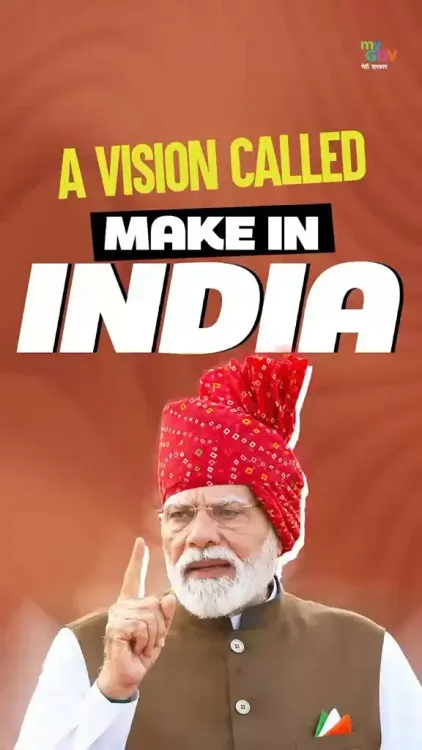
Make in India was launched on 25 September 2014 with a roaring lion logo and a mandate to raise manufacturing's share of GDP to 25 per cent. The initiative's first years were criticised for generating more ceremony than output. The pivot came when PLI schemes injected hard financial incentives into the equation, aligning corporate capex decisions with national supply-chain goals.
Gadkari's framing — 'India is increasingly making not just for itself, but for the world' — captures the strategic upgrade: from import substitution to export competitiveness. That shift has been most visible in mobile phone manufacturing, where India moved from near-zero to becoming a significant global exporter in under a decade, and in pharmaceuticals, where the country's generic-drug supply chain proved its global indispensability during the COVID-19 crisis.
The next test is whether PLI's headline production numbers translate into deep indigenisation — components, design, and intellectual property — rather than final-stage assembly with imported inputs. That question will shape the next chapter of the story Gadkari is celebrating today.
Point of View
Using the Make in India anniversary to consolidate a narrative of manufacturing-led growth ahead of what is expected to be a policy-intensive budget cycle. The PLI framework represents the BJP government's most concrete departure from earlier, vaguer 'ease of doing business' rhetoric — binding state incentives to measurable production thresholds. The specific call-out of Tier 2 and Tier 3 cities is politically significant, signalling that the manufacturing dividend is being positioned as broadly distributed rather than metro-concentrated. The deeper structural question — whether India is building genuine industrial depth or a sophisticated assembly layer — remains the critical variable for the next phase of this agenda.
NationPress
25 Sept 2026
Frequently Asked Questions
When was Make in India launched and what is its goal?
Make in India was launched on 25 September 2014 by Prime Minister Narendra Modi to position India as a global manufacturing hub and raise manufacturing's share of GDP to 25 per cent.
What are PLI schemes and which sectors do they cover?
Production Linked Incentive (PLI) schemes pay companies a percentage of incremental sales to boost domestic production. They cover 14 sectors including mobile phones, pharmaceuticals, food processing, and semiconductors, and were introduced from 2020 onwards.
How many jobs has Make in India and PLI created?
According to Minister Gadkari's post, PLI schemes have created 14 lakh+ jobs , while the broader startup ecosystem of 2.5 lakh+ startups has generated over 25 lakh jobs across India.
What production and export figures have PLI schemes achieved?
Gadkari cited ₹22.66 lakh crore in total production and ₹15.2 lakh crore+ in exports attributed to PLI schemes across 14 sectors, though these are government claims that await independent verification.
Why is Make in India significant for Tier 2 and Tier 3 cities?
The initiative is explicitly designed to spread manufacturing and startup opportunities beyond major metros into smaller cities, deepening supply chains and creating entrepreneurial opportunities where industrial activity was previously limited.