CEA Nageswaran: Global competitiveness key for India to attract FDI

Synopsis
CEA V. Anantha Nageswaran told the PAFI Annual Forum that global competitiveness — not just policy box-ticking — is the true driver of FDI. With India's cumulative FDI crossing $1.16 trillion since FY2001, his warning that a shifting global interest-rate environment could crimp future flows adds a rare note of caution to an otherwise bullish inflow story.
Key Takeaways
Anantha Nageswaran addressed the 13th PAFI Annual Forum in New Delhi on 25 September 2026 .
He stressed that global competitiveness is the most important factor for Indian industry to attract and retain foreign capital.
Key investor signals cited: GDP growth of 7% or higher , declining inflation, fiscal prudence, and credit rating upgrades.
India's total FDI inflows rose from $4 billion in FY2000-01 to $95 billion in FY2025-26; cumulative FDI stands at $1.16 trillion .
An Assocham study this week called for the next FDI policy phase to focus on sustaining and deepening investment, not just attracting it.
Nageswaran warned that the changing global interest-rate environment could materially affect the cost of capital and cross-border investment flows.
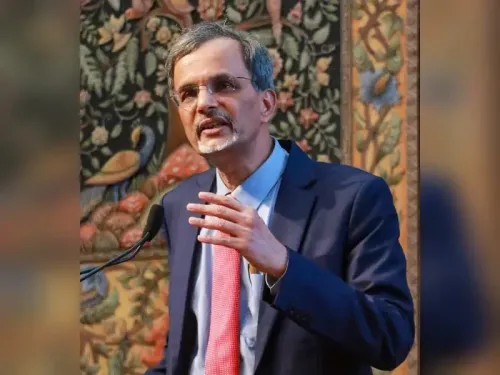
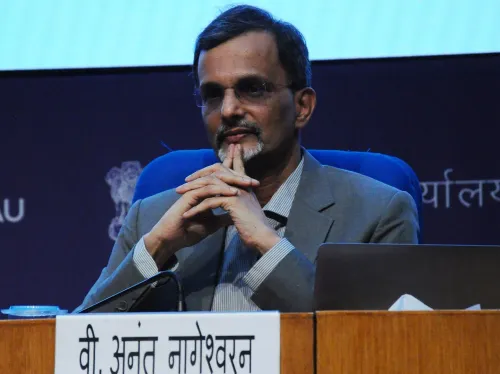
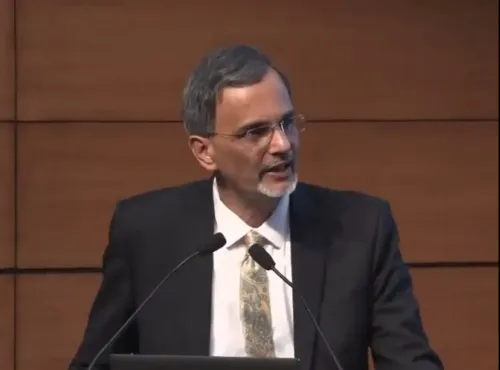
Chief Economic Adviser V. Anantha Nageswaran on Friday, 25 September 2026, underscored that global competitiveness remains the single most critical factor for Indian industry if it seeks to draw sustained foreign direct investment. Speaking at the 13th PAFI Annual Forum in New Delhi, Nageswaran credited India's manufacturing reforms and macroeconomic fundamentals for bolstering the country's FDI appeal, while cautioning that ticking policy boxes alone does not guarantee immediate capital flows.
The Global Context Has Shifted
Nageswaran argued that India's FDI performance must be assessed against a rapidly evolving global investment environment. 'It is not that we are not doing things to improve our FDI receptivity, but the world is constantly shifting. Therefore, what we need to do also increases, but it does not mean even if we tick boxes, the money will start flowing tomorrow,' he told the gathering.
He further noted that public expectations can outpace on-ground results precisely because the global context has changed so significantly. 'You can do everything right, and the public will see that there is no result, and will therefore be clamouring for more, but the point is global context has shifted,' Nageswaran said.
What Signals Investors Watch
The CEA outlined a hierarchy of factors that influence foreign investor decisions. At the top: macroeconomic stability. 'Steady growth of 7 per cent or higher, declining inflation and fiscal prudence that has earned credit rating upgrades are among the signals that matter,' he noted. Investor protection, tax-policy certainty and consistency, availability of skilled talent, and logistics infrastructure were also cited as significant determinants.
Nageswaran stressed that without macroeconomic stability in place, investors tend to remain more patient — or more cautious — regardless of other reforms. He also flagged that 'the changing global interest-rate environment could also have a significant bearing on the cost of capital and cross-border investment flows.'
India's FDI Trajectory: The Numbers
The scale of India's FDI journey over the past two-and-a-half decades illustrates the stakes. According to official DPIIT and Reserve Bank of India (RBI) data, total FDI inflows rose from $4 billion in FY2000-01 to approximately $95 billion in FY2025-26, while FDI equity inflows climbed from $2 billion to $59 billion over the same period. Cumulatively, India received $1.16 trillion in total FDI and $791 billion in FDI equity between FY2000-01 and FY2025-26.
Sustaining, Not Just Attracting Investment
A study released this week by industry body Assocham aligned with Nageswaran's broader thrust, arguing that the next phase of India's FDI policy should focus not merely on attracting investment but on creating conditions in which capital can be 'sustained, expanded and more deeply integrated with India's economic and industrial ecosystem.' This framing — from attraction to retention — signals a maturing policy debate that goes beyond headline inflow figures.
With global capital increasingly price-sensitive to interest-rate differentials and geopolitical risk, India's ability to hold its reform momentum while maintaining macro discipline will be the defining test for FDI ambitions in the years ahead.
Point of View
But the reward is not guaranteed because the goalposts keep moving. The subtext is significant — after a decade of reform momentum, policymakers are now quietly managing expectations about capital flow timelines. The $1.16 trillion cumulative FDI figure is impressive, but the more telling stress-test will come as US interest rates and geopolitical fragmentation keep reallocating global capital away from emerging markets. The Assocham framing — from FDI attraction to FDI retention — points to an underappreciated structural challenge: India wins on entry, but investor exits and reinvestment rates remain underanalysed metrics in the public policy debate.
NationPress
25 Sept 2026
Frequently Asked Questions
What did CEA V. Anantha Nageswaran say about India's FDI at the PAFI forum?
Nageswaran said that global competitiveness is the most important factor for Indian industry to attract foreign investment. He cautioned that even if India implements the right policies, capital flows may not materialise immediately because the global investment environment is constantly shifting.
How much FDI has India attracted since FY2000-01?
According to official DPIIT and RBI data, India received cumulative total FDI inflows of $1.16 trillion and $791 billion in FDI equity between FY2000-01 and FY2025-26. Total FDI inflows in FY2025-26 alone stood at approximately $95 billion.
What macroeconomic factors does Nageswaran say matter most to foreign investors?
He highlighted steady GDP growth of 7% or higher, declining inflation, and fiscal prudence that has earned credit rating upgrades as the primary signals investors watch. He also cited investor protection, tax-policy certainty, skilled talent availability, and logistics as important supporting factors.
What is the Assocham recommendation on India's next FDI phase?
An Assocham study released this week argued that India's next FDI policy phase should focus not just on attracting investment but on creating conditions for capital to be sustained, expanded, and more deeply integrated with India's economic and industrial ecosystem.
Why does the global interest-rate environment matter for India's FDI outlook?
Nageswaran noted that a changing global interest-rate environment can significantly affect the cost of capital and cross-border investment flows. Higher rates globally raise the opportunity cost of investing in emerging markets, potentially slowing inflows even when domestic fundamentals are sound.