CM Yogi Pitches UP as India's FTA Gateway to the World
Synopsis
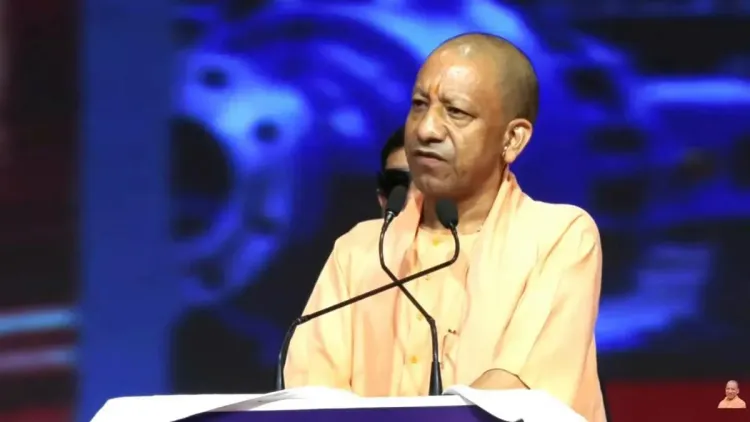
Uttar Pradesh CM Yogi Adityanath declared on September 25, 2026 that UP is positioning itself as the most accessible route for international companies to enter India and export globally, leveraging Prime Minister Modi's Free Trade Agreements.
Key Takeaways
CM Yogi Adityanath posted on September 25, 2026 pitching Uttar Pradesh as the primary FTA-linked export and investment gateway for global companies entering India.
He credited Prime Minister Narendra Modi with securing Free Trade Agreements with major world economies as the foundation of this opportunity.
India signed the India-UAE Comprehensive Economic Partnership Agreement and the India-Australia Economic Cooperation and Trade Agreement in 2022 , creating preferential tariff access on key goods.
India pivoted toward bilateral FTAs after stepping back from the RCEP agreement in 2019 to secure better terms for Indian exporters.
UP has been building industrial infrastructure — expressways, logistics hubs, and manufacturing corridors — to back its trade-gateway claim with physical capacity.
Export-utilisation rates and new FDI announcements in UP will be the measurable test of the state's ambition.
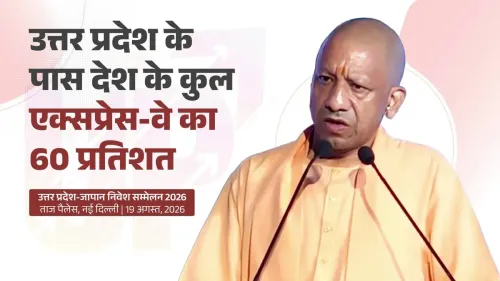
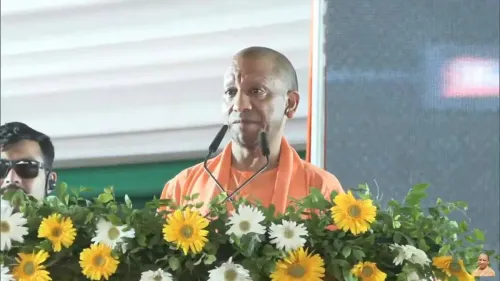
Every time India inks a Free Trade Agreement, a race begins — which state moves fastest to convert that deal into factories, shipments, and jobs? On Friday, September 25, 2026, Uttar Pradesh Chief Minister Yogi Adityanath made his answer emphatic: Uttar Pradesh is ready to be that state.
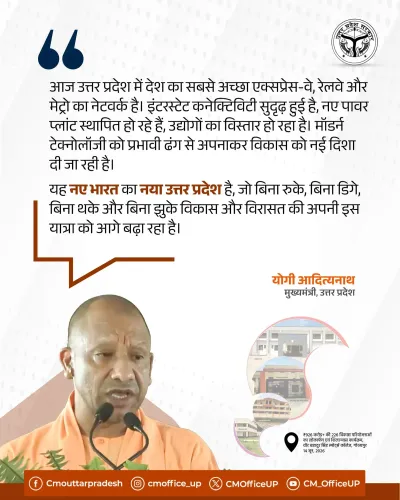
Posting on X, CM Yogi credited the trade diplomacy of Prime Minister Narendra Modi for opening doors globally, then turned immediately to execution: 'Uttar Pradesh un samjhauton ka labh uthakar antarrashtriya companies ko Bharat mein amantr it karne aur vaishvik niryaat karne ka sabse sulabh raasta de raha hai' — 'Uttar Pradesh is offering the most accessible route to invite international companies to India and to export globally by leveraging those agreements.'
India's FTA push — what's on the table
Under Prime Minister Modi, India has signed a series of bilateral trade compacts after stepping away from the RCEP bloc in 2019. The India-UAE Comprehensive Economic Partnership Agreement and the India-Australia Economic Cooperation and Trade Agreement, both concluded in 2022, slashed tariffs on key goods and services, giving Indian exporters preferential access to two of the world's most active trade corridors. Additional agreements have followed since, further expanding that market-access map.
The strategic logic is straightforward: bilateral deals move faster than mega-regional pacts, and each new agreement creates an immediate window for competitive manufacturing to pour through — if a state is ready.
Why UP is making this pitch right now
Uttar Pradesh — India's most populous state — has spent the last several years rebranding itself from a law-and-order story into an industrial one. The state has held investment summits attracting pledges across sectors from electronics and defence manufacturing to food processing and textiles. The infrastructure groundwork — expressways, logistics hubs, and industrial corridors — is the physical argument behind CM Yogi's political one.
The FTA framing adds a sharper edge to that pitch. It tells a multinational not just 'come to UP because it is big' but 'come to UP because from here, your goods can reach Dubai, Sydney, and beyond with preferential tariff treatment already locked in.' That is a qualitatively different conversation than state governments have historically been able to have with global supply-chain decision-makers.
The export-utilisation gap UP is aiming to close
The harder question is utilisation. India has a documented history of signing trade agreements whose benefits go underused by domestic industry — exporters either unaware of rules-of-origin requirements or unprepared to meet quality standards of partner markets. CM Yogi's post implicitly acknowledges this gap and positions UP's state machinery as the bridge between a signed deal and actual trade flows.
Quarterly export data from UP and the pace of new foreign-direct-investment announcements will be the real scorecard. The Chief Minister has set the ambition publicly; the numbers will follow.
Point of View
States are now competing to be the institutional front-door for that trade architecture. By framing UP not merely as a large market but as a logistics and regulatory bridge between foreign companies and preferential trade routes, the Chief Minister is making a supply-chain argument — one that resonates with boardrooms in ways that older slogans about market size alone do not. The pitch also doubles as a political one, tying UP's governance record tightly to the Centre's economic diplomacy, reinforcing the BJP's combined federal story ahead of any coming election cycle. The real test, however, lies in closing the utilisation gap that has historically plagued India's FTA performance.
NationPress
25 Sept 2026
Frequently Asked Questions
What did CM Yogi Adityanath say about Free Trade Agreements?
CM Yogi stated that Uttar Pradesh is providing the most accessible route for international companies to enter India and export globally by leveraging the Free Trade Agreements signed under Prime Minister Modi's leadership.
Which Free Trade Agreements has India signed under PM Modi?
Key agreements include the India-UAE Comprehensive Economic Partnership Agreement and the India-Australia Economic Cooperation and Trade Agreement, both signed in 2022, among others negotiated since 2014.
How is Uttar Pradesh positioning itself as an export hub?
UP has invested in expressways, industrial corridors, and logistics infrastructure, and holds investment summits to attract FDI — positioning the state as the physical and policy bridge between India's trade deals and actual export flows.
Why did India move toward bilateral FTAs instead of RCEP?
India stepped back from the RCEP regional trade bloc in 2019, citing concerns over tariff asymmetry and import surges, and pivoted to bilateral agreements that offer more tailored market access on India's terms.
What should we watch to see if UP's FTA gateway pitch succeeds?
Track quarterly export data from Uttar Pradesh and the volume of new foreign direct investment commitments in the state — these are the clearest indicators of whether FTA benefits are actually being utilised.