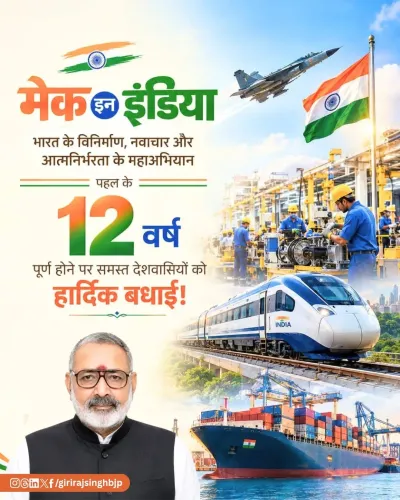
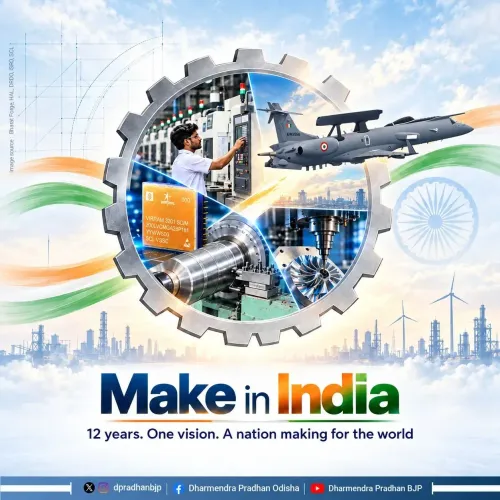
Dr. Jitendra Singh marks 12 years of Make in India
Synopsis
Union Minister Dr. Jitendra Singh marked the 12th anniversary of Make in India, highlighting PLI-led manufacturing growth, FDI inflows, and industrial corridor development as milestones on India's path to becoming a global manufacturing hub under the Viksit Bharat 2047 vision.
Key Takeaways
Make in India turned 12 years old on 25 September 2026 , having been launched by PM Modi on the same date in 2014 .
Jitendra Singh highlighted PLI schemes (introduced from 2020 ), industrial corridors, and FDI growth as key pillars of the initiative.
The minister framed the initiative's next phase as building 'for India and for the world' — export-competitive manufacturing, not just import substitution.
Make in India is explicitly linked to Viksit Bharat 2047 , the government's target to achieve developed-economy status by India's independence centenary.
Key metrics to watch include PLI disbursement data, fresh FDI announcements, and industrial corridor project milestones in upcoming economic surveys.
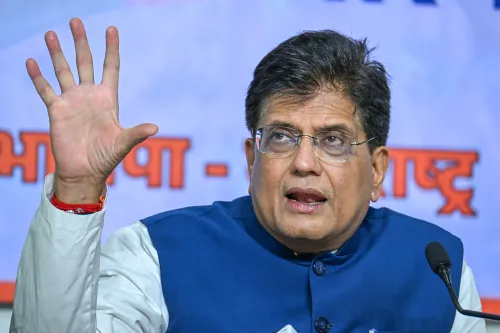
Twelve years after Prime Minister Narendra Modi launched Make in India on 25 September 2014, the initiative that once read as an ambitious slogan has accumulated a concrete policy infrastructure — and Union Science and Technology Minister Dr. Jitendra Singh marked the anniversary on Friday by situating it squarely within India's longer march toward becoming a global manufacturing power.
From a 2014 slogan to a layered policy architecture
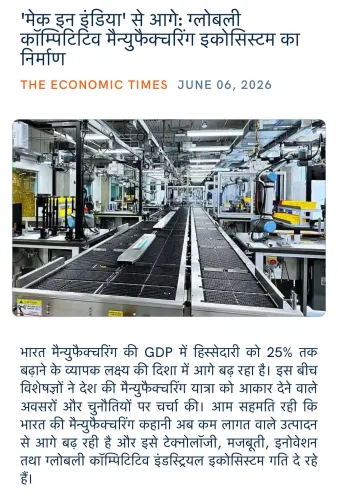
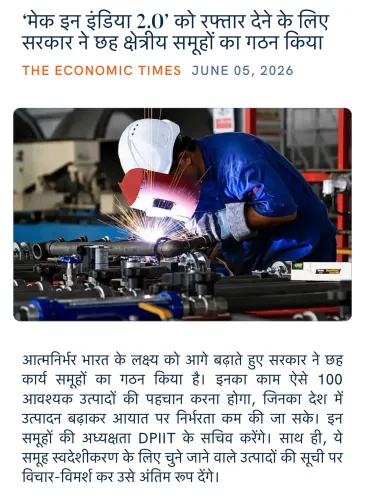
When Make in India debuted, its lion-gear logo was everywhere but its mechanism was still being built. What followed over the next decade-plus was a layered stack of policy instruments. The Production Linked Incentive (PLI) schemes, rolled out from 2020 onward, became the sharpest financial tool in the kit — offering direct cash incentives to manufacturers in sectors ranging from electronics and semiconductors to pharmaceuticals and textiles, effectively making domestic production more competitive against established global hubs.
Alongside PLI, the government pushed development of industrial corridors — dedicated freight and manufacturing zones designed to compress logistics costs and cluster industrial activity. Together, these instruments represent the shift Dr. Singh points to: from aspiration to operational architecture.
What Dr. Singh's post actually argues
Writing on X, Dr. Singh framed the anniversary not as a ceremonial milestone but as evidence of directional momentum. 'From record FDI and PLI-led manufacturing to new industrial corridors and opportunities for our entrepreneurs, the momentum is clear,' he posted, before landing on the sentence that carries the most political weight: 'It has strengthened the confidence that India can build for India and for the world.'
That framing — building for the world, not merely for domestic consumption — signals the ambition baked into the initiative's next phase. The goal is not import substitution alone but export-competitive, globally integrated manufacturing. Dr. Singh explicitly tied this to #ViksitBharat2047, the government's overarching vision to have India join the ranks of developed economies by the centenary of independence.
The road from PLI to Viksit Bharat 2047
The Viksit Bharat 2047 framework provides Make in India with its longest runway yet. Raising the manufacturing sector's share of GDP — a long-standing structural goal — sits at the centre of that vision, as does deeper integration into global supply chains at a moment when geopolitical realignments are prompting multinationals to diversify away from single-country dependencies.
For entrepreneurs and investors watching the programme, the metrics that will matter most in coming months are PLI disbursement outcomes in high-value sectors, fresh FDI commitments, and progress reports on corridor infrastructure. Those numbers will test whether the confidence Dr. Singh celebrates translates into durable industrial capacity.
Twelve years in, Make in India has graduated from a branding exercise to a policy ecosystem. The next twelve will determine whether that ecosystem can actually deliver the manufacturing share of GDP — and the global supply-chain standing — that Viksit Bharat 2047 demands.
Point of View
The 2020-era PLI rollout, and the Viksit Bharat 2047 horizon) into a single momentum story. The framing is significant: by anchoring the milestone to a future vision rather than past metrics, the government signals that the initiative is still in its build phase, not a finished legacy project. For the BJP, twelve-year anniversaries carry electoral and symbolic weight, and manufacturing self-reliance has become a core pillar of the party's economic identity since the pandemic accelerated the global supply-chain diversification conversation. The real analytical test, however, lies ahead: whether PLI disbursements and corridor completions can deliver the manufacturing-GDP uplift that the vision demands.
NationPress
25 Sept 2026
Frequently Asked Questions
When was Make in India launched?
Make in India was launched by Prime Minister Narendra Modi on 25 September 2014 to position India as a global manufacturing destination and attract domestic and foreign investment.
What is the PLI scheme and how does it relate to Make in India?
The Production Linked Incentive (PLI) scheme, rolled out from 2020 , provides direct financial incentives to manufacturers in sectors such as electronics, pharmaceuticals, and textiles. It is one of the primary instruments delivering on Make in India's manufacturing growth objectives.
What is Viksit Bharat 2047?
Viksit Bharat 2047 is the Indian government's vision to transform India into a developed economy by 2047 — the centenary of independence. Make in India's manufacturing push is a central component of this long-term framework.
What are industrial corridors in the context of Make in India?
Industrial corridors are dedicated freight and manufacturing zones developed under Make in India to reduce logistics costs, cluster industrial activity, and attract investment — functioning as physical infrastructure to complement financial incentives like PLI.
What should investors and manufacturers watch for from Make in India in 2026?
Key indicators include PLI disbursement outcomes in high-value sectors, new FDI announcements, and progress updates on industrial corridor projects — data typically surfaced through economic surveys and budget documents.