Kishan Reddy Marks 12 Years of Make in India
Synopsis
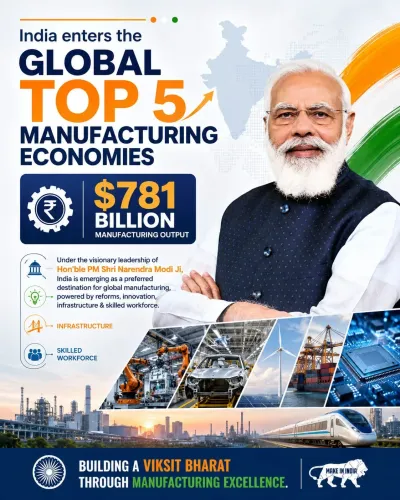
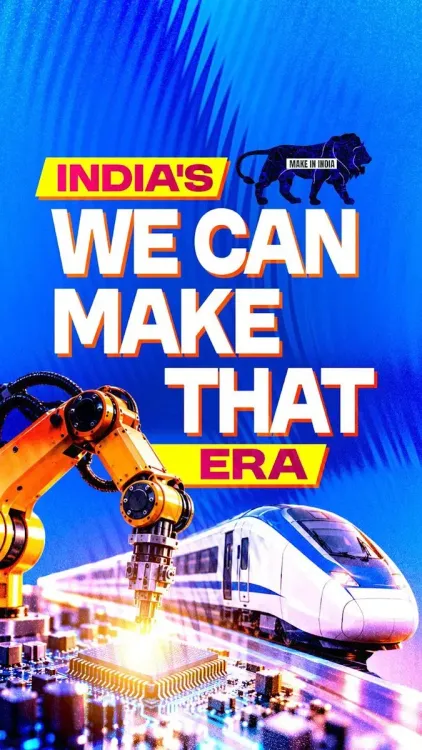
Union Coal and Mines Minister G. Kishan Reddy marked 12 years of Make in India on 25 September 2026, crediting PM Modi's leadership for transforming India into a global manufacturing force, building on the initiative's 2014 launch and subsequent PLI scheme architecture.
Key Takeaways
Make in India completed 12 years on 25 September 2026 , having been launched by PM Narendra Modi on the same date in 2014 .
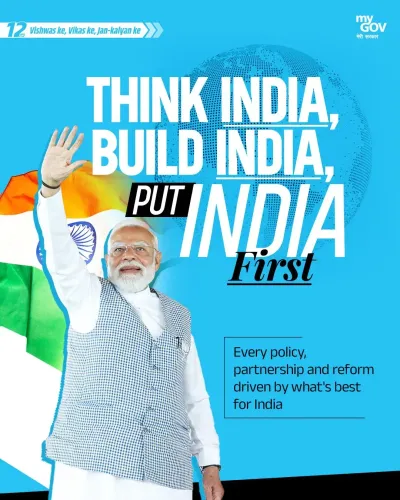
Kishan Reddy described India as 'building, innovating and scaling like never before — making not just for India, but for the world.' The initiative originally targeted 25 sectors to attract FDI and boost domestic manufacturing.
Production Linked Incentive (PLI) schemes rolled out from 2020 onward deepened the Make in India framework with sector-specific financial incentives.
Reddy holds a dual role as Union Coal and Mines Minister and BJP Telangana state president , giving his messaging both national and regional resonance.
Fresh FDI inflow data and manufacturing GDP contribution figures for 2026 are expected in upcoming official releases.
Twelve years after Prime Minister Narendra Modi set a manufacturing revolution in motion, Union Coal and Mines Minister G. Kishan Reddy marked the anniversary of Make in India on Friday, 25 September 2026 — framing the milestone not as a lookback, but as proof of a country still accelerating.
From a 2014 launch to a 12-year manufacturing arc
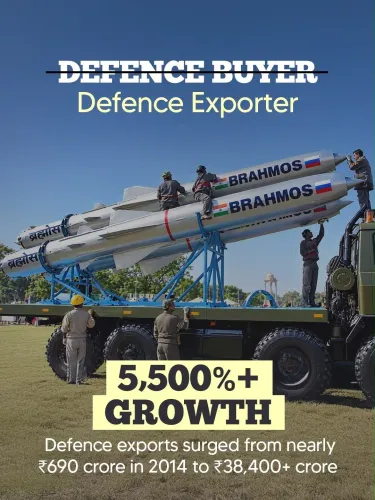
Make in India was unveiled by PM Modi on 25 September 2014, with a single audacious pitch: transform India from a largely import-dependent economy into a globally competitive manufacturing destination. The programme targeted 25 sectors — from defence and automobiles to electronics and textiles — and was built around three pillars: attracting foreign direct investment, dismantling regulatory friction, and building world-class infrastructure.
Reddy's post captured that spirit directly: 'India is building, innovating and scaling like never before — making not just for India, but for the world.' The line is deliberate. The shift from 'made for India' to 'made for the world' has been the defining rhetorical — and, the government argues, economic — evolution of the past decade.
PLI schemes and the manufacturing GDP push
Make in India did not stand alone for long. From 2020 onward, the government layered in Production Linked Incentive (PLI) schemes across more than a dozen sectors, offering direct output-linked cash incentives to manufacturers who scaled. The PLI architecture effectively deepened the original Make in India framework, giving it teeth with sector-specific financial architecture — from semiconductors to mobile phones to pharmaceuticals.
Indian manufacturers, MSMEs, and FDI investors remain the core constituency of the programme. The government has consistently pointed to rising FDI inflows and a growing share of manufactured goods in India's export basket as evidence of structural progress. Specific figures for 2026 are expected in upcoming data releases.
Why the anniversary message carries political weight in Telangana
As BJP Telangana state president, Reddy's amplification of the Make in India anniversary is also a regional signal. Telangana has positioned itself as a competitive destination for manufacturing investment — particularly in pharmaceuticals, defence, and electronics — and the BJP's association with the initiative's outcomes is a live electoral argument in the state. Messaging from a senior Union Minister who simultaneously holds the state party's top post rarely lands in only one inbox.
Coal and mines, Reddy's ministerial portfolio, sit at the foundation of India's industrial supply chain — the raw material end of the very manufacturing story Make in India is built on. That context is rarely accidental.
Point of View
But the 12-year mark carries more policy weight than a routine milestone — it coincides with a period when PLI-driven manufacturing investment is being tested against global supply-chain realignments and competition from Southeast Asia. Reddy's framing of India as manufacturing 'for the world' signals that the government is doubling down on export-led industrial growth rather than treating domestic demand alone as the finish line. His dual role as state BJP president in Telangana adds a tactical layer: the party needs to own the narrative of industrial progress in a state where it remains in opposition. The real measure of this anniversary will come when updated FDI and manufacturing-GDP data land — the rhetoric and the numbers will either align or create a gap the opposition will exploit.
NationPress
25 Sept 2026
Frequently Asked Questions
When was Make in India launched?
Make in India was launched by Prime Minister Narendra Modi on 25 September 2014, completing 12 years in 2026.
What is Make in India's main goal?
Make in India aims to transform India into a global manufacturing hub by attracting foreign direct investment, easing regulatory barriers, and developing industrial infrastructure across 25 key sectors.
How are PLI schemes related to Make in India?
Production Linked Incentive (PLI) schemes, introduced from 2020 onward, extended the Make in India framework by offering direct output-linked financial incentives to manufacturers scaling up in sectors such as electronics, pharmaceuticals, and defence.
What is G. Kishan Reddy's role in government?
G. Kishan Reddy is the Union Minister of Coal and Mines in the Modi government and also serves as the BJP's Telangana state president.
Who benefits from Make in India?
The programme's primary beneficiaries include Indian manufacturers, MSMEs, and foreign direct investors, with downstream benefits intended for employment and industrial infrastructure across the country.