Goyal champions India's multi-alignment foreign policy vision
Synopsis
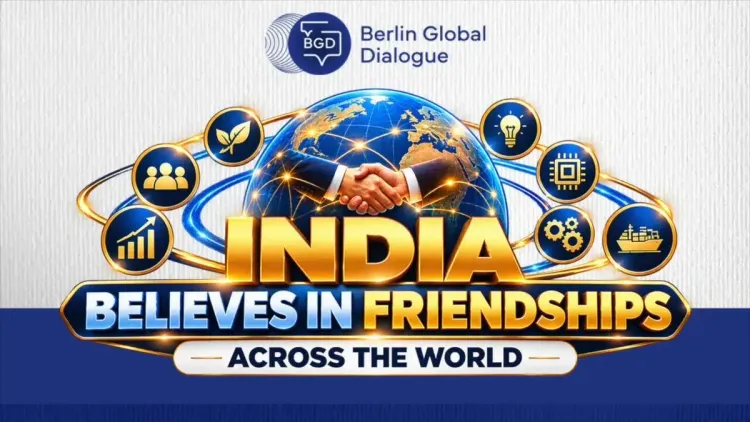
Commerce and Industry Minister Piyush Goyal invoked India's multi-alignment foreign policy on 22 October 2026, citing partnerships with the US, Europe, Australia, New Zealand, Canada, and Mexico as proof that India builds friendships across geopolitical divides.
Key Takeaways
Commerce Minister Piyush Goyal posted on 22 October 2026 affirming India's commitment to friendships across the world.
Countries named span three continents: United States , Europe , Australia , New Zealand , Canada , and Mexico .
The statement reflects India's longstanding doctrine of strategic autonomy — engaging all blocs without exclusive alliances.
India's G20 presidency in 2023 popularised the same philosophy under the banner of Vasudhaiva Kutumbakam .
Australia is a Quad partner and FTA signatory; Canada and Mexico represent diaspora and emerging trade frontiers respectively.
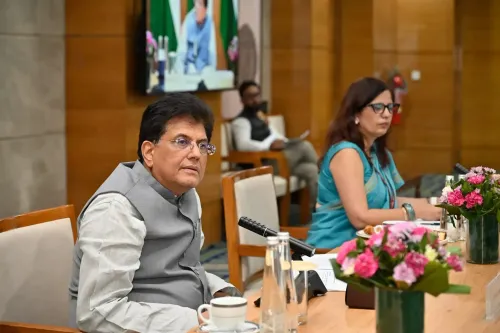
India's friendships know no borders — and Union Commerce and Industry Minister Piyush Goyal made that point with deliberate sweep on Thursday, 22 October 2026, listing partners from Washington to Wellington in a single breath to underscore New Delhi's commitment to ties that cut across geopolitical fault lines.
Goyal's post named six countries across three continents — the United States, Europe, Australia, New Zealand, Canada, and Mexico — framing India's outreach not as a matter of strategic necessity but as genuine belief. 'India believes in friendships across the world,' he wrote, a formulation that echoes the doctrine of strategic autonomy that has defined New Delhi's diplomatic posture for decades.
Vasudhaiva Kutumbakam in practice
The sentiment Goyal articulated sits squarely within a foreign-policy tradition India amplified loudly during its G20 presidency in 2023, when the Sanskrit phrase Vasudhaiva Kutumbakam — 'the world is one family' — became the summit's guiding theme. That presidency was a deliberate signal: India would not be boxed into any single alliance architecture, whether the Western-led liberal order or emerging alternative blocs.
The countries Goyal named are not chosen at random. The United States anchors India's deepest defence and technology partnerships. Australia is a Quad partner and a co-signatory of the Economic Cooperation and Trade Agreement of 2022. Canada, despite periodic diplomatic turbulence, remains tied to India through a vast diaspora and significant bilateral trade. Mexico represents the expanding Latin American frontier for Indian commerce. New Zealand has explored an FTA framework with India and maintains growing people-to-people links.
Why multi-alignment matters right now
The message lands at a moment when global trade architecture is being redrawn — tariff regimes reconfigured, supply chains re-routed, and every major economy reconsidering its dependencies. For India, the ability to simultaneously engage partners across the Indo-Pacific, the Transatlantic, and the Americas is not diplomatic politeness — it is economic strategy made explicit.
As Leader of the House in the Rajya Sabha and the minister who steers India's trade negotiations, Goyal's voice on foreign economic partnerships carries institutional weight. A post like this, however brief, signals to negotiating counterparts on multiple continents that New Delhi is open, engaged, and consistent in its worldview.
The world may be fragmenting into blocs. India, Goyal's message suggests, has chosen to be everyone's partner instead.
Point of View
The minister signals strategic consistency rather than opportunism. It also reinforces his own institutional role: as the minister who conducts trade negotiations, affirming goodwill publicly gives negotiating counterparts a clear political signal. The timing — amid ongoing bilateral trade discussions with several of the listed nations — suggests this is less a philosophical musing and more a calibrated diplomatic message dressed in friendly language.
NationPress
22 Oct 2026
Frequently Asked Questions
What is India's multi-alignment foreign policy?
India's multi-alignment policy means New Delhi builds strategic and economic ties with countries across geopolitical lines — including Western allies, Indo-Pacific partners, and emerging economies — without joining any exclusive bloc or formal alliance.
Why did Piyush Goyal mention the US, Australia, Canada, Mexico, and New Zealand together?
The countries collectively represent India's key trade and diplomatic partners across North America, Oceania, and Europe, illustrating the breadth of India's bilateral engagement and its strategy of diversifying economic and security relationships.
What is India's trade relationship with Australia?
India and Australia signed the Economic Cooperation and Trade Agreement in 2022 and are also partners in the Quad grouping, making Australia one of India's most significant Indo-Pacific allies.
What is Vasudhaiva Kutumbakam and how does it relate to Indian foreign policy?
Vasudhaiva Kutumbakam is a Sanskrit phrase meaning 'the world is one family.' India adopted it as the theme for its G20 presidency in 2023 , making it the philosophical cornerstone of its inclusive, multi-directional foreign policy approach.
What is Piyush Goyal's role in India's foreign trade?
As Union Commerce and Industry Minister , Piyush Goyal leads India's trade negotiations, steers FTA discussions, and represents India's commercial interests in bilateral and multilateral forums.