Goyal: India, New Zealand Form Joint Terror Group, Back UN Reform
Synopsis
Union Minister Piyush Goyal on 11 July 2026 announced the formation of a bilateral joint working group on terrorism between India and New Zealand, and reaffirmed both nations' shared call for reform of the UN and other global multilateral institutions.
Key Takeaways
India and New Zealand have constituted a joint working group on counter-terrorism to coordinate policy and move forward together on the issue.
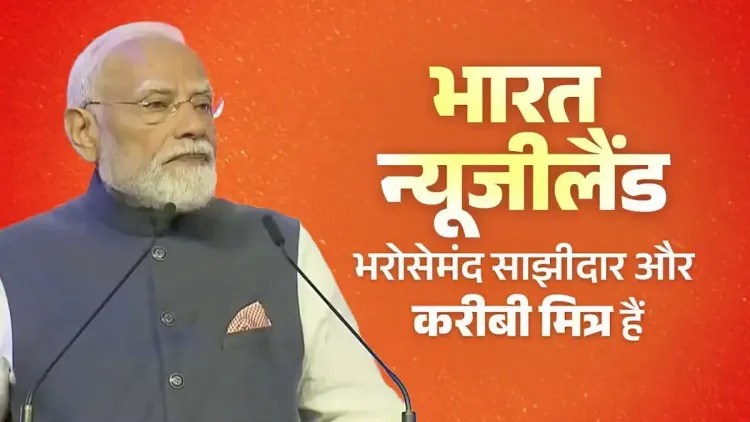
Minister Piyush Goyal described both nations as 'trusted partners and close friends' on the global stage.
Both countries agree that UN reform and reform of other global institutions is necessary to address contemporary challenges.
The announcement continues India's established pattern of pairing calls for UN Security Council reform with practical bilateral security mechanisms.
The joint working group will involve the foreign ministries and counter-terrorism agencies of both countries.
The development could set the stage for a broader India-New Zealand bilateral summit or joint declaration.
Union Commerce and Industry Minister Piyush Goyal on Saturday, 11 July 2026 highlighted the deepening strategic partnership between India and New Zealand, announcing the formation of a bilateral joint working group on counter-terrorism and reaffirming both nations' shared push for reform of global multilateral institutions, including the United Nations.
Context
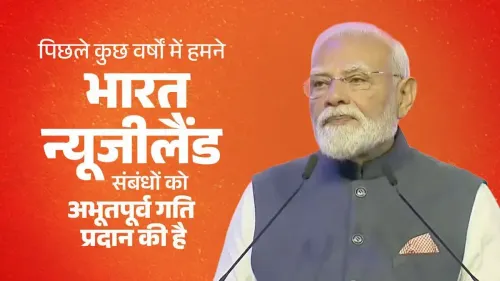
Posting in Hindi on X, Minister Goyal stated: 'वैश्विक मंच पर भी भारत और न्यूजीलैंड भरोसेमंद साझीदार और करीबी मित्र हैं' — 'On the global stage too, India and New Zealand are trusted partners and close friends.' He added that both sides believe reforms in the UN and other global institutions are necessary to confront the challenges of the present era.
Goyal further announced: 'आतंकवाद के विषय पर कंधे से कंधा मिलाकर आगे बढ़ने के लिए आज हमने joint-working group का गठन किया है' — 'To move forward shoulder to shoulder on the issue of terrorism, we have today constituted a joint working group.' The post underscores a substantive bilateral engagement beyond trade and commerce, the minister's primary portfolio.
Policy Backdrop
India has been a vocal advocate for UN Security Council reform and expanded permanent membership since the 1990s, consistently raising the demand at successive sessions of the UN General Assembly. New Delhi argues that post-1945 multilateral architecture no longer reflects contemporary geopolitical realities.
On counter-terrorism, India has established joint working groups with multiple partner countries following the 2008 Mumbai attacks, creating structured bilateral channels for intelligence sharing and coordinated policy responses. The India-New Zealand bilateral relationship has included periodic foreign office consultations and defence dialogues covering regional security since the 2010s.
Stakeholders and Impact
The newly constituted Joint Working Group on Terrorism is expected to involve the foreign ministries and counter-terrorism agencies of both countries. For New Zealand, the mechanism deepens its Indo-Pacific security engagement at a time when like-minded democracies are actively coordinating on non-traditional threats.
For India, the development fits a broader pattern of pairing calls for institutional reform with practical bilateral security architecture. The move signals that New Delhi views Wellington as a meaningful partner in its wider campaign to reshape post-war multilateral institutions while building ground-level security cooperation across the Indo-Pacific.
What's Next
Attention will now turn to the operational details, composition, and meeting schedule of the new joint working group, which have not yet been made public. Both governments are also expected to align their positions ahead of the next UN General Assembly session, where India's push for Security Council reform and counter-terrorism resolutions will again be central agenda items.
The announcement adds momentum to the India-New Zealand relationship and could pave the way for a broader bilateral summit or joint declaration in the months ahead, consolidating the security dimension alongside existing ties in trade and education.
Point of View
Using each partnership to reinforce the broader multilateral reform agenda. Goyal's involvement — a commerce minister announcing a security mechanism — signals that New Delhi is deploying its full cabinet to project foreign policy depth. The pairing of UN reform rhetoric with a concrete counter-terrorism structure is a well-worn but effective Indian diplomatic formula, lending credibility to both objectives simultaneously. The New Zealand partnership, while modest in scale, adds another node to India's expanding network of like-minded security partners in the region.
NationPress
10 Oct 2026
Frequently Asked Questions
What is the India-New Zealand joint working group on terrorism?
It is a bilateral mechanism announced on 11 July 2026 by Minister Piyush Goyal to coordinate counter-terrorism policy and intelligence cooperation between India and New Zealand .
Why is India pushing for UN reform?
India has advocated for UN Security Council reform since the 1990s , arguing that the post- 1945 institutional structure no longer reflects current global realities and that India deserves permanent membership.
What is Piyush Goyal's role in India's foreign policy?
Piyush Goyal is primarily the Union Minister of Commerce and Industry and Leader of the House in the Rajya Sabha, but senior cabinet ministers routinely participate in bilateral diplomatic engagements alongside the Ministry of External Affairs.
Has India formed similar counter-terrorism groups with other countries?
Yes. India has established joint working groups on counter-terrorism with multiple partner nations since the 2008 Mumbai attacks , creating structured channels for intelligence sharing and coordinated policy responses.
What are the next steps after the India-New Zealand joint working group announcement?
The operational details and meeting schedule of the group are yet to be disclosed. Both countries are expected to align their positions at the next UN General Assembly session and may work toward a broader bilateral summit.