Jaishankar: Terrorism now invites consequences, not a return to talks
Synopsis
India's foreign policy doctrine on terrorism has been put on record: EAM Jaishankar declared at the NDTV World Summit 2026 that any future terror act will invite consequences — not a pause-and-resume-talks cycle. The 26/11 memorial visit with US Secretary of State Rubio wasn't just optics; it was a calibrated message to the world about accountability, resolve, and the end of strategic patience.
Key Takeaways
EAM S Jaishankar declared at the NDTV World Summit 2026 on 22 October 2026 that terrorism will now invite consequences, not a return to dialogue.
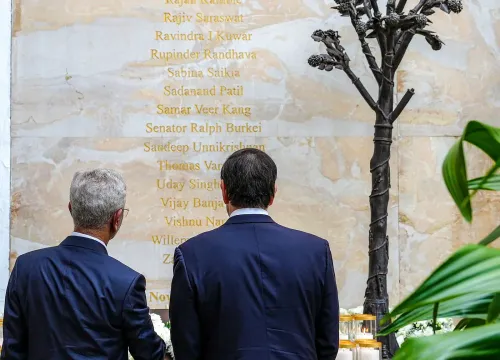
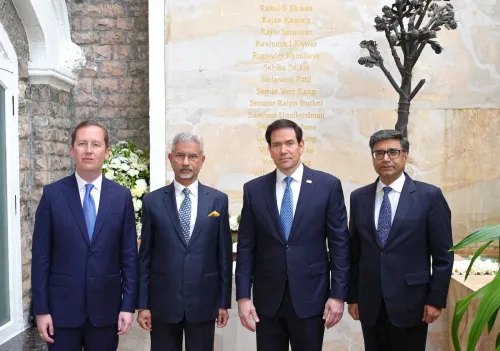
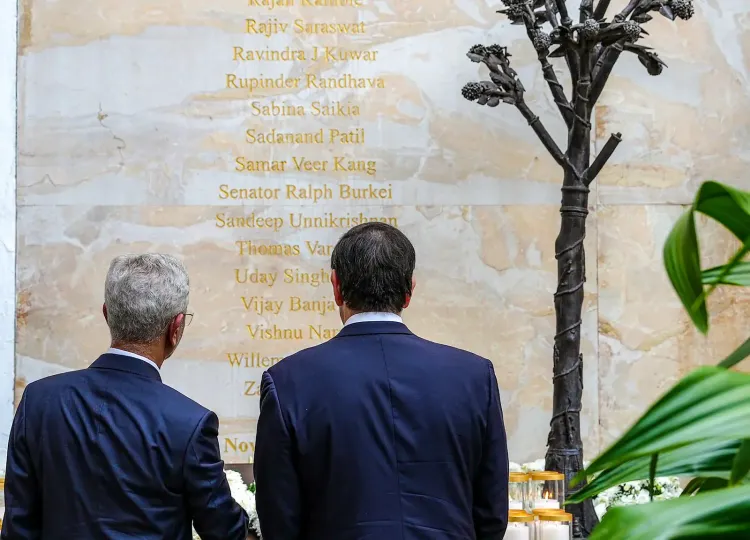
Jaishankar took US Secretary of State Marco Rubio to the 26/11 memorial at Mumbai's Taj Mahal Palace Hotel on Tuesday as a deliberate signal of resolve.
The 2008 Mumbai terror attacks killed 166 people , including 6 Americans , and were carried out by Pakistani terrorists.
Jaishankar contrasted India's post-2008 restraint with its current assertive posture, referencing the response to Pahalgam and Operation Sindoor .
On the reported Saudi Arabia-Turkey-Pakistan defence pact, Jaishankar said 'time will tell' and that countries would be judged by their actions.
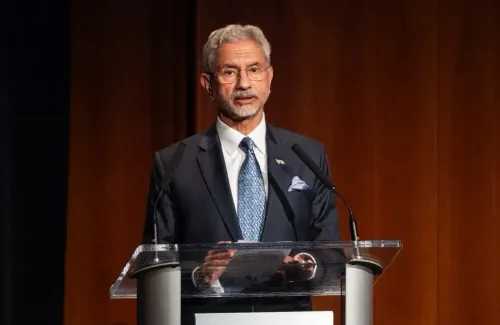
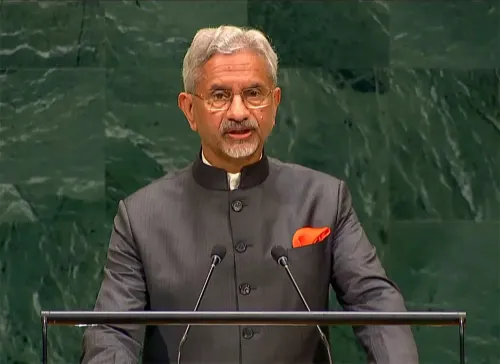
External Affairs Minister S Jaishankar on Thursday, 22 October 2026 delivered a sharp warning that India's approach to terrorism has fundamentally shifted — any act of terror will now invite direct consequences, not a temporary pause followed by a resumption of dialogue. Speaking at the NDTV World Summit 2026 in New Delhi, Jaishankar underscored that a firm response commands global respect, while inaction invites exploitation.
The 26/11 Memorial Visit and Its Message
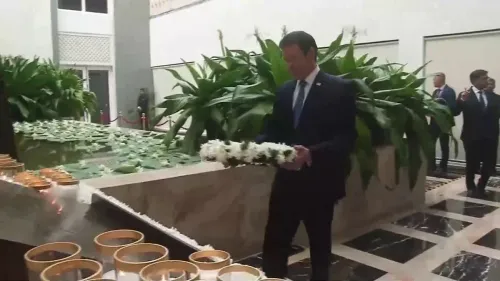
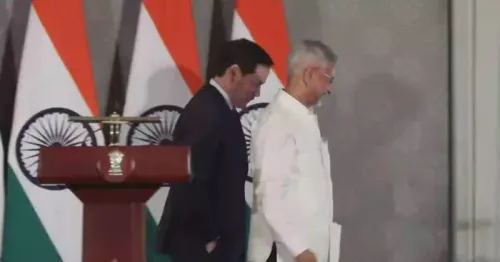
Jaishankar pointed to his decision to take US Secretary of State Marco Rubio to the 26/11 memorial at Mumbai's Taj Mahal Palace Hotel as a deliberate and symbolic act. 'To me, 26/11, where I took Secretary Rubio, should serve as a reminder of the enormity of what is being done to us and the necessity for us to respond. And believe me, when you respond, the world will take note of it. When you don't respond, the world will play games,' Jaishankar said.
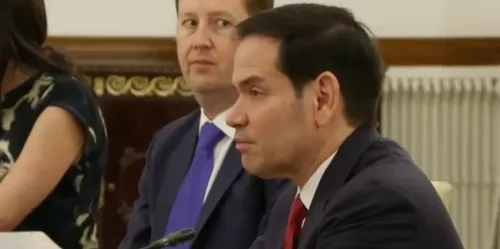
The visit took place on Tuesday, when Rubio laid a wreath honouring the victims of the 2008 Mumbai terror attacks — a strike carried out by Pakistani terrorists that killed 166 people, including six Americans. Rubio subsequently posted on X: 'At the Taj Mahal Palace Hotel, I laid a wreath honoring the victims of the horrific November 26, 2008 terrorist attacks, including six American citizens. We remember those lost, honour the courage of those who responded, and reaffirm the enduring US-India partnership and our shared commitment to combating terrorism.'
A Decisive Shift from the Old Pattern
The EAM drew a pointed contrast between India's restrained posture after the 2008 Mumbai attacks and the more assertive stance it has adopted in recent years, citing the response to the Pahalgam attack as a turning point. He described the earlier approach as a recognisable but now-discarded pattern: 'If terrorism goes on, it will not be business as usual. It is not you'll take a break and then say, okay, now it's a long time, let me get back to talking to them again, which is what was the pattern,' he said.
This marks a codification, at the level of ministerial statement, of the doctrine that emerged from Operation Sindoor — that terror attacks will be met with calibrated military or diplomatic consequences rather than absorbed into a cycle of normalised hostility and eventual resumption of talks.
On the Saudi-Turkey-Pakistan Defence Pact
Asked whether the reported defence alignment between Saudi Arabia, Turkey, and Pakistan could affect the calculus in any future Operation Sindoor-type scenario, Jaishankar said 'time will tell.' He added that countries — including India — would ultimately be judged by their actions and that the world would be watching closely to see which stated positions translate into reality.
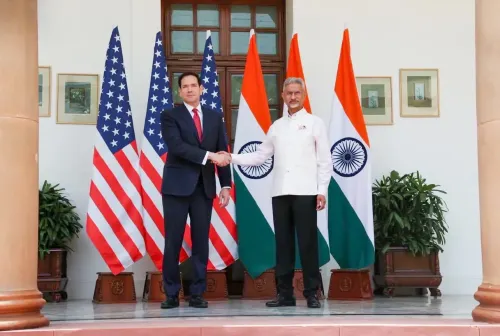
This comes amid a period of heightened diplomatic signalling between New Delhi and Washington, with the Rubio visit reinforcing the counter-terrorism dimension of the US-India strategic partnership. Notably, the choice of the 26/11 memorial as a stop on a bilateral itinerary is rarely incidental — it sends a clear message about shared threat perceptions and shared expectations of accountability.
What This Signals Going Forward
Jaishankar's remarks at the NDTV World Summit are likely to be read closely in both Islamabad and global diplomatic capitals. By publicly articulating that the old pause-and-talk formula is dead, India is setting an expectation that any future terror event with cross-border links will trigger a response rather than a peace process. The ministerial statement, made at a high-profile multilateral forum, carries the weight of official doctrine rather than political rhetoric.
How regional actors and India's Western partners respond to this recalibration will shape the diplomatic environment in South Asia in the months ahead.
Point of View
India is raising the floor for what it will accept as a response to cross-border terrorism, and daring regional actors to test that red line. The 26/11 memorial visit with Rubio was choreographed precisely to internationalise that expectation. What mainstream coverage underplays is the strategic weight of a serving EAM framing this not as policy preference but as settled doctrine — that shift in register matters. The real question is whether India's partners, particularly the US and Gulf states, are prepared to hold that line when the next incident triggers the consequences Jaishankar has promised.
NationPress
22 Oct 2026
Frequently Asked Questions
What did EAM Jaishankar say about India's response to terrorism at NDTV World Summit 2026?
Jaishankar declared that terrorism will now invite direct consequences and will no longer result in a temporary pause followed by resumed talks with the perpetrators. He described the earlier pattern — taking a break and then returning to dialogue — as definitively over.
Why did Jaishankar take US Secretary of State Rubio to the 26/11 memorial in Mumbai?
The visit to the 26/11 memorial at Mumbai's Taj Mahal Palace Hotel was a deliberate act of diplomatic signalling, intended to remind the world of the scale of the 2008 attacks and to reinforce the shared US-India commitment to counter-terrorism. Jaishankar said the visit should serve as 'a reminder of the enormity of what is being done to us and the necessity for us to respond.'
How many people were killed in the 2008 Mumbai terror attacks?
The 2008 Mumbai terror attacks, carried out by Pakistani terrorists, killed 166 people, including 6 American citizens. The attacks targeted multiple locations in the city, with the Taj Mahal Palace Hotel among the most prominent sites.
What did Jaishankar say about the Saudi Arabia-Turkey-Pakistan defence pact?
Jaishankar said 'time will tell' regarding the potential impact of the reported Saudi Arabia-Turkey-Pakistan defence alignment on any future Operation Sindoor-type scenario. He added that all countries, including India, would ultimately be judged by their actions, and the world would be watching which positions become reality.
What is Operation Sindoor, referenced by Jaishankar?
Operation Sindoor was India's military response to the Pahalgam terror attack, representing the assertive posture India has adopted in recent years in contrast to its earlier restrained approach after incidents such as the 2008 Mumbai attacks. Jaishankar cited it as the model for how India now responds to cross-border terrorism.