Jaishankar urges zero tolerance on terror, hails Rana extradition at US event in Mumbai
Synopsis
At a US independence anniversary event in Mumbai, EAM Jaishankar explicitly linked India's counter-terror expectations to its partnership with Washington — welcoming the Tahawwur Rana extradition and Rubio's 26/11 wreath-laying as concrete signals. The setting was deliberate: Mumbai, the city that bore the 2008 attacks, hosting a celebration of democratic solidarity.
Key Takeaways
EAM S Jaishankar on 20 October called on India's partners to show zero tolerance toward terrorism at the Freedom 250 reception in Mumbai .
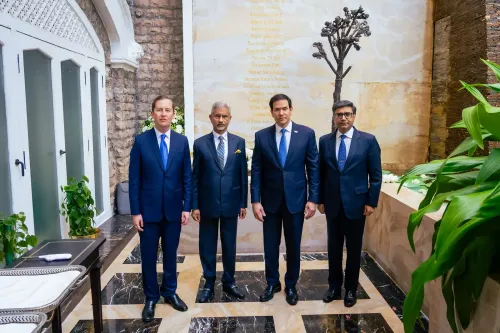
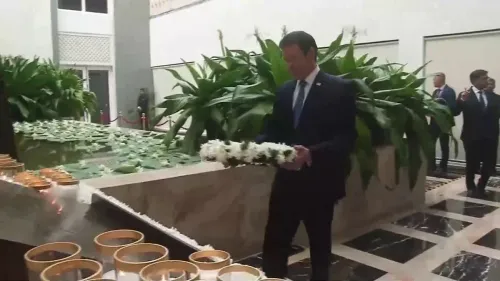
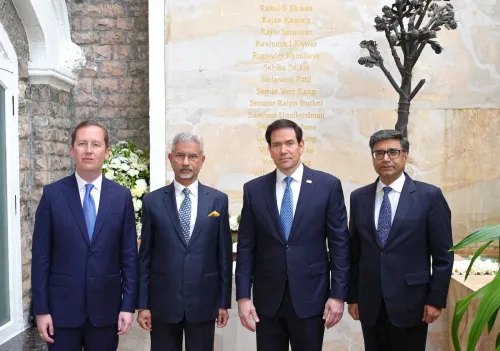
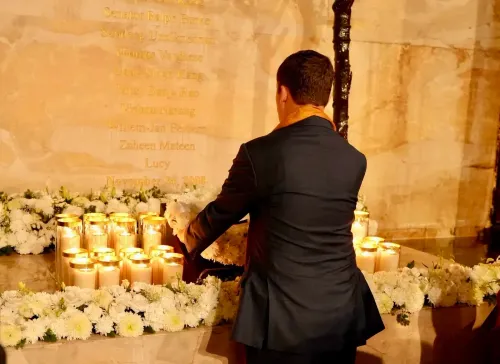
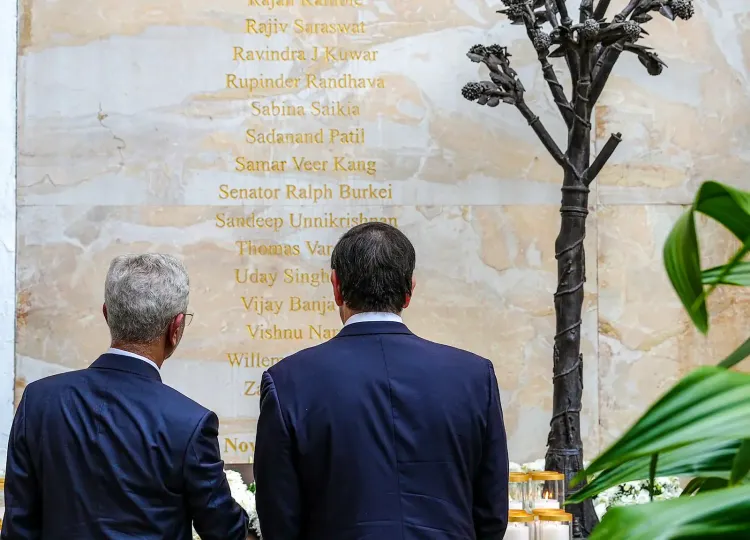
US Secretary of State Marco Rubio laid a wreath at the Taj Hotel's 26/11 Memorial , a gesture Jaishankar publicly appreciated.
Jaishankar welcomed the US decision to extradite Tahawwur Hussain Rana , described as 'one of the key culprits' of the 2008 Mumbai attacks .
The EAM cited the Quad, Mission 500, Pax Silica, and the Forge Initiative as pillars of an expanding India-US partnership.
Both nations were said to share a stake in peace and stability across the Indo-Pacific .
Mumbai was highlighted as the symbolic and commercial heart of India-US ties, from the historic 'ice trade' to today's technology and financial linkages.
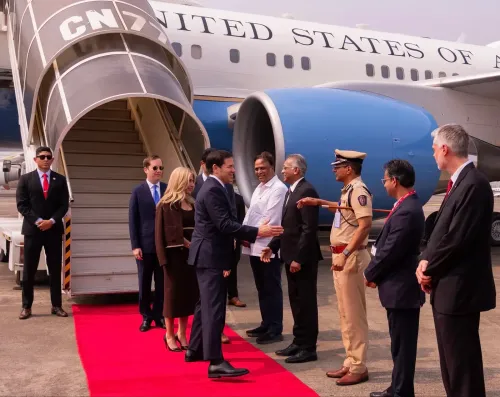
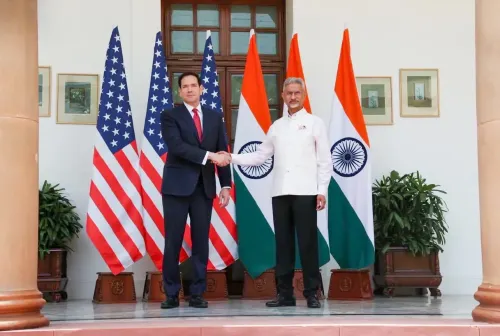
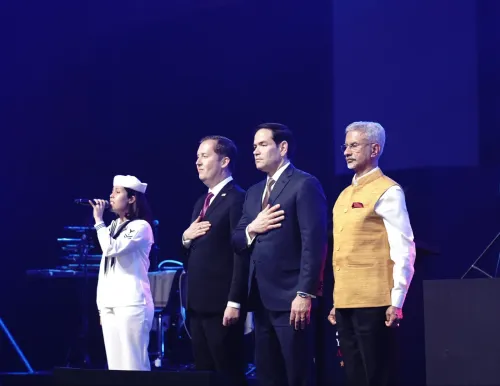
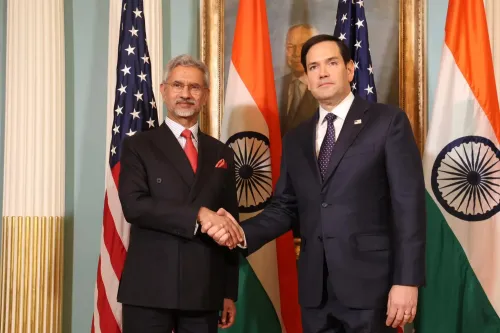
External Affairs Minister S Jaishankar on Tuesday, 20 October called on India's partners to adopt zero tolerance toward terrorism, underscoring that India remains unequivocal about its right to defend itself against terror threats. Speaking at the 'Freedom 250' reception in Mumbai — held to mark the 250th anniversary of US independence — Jaishankar made the remarks in the presence of visiting US Secretary of State Marco Rubio and US Ambassador Sergio Gor.
Tribute at 26/11 Memorial and Rana Extradition
Jaishankar publicly appreciated Rubio for laying a wreath at the Taj Hotel's 26/11 Memorial earlier in the day, calling the gesture meaningful for all of Mumbai and India. He also welcomed the US administration's decision to extradite Tahawwur Hussain Rana, describing him as 'one of the key culprits' of the 2008 Mumbai terror attacks.
'Secretary Rubio, all of Mumbai, and indeed all of India, appreciate your laying a wreath today at the Taj Hotel's 26/11 Memorial. India also welcomes this administration's decision to extradite Tahawwur Hussain Rana, who was one of the key culprits. We are clear on our right to defend ourselves against terrorism and expect our partners to show zero tolerance toward terrorism as well,' said Jaishankar.
A World Order in Transition
The External Affairs Minister framed the India-US relationship against the backdrop of a rapidly shifting global order, noting that countries are recalibrating their positions in response. He emphasised that expanding convergence between nations would be essential to deepening bilateral ties in such an era.
'The world order is clearly in transition, and countries are responding accordingly. Each one of us will naturally pursue our national interests. In such an era, expanding our convergence is key to deepening our ties,' he said. This framing signals India's intent to engage the US as a strategic partner of equals rather than a junior ally — a posture consistent with New Delhi's longstanding multi-alignment doctrine.
New Opportunities in India-US Partnership
Jaishankar pointed to fresh growth potential in trade, investment, technology, and energy as sectors where the two democracies could expand their engagement. He specifically cited the Quad, Mission 500, Pax Silica, and the Forge Initiative as examples of a partnership that has acquired 'new dimensions and new facets' over recent decades. He noted that growth in energy, defence, and civil aviation has been 'striking.'
Both nations, he added, share a stake in reinforcing peace and stability across the Indo-Pacific — a theatre where India-US alignment has strengthened considerably since the formalisation of the Quad framework.
Mumbai at the Heart of the Relationship
Jaishankar highlighted Mumbai's unique significance as the venue for the anniversary celebration, describing the city as India's financial capital, a Bollywood hub, a centre of research and technology, and — critically — a 'gateway to the world.' He noted that Mumbai's commercial ties with the United States trace back to what was once called the 'ice trade,' and today the city is central to bilateral financial, commercial, and technology linkages.
'It is particularly fitting that you celebrate this anniversary here in Mumbai,' Jaishankar told Rubio, situating the event within a longer arc of civilisational and economic exchange between the two countries.
What This Signals
Rubio's wreath-laying at the 26/11 Memorial and the Rana extradition decision together represent a notable alignment of US actions with India's long-standing counter-terror demands. Coming at a moment of heightened geopolitical realignment, the joint reception in Mumbai underlines both governments' interest in projecting continuity and depth in the partnership. How this translates into concrete cooperation — on extradition timelines, trade negotiations, and Indo-Pacific security architecture — will be closely watched in the weeks ahead.
Point of View
Not ceremonial — pairing a public thank-you for Rubio's symbolic gesture with a pointed demand that US partnership translate into matching counter-terror standards. The Rana extradition, years in the making, is cited as proof of concept, but India's expectations clearly extend beyond a single case. The EAM's invocation of the 26/11 Memorial in Rubio's presence was a reminder that the costs of terror on Indian soil remain politically live — and that New Delhi intends to hold Washington to its stated commitments. Whether the two sides can align on the broader 'zero tolerance' standard — particularly where third-country actors are involved — will test the limits of what this partnership can deliver.
NationPress
20 Oct 2026
Frequently Asked Questions
What did EAM Jaishankar say about terrorism at the Mumbai event?
Jaishankar stated that India is clear about its right to defend itself against terrorism and expects its partners to show zero tolerance toward terrorism as well. He made these remarks at the Freedom 250 reception in Mumbai on 20 October in the presence of US Secretary of State Marco Rubio.
Why did Jaishankar welcome the extradition of Tahawwur Hussain Rana?
Tahawwur Hussain Rana is identified as one of the key culprits of the 2008 Mumbai terror attacks, which killed over 160 people. Jaishankar welcomed the US administration's decision to extradite him as a concrete demonstration of bilateral counter-terror cooperation.
What is the Freedom 250 reception and why was it held in Mumbai?
Freedom 250 is a reception marking the 250th anniversary of US independence, hosted in Mumbai on 20 October 2026 with US Secretary of State Marco Rubio in attendance. Jaishankar noted that Mumbai was chosen for its symbolic and commercial significance as a gateway to India-US ties.
What bilateral initiatives did Jaishankar highlight at the event?
Jaishankar cited the Quad, Mission 500, Pax Silica, and the Forge Initiative as notable examples of the India-US partnership's expanding scope. He also pointed to growth in energy, defence, civil aviation, trade, investment, and technology as areas of new opportunity.
What is India's position on the Indo-Pacific, as stated by Jaishankar?
Jaishankar said both India and the United States share a stake in strengthening peace and stability in the Indo-Pacific. This aligns with the broader Quad framework that India, the US, Japan, and Australia have been developing as a counter to regional security challenges.