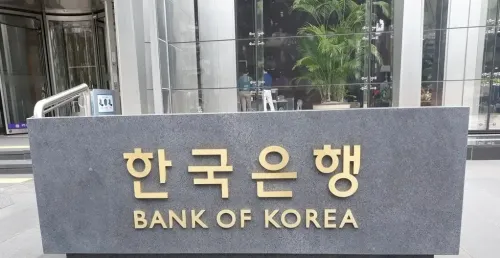
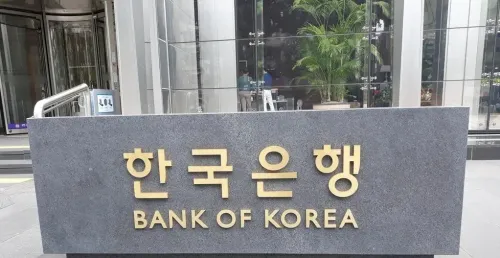
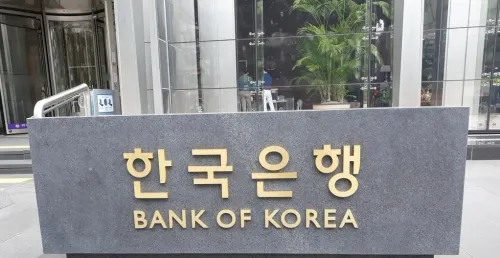
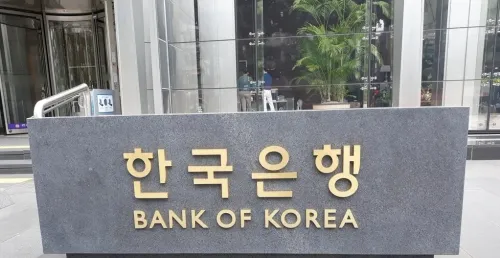
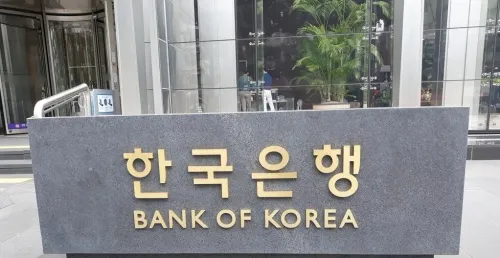
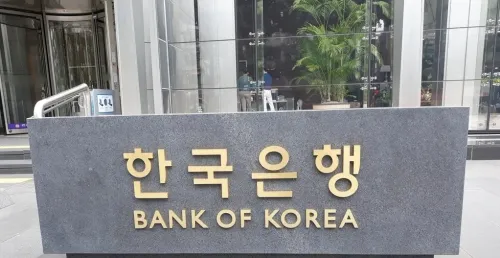
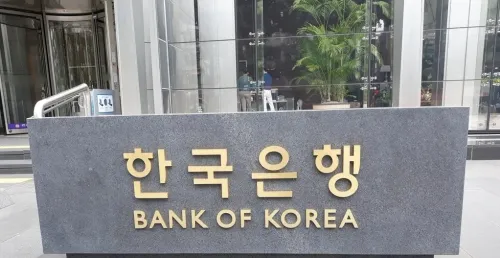
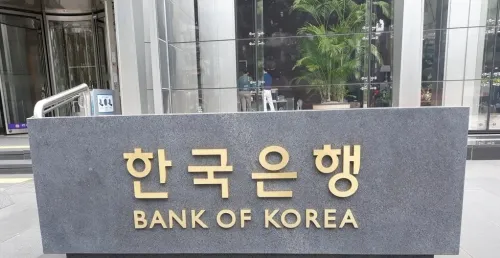
Bank of Korea holds rate at 3% after back-to-back hikes amid Middle East risk
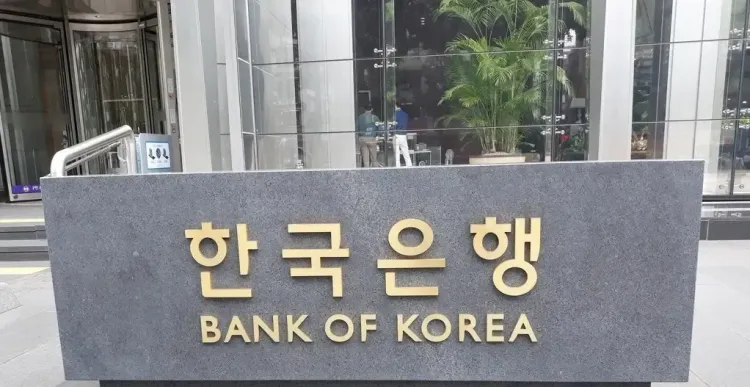
Synopsis
The Bank of Korea paused its tightening cycle at 3 percent — but make no mistake, this is a hawkish hold, not a pivot. With inflation still above target, oil prices rising, and another hike already flagged for November, the BOK is threading a needle between fighting price pressures and protecting debt-laden households in Asia's fourth-largest economy.
Key Takeaways
The Bank of Korea held its benchmark rate at 3 percent on 22 October 2026 , with all seven board members in agreement.
The pause follows back-to-back rate hikes in July and August 2026 — the first consecutive increases since January 2023 .
Consumer inflation was 2.8% in July, 3.1% in August, and 2.9% in September — still above the BOK's 2 percent target.
South Korea's current account surplus hit US$279.2 billion in the first eight months of 2026, more than quadrupling year-on-year.
The BOK raised its 2026 GDP growth forecast to 3.3 percent , with upside potential to 3.6 percent , on semiconductor export strength.
Markets expect the next rate hike at the BOK's policy meeting on 26 November 2026 .
The Bank of Korea (BOK) kept its benchmark interest rate unchanged at 3 percent on Thursday, 22 October 2026, pausing its tightening cycle after two consecutive hikes aimed at curbing accelerating inflation driven by rising oil prices and ongoing Middle East tensions. All seven members of the Monetary Policy Board backed the decision unanimously.
Why the BOK Pressed Pause
The rate freeze follows hikes at the BOK's July and August meetings, which the central bank described as 'preemptive action' to contain mounting inflationary pressure and ensure macroeconomic stability. Those back-to-back increases were the first since January 2023, when the bank concluded a run of seven consecutive hikes that began in April 2022.
In its policy statement, the board explained the rationale for the pause: 'Given the growing uncertainties surrounding the Middle East conflict and monetary and fiscal policies in major economies, the board judged that it would be necessary to assess developments in both domestic and external risk factors and the effects of the two prior rate hikes while maintaining the current level of the base rate.'
A key concern was the financial burden that sustained higher borrowing costs could place on lower-income households — a social stability consideration that weighed against further immediate tightening.
Inflation Still Above Target
Consumer prices have remained stubbornly elevated, hovering near the 3 percent level in recent months. Inflation printed at 2.8 percent in July, climbed to 3.1 percent in August, and eased slightly to 2.9 percent in September. The BOK's official target remains 2 percent.
Inflation is expected to hold at a similar level in October, according to the central bank, as rising oil prices linked to escalating military tensions in the Middle East continue to feed through to consumer prices.
BOK Governor Shin Hyun-song has stated publicly that the central bank will continue tightening monetary policy until inflation is 'firmly on track' to reach the 2 percent target — signalling that the pause does not represent a pivot.
Strong Growth Underpins Hawkish Bias
South Korea's economy — Asia's fourth-largest — expanded 1.8 percent in the first quarter and 0.6 percent in the second quarter of the year. The country's current account surplus reached US$279.2 billion in the first eight months of 2026, more than quadrupling compared to the same period last year.
The BOK has revised its 2026 growth forecast upward to 3.3 percent from 2.6 percent in its August projections, with the possibility of expansion reaching as high as 3.6 percent, supported by strong semiconductor exports driven by surging global demand for artificial intelligence (AI) infrastructure.
'Going forward, exports and investment are expected to sustain their high growth, driven by a strong semiconductor sector, while the recovery in consumption is likely to gradually accelerate, supported by improving income conditions,' the BOK said in its statement.
What Markets Expect Next
Despite the pause, the BOK has retained an explicitly hawkish tone, indicating it will determine 'the timing and pace of further rate hikes' based on inflation trends, domestic economic conditions, and financial stability. Market analysts widely expect another rate increase at the central bank's next policy meeting, scheduled for 26 November 2026.
The BOK's next move will be watched closely not just in Seoul but across Asia, as regional central banks navigate the twin pressures of persistent inflation and geopolitical uncertainty in the Middle East.
Point of View
Not a change of direction. With inflation still a full percentage point above the 2 percent target and the central bank openly flagging further hikes, calling this a pivot would be misleading. What is notable is the explicit weight the board placed on lower-income household debt — a social dimension that is often an afterthought in central bank communications. The upgraded 3.3-to-3.6 percent growth forecast, powered by AI-driven semiconductor demand, gives the BOK the economic headroom to resume tightening in November without causing a sharp growth shock. The real risk is that Middle East escalation sends oil prices higher still, forcing the BOK's hand faster than markets have priced in.
NationPress
22 Oct 2026
Frequently Asked Questions
Why did the Bank of Korea keep its interest rate unchanged in October 2026?
The Bank of Korea held its benchmark rate steady at 3 percent to assess the impact of two prior rate hikes and monitor growing uncertainties, including the Middle East conflict and monetary policy shifts in major economies. The board also cited concern that further hikes could increase the financial burden on lower-income households.
What is the Bank of Korea's current interest rate?
The Bank of Korea's benchmark interest rate is currently 3 percent, following hikes in July and August 2026. It was held at this level at the 22 October 2026 Monetary Policy Board meeting.
When is the Bank of Korea's next rate decision?
The BOK's next monetary policy meeting is scheduled for 26 November 2026. Market analysts widely expect the central bank to deliver another rate hike at that meeting, given its stated hawkish stance.
What is South Korea's inflation situation in 2026?
Consumer inflation in South Korea has hovered near 3 percent in recent months, printing at 2.8 percent in July, 3.1 percent in August, and 2.9 percent in September — all above the BOK's 2 percent target. Inflation is expected to remain at similar levels in October amid rising oil prices.
How has South Korea's economy performed in 2026?
South Korea's economy expanded 1.8 percent in the first quarter and 0.6 percent in the second quarter of 2026. The BOK has raised its full-year growth forecast to 3.3 percent, with potential upside to 3.6 percent, driven by strong semiconductor exports tied to global AI infrastructure demand.