RBI forex inflows hit $72.8 billion by Aug 21, FCNR(B) deposits at $65.4 billion
Synopsis
India's RBI-backed dollar-mobilisation drive has pulled in $72.8 billion by 21 August — with FCNR(B) deposits alone at $65.4 billion — prompting the central bank to shut the deposit window a month early. SBI Research estimates total collections could hit $85 billion before the month ends, pushing forex reserves toward an all-time high of $716.9 billion.
Key Takeaways
Authorised dealer banks raised $72.848 billion in forex inflows under the RBI swap facility up to 21 August 2026 .
FCNR(B) deposits accounted for $65.397 billion ; ECBs and OFCBs contributed $7.451 billion .
The RBI advanced the FCNR(B) window closure to 31 August 2026 from the original 30 September deadline, citing strong response.
SBI Research estimates total collections could reach $85 billion by month-end, with swap costs at roughly $10.5 billion (15% of corpus).
India's forex reserves rose $9.905 billion to $716.90 billion for the week ended 14 August 2026 .
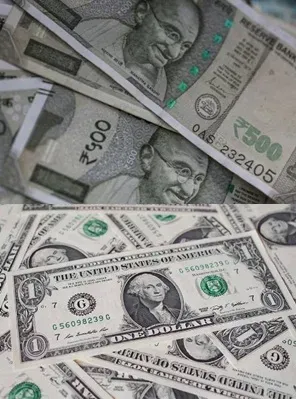
The Reserve Bank of India (RBI) on 22 August 2026 disclosed that authorised dealer banks have mobilised $72.848 billion in foreign exchange inflows through its special swap facility up to 21 August, with FCNR(B) deposits accounting for the lion's share at $65.397 billion. The figures underline the scale of India's dollar-mobilisation drive at a time when the rupee had come under pressure.
Breakdown of Inflows
Beyond FCNR(B) deposits, External Commercial Borrowings (ECBs) and Overseas Foreign Currency Borrowings (OFCBs) under the RBI's swap facility contributed an additional $7.451 billion to the total tally by 21 August. The RBI had launched the special USD-INR forex swap facility covering FCNR(B) deposits, ECBs, and OFCBs on 8 June 2026.
Deadline Brought Forward
In a notable policy shift, the RBI shortened the window for FCNR(B) deposits under the scheme to 31 August 2026 — a full month ahead of the original 30 September deadline — citing an 'encouraging response' that had already delivered the required quantum of foreign exchange. The ECB and OFCB legs of the facility remain open until 31 December 2026, according to the central bank's statement.
The early closure triggered Indian banks to intensify their outreach, offering higher interest rates to attract FCNR(B) deposits before the window shuts. Notably, this is a pattern seen in earlier episodes of rupee stress, where deposit-linked swap schemes have served as a fast-track mechanism to shore up reserves.
What SBI Research Says
According to an SBI Research report released earlier this week, the most probable reason for the early closure is that the dollar-mobilisation target has already been met, with inflows at $57 billion at the time of writing. The report estimated that a further $25–30 billion could flow in during the remaining days of August, potentially pushing total collections to around $85 billion.
On the cost of the swap, SBI Research argued that cumulative expenses would amount to roughly 15 per cent of the corpus, or approximately $10.5 billion. 'While this appears sizeable in absolute terms, it needs to be viewed against the scale of India's foreign-exchange reserves rather than the FCNR(B) corpus alone,' the report stated. The same report added, 'we don't believe that the cost of swap could have been a constraining factor.'
Forex Reserves at Record High
India's overall foreign exchange reserves surged $9.905 billion to reach $716.90 billion during the week ended 14 August, according to RBI data released on 22 August. This followed an even sharper jump of $14.1 billion the previous week, when reserves touched $707 billion — their highest level in the current financial year. The RBI confirmed that FCNR(B) inflows under the scheme have begun reflecting directly in the country's reserve figures.
With the FCNR(B) window closing at the end of August and reserves approaching historic highs, the RBI's dollar-mobilisation campaign appears to have achieved its core objective well ahead of schedule.
Point of View
While framed as manageable relative to total reserves, is real money that will eventually flow out, and the RBI has yet to offer a transparent accounting of how that liability will be managed. More broadly, relying on deposit-linked swap schemes to defend the rupee is a proven short-term tool but not a structural fix; the underlying current-account dynamics that weakened the rupee in the first place remain unaddressed. The reserves headline of $716.9 billion looks impressive, but a significant portion is borrowed inflow — not earned surplus.
NationPress
22 Aug 2026
Frequently Asked Questions
What is the RBI's FCNR(B) deposit scheme and how does it work?
The FCNR(B) — or Foreign Currency Non-Resident (Banks) — deposit scheme allows Non-Resident Indians to park foreign currency in Indian banks for fixed tenures. Under the RBI's special 2026 swap facility launched on 8 June, banks could swap the dollar inflows with the RBI at a fixed rate, reducing their currency risk and incentivising them to offer higher interest rates to attract deposits.
Why did the RBI close the FCNR(B) window early?
The RBI shortened the FCNR(B) deposit window to 31 August 2026 from the original 30 September deadline, citing an 'encouraging response' that had already met the required foreign exchange inflow target. According to SBI Research, inflows had already reached $57 billion and were on track to hit $85 billion by month-end.
How much have India's forex reserves grown due to these inflows?
India's foreign exchange reserves rose $9.905 billion to $716.90 billion for the week ended 14 August 2026, partly driven by FCNR(B) inflows beginning to reflect in reserve figures. The previous week had seen an even larger jump of $14.1 billion, taking reserves to $707 billion — their highest in the current financial year.
What is the estimated cost of the RBI's swap facility?
SBI Research estimates the cumulative cost of the swap facility at approximately $10.5 billion, or around 15 per cent of the FCNR(B) corpus. The report argued this cost should be assessed relative to India's total forex reserves rather than the deposit corpus alone, and does not consider it a constraining factor.
Are ECB and OFCB inflows also part of the RBI swap scheme?
Yes. External Commercial Borrowings (ECBs) and Overseas Foreign Currency Borrowings (OFCBs) are also covered under the RBI's USD-INR swap facility, contributing $7.451 billion to total inflows by 21 August 2026. Unlike the FCNR(B) window, the ECB and OFCB legs remain open until 31 December 2026.