IMF stalls Bangladesh loan over banking, climate reform gaps
Synopsis
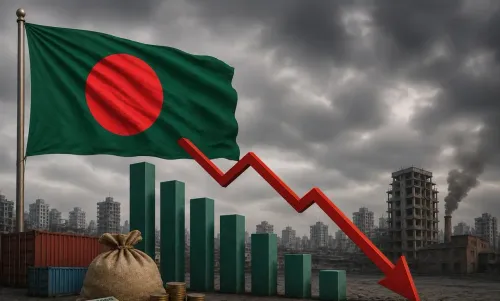
The IMF has put Bangladesh's $4.7 billion loan programme on hold, demanding nearly a dozen reforms — from banking overhauls to market-based exchange rates and climate resilience measures — before releasing remaining funds. With Dhaka simultaneously seeking $2 billion in additional budget support, the stakes could hardly be higher for Bangladesh's fiscal stability.
Key Takeaways
The IMF has stalled the remaining tranches of its $4.7 billion loan programme for Bangladesh pending completion of nearly a dozen reforms.
Conditions include banking-sector and legal reforms , NBR capacity building, removal of fuel and electricity subsidies, and a market-based foreign-exchange rate .
Bangladesh is also seeking an additional $2 billion in budget support alongside the stalled tranches.
The IMF's Fiscal Affairs Department and Technical Assistance missions have both recently visited Dhaka to assess reform progress.
Tk 42,206.89 crore — or 10.09% of the FY26 budget — has been allocated across 25 ministries for climate-related expenditure.
Finance Secretary Dr.
Khairuzzaman Mozumder expressed cautious optimism that the loans would ultimately be released.
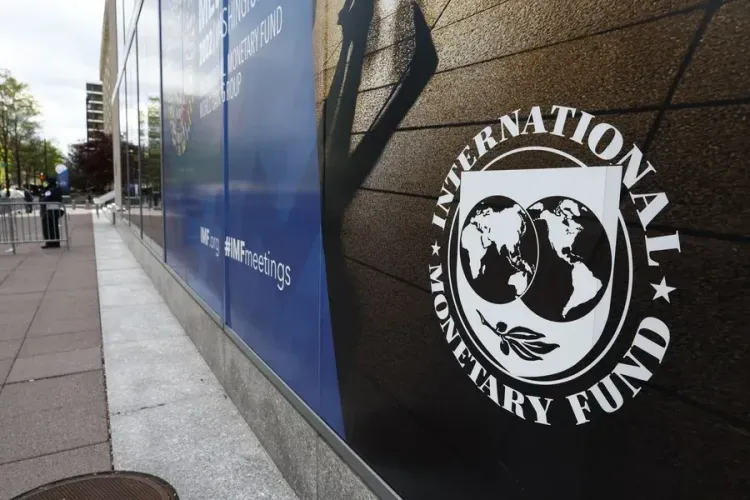
The International Monetary Fund (IMF) has suspended the remaining tranches of its $4.7 billion loan programme for Bangladesh, conditioning their release on Dhaka completing nearly a dozen pending reforms spanning banking-sector restructuring, legal changes, and climate resilience, according to a report by Dhaka-based publication The Asian Age.
Key Conditions Blocking the Funds
The IMF has laid out a broad reform checklist before reactivating the stalled programme. These include overhauls of the banking sector and legal framework, capacity building of the National Board of Revenue (NBR), and the introduction of single-click access to taxpayer information. The lender has also pressed for the removal of fuel and electricity subsidies, the adoption of a market-based foreign-exchange rate, and structural measures to strengthen climate resilience.
Bangladesh is simultaneously seeking an additional $2 billion in budget support on top of the remaining tranches of the existing programme — a request that hinges on satisfactory reform progress.
IMF Delegations Scrutinise Dhaka's Progress
The IMF's Fiscal Affairs Department delegation recently visited Dhaka to review progress across key sectors and assess tax policy direction. Separately, the IMF's Technical Assistance (TA) mission in July evaluated Bangladesh's policies, financial structures, and institutional capacity in addressing climate change. According to the report, the findings of that evaluation will carry significant weight in deliberations over any new loan programme.
'The incomplete reform activities under the previous loan program with the IMF got priority under the new program. As a result, this visit was not limited solely to assessing climate policies, but also played a crucial role in setting the future direction of economic reforms,' the report noted.
Bangladesh's Climate Finance Push
Notably, Bangladesh's recently released Public Financial Management Reform Strategy 2025–2030 incorporates climate-smart public financial management and gender-responsive budgeting for the first time. In the FY26 budget, approximately Tk 42,206.89 crore has been allocated across 25 ministries for climate-related expenditures — equivalent to 10.09 percent of the total budget allocation. These steps signal an effort by Dhaka to align its fiscal architecture with IMF expectations.
Government Signals Cautious Optimism
Finance Secretary Dr. Md. Khairuzzaman Mozumder expressed measured confidence that the funds would eventually be released. 'We hope that the IMF will consider different difficulties of Bangladesh to meet cent percent of the loan conditions. Despite some challenges, we are expecting the loans will be released in favour of Bangladesh,' he said, according to the report.
The outcome of ongoing IMF assessments is expected to determine whether Bangladesh can unlock the stalled funds and access the additional budget support it is seeking, with the country's fiscal stability and reform credibility on the line.
Point of View
Tax administration, exchange-rate policy, and climate finance simultaneously — suggesting the lender views Dhaka's reform record as structurally weak, not just procedurally incomplete. The parallel request for $2 billion in additional budget support while existing tranches remain frozen signals a fiscal position under real strain. What mainstream coverage underplays is the climate-finance angle: the IMF's TA mission findings on climate institutional capacity will shape not just this programme but the contours of any future one, making Bangladesh's Public Financial Management Reform Strategy 2025–2030 far more than a bureaucratic document. Dhaka's ability to sequence these reforms without triggering subsidy-removal protests will test the interim government's political bandwidth as much as its technocratic capacity.
NationPress
6 Oct 2026
Frequently Asked Questions
Why has the IMF stalled Bangladesh's loan programme?
The IMF has suspended the remaining tranches of its $4.7 billion programme because Bangladesh has not yet completed a series of required reforms, including banking-sector restructuring, legal changes, NBR capacity building, removal of fuel and electricity subsidies, and adoption of a market-based foreign-exchange rate. The lender is also assessing climate resilience measures before releasing funds.
How much additional funding is Bangladesh seeking from the IMF?
Bangladesh is seeking $2 billion in additional budget support on top of the remaining tranches of the existing $4.7 billion IMF programme. Both are contingent on satisfactory reform progress, according to the report.
What role does climate policy play in the IMF's conditions for Bangladesh?
Climate resilience is one of the IMF's explicit conditions for reactivating the stalled programme. The IMF's Technical Assistance mission in July evaluated Bangladesh's climate-related policies and institutional capacity, and those findings will influence discussions on any future loan arrangement. Bangladesh has allocated Tk 42,206.89 crore — 10.09% of its FY26 budget — across 25 ministries for climate-related expenditure.
What has Bangladesh's government said about meeting IMF conditions?
Finance Secretary Dr. Md. Khairuzzaman Mozumder expressed cautious optimism, saying the government hopes the IMF will account for Bangladesh's difficulties in fully meeting all conditions and expects the loans to be released. He acknowledged that some challenges remain.
Which IMF teams have recently visited Bangladesh to assess the programme?
Two separate IMF delegations have recently visited Dhaka. The Fiscal Affairs Department delegation reviewed tax policy and key sector progress to determine the loan programme's future direction. The Technical Assistance mission, which visited in July, assessed Bangladesh's climate-related policies, financial structures, and institutional capabilities.