Bangladesh debt servicing costs to hit $30.59bn in FY26, IMF warns
Synopsis
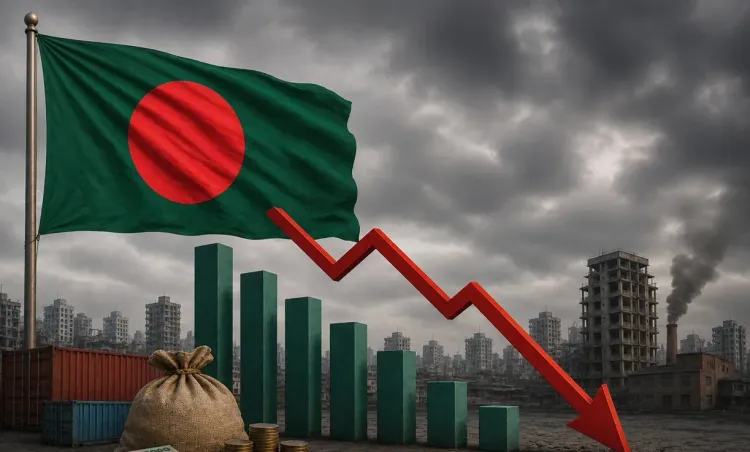
The IMF has quietly but significantly upgraded Bangladesh's debt risk rating from low to moderate — and the numbers explain why. With debt servicing costs set to jump from $26.63 billion to $30.59 billion in a single year, and the entire development budget now funded by loans, the BNP-led government's first budget is less a policy statement and more a fiscal tightrope walk.
Key Takeaways
The IMF reclassified Bangladesh from a low-risk to a moderate-risk country in its debt sustainability analysis.
Bangladesh's public debt stood at $188.79 billion (about 41% of GDP ) in FY2024–25 , up from 39% the prior year.
Debt servicing costs are projected to rise from $26.63 billion in FY25 to $30.59 billion in FY26 and $33.84 billion in FY27 .
From FY2022–23 , Bangladesh began borrowing to cover even operational expenditure, with the revenue shortfall widening to Tk 3,630 crore by FY24 .
The entire Annual Development Programme (ADP) is now financed through loans, a significant structural shift.
The IMF warned that heavy bank borrowing risks crowding out private-sector credit .
Bangladesh's mounting debt servicing burden is shaping up as one of the most pressing challenges for the BNP-led government as it prepares its first budget, according to a report in The Daily Star. The warning comes after the International Monetary Fund (IMF) reclassified Bangladesh from a low-risk to a moderate-risk country in its latest debt sustainability analysis.
IMF's Debt Risk Downgrade
The IMF's reclassification reflected, in its own words, “deteriorating metrics across debt volume, debt servicing relative to GDP, exports, and revenue earnings.” Bangladesh's public debt reached $188.79 billion — roughly 41 per cent of GDP — in fiscal 2024–25, up from 39 per cent the previous year. The fund cautioned that the “elevated debt service-to-revenue ratio, including interest payments, poses significant rollover risks over the medium term.”
Rising Repayment Obligations
The pace of increase in debt servicing costs is at the heart of the crisis. The IMF projected that combined principal and interest repayments would climb to $30.59 billion in FY26, up from $26.63 billion in FY25, and rise further to $33.84 billion in FY27. That trajectory represents a near-27 per cent jump in just two fiscal years.
From Revenue Surplus to Deficit Financing
The structural deterioration in Bangladesh's public finances has been rapid. The country once financed a portion of its development expenditure through revenue surpluses. According to the report, that position reversed sharply from fiscal year 2022–23, when actual revenue fell Tk 463 crore short of what was needed to cover even operating expenditure — a gap that had to be plugged through borrowing.
By FY24, the shortfall had widened to Tk 3,630 crore. In the following fiscal year, the entire Annual Development Programme (ADP) — the primary instrument for financing public-sector development — had to be funded through loans. Notably, this means Bangladesh is now borrowing not just to invest, but to keep the lights on.
What Is Driving the Pressure
Much of the strain traces back to earlier non-concessional foreign borrowing, which carried higher interest rates and shorter grace periods than typical development loans. Large infrastructure projects financed by debt have also reportedly failed to generate sufficient revenue to service those obligations. The IMF additionally warned that heavy reliance on bank borrowing risks crowding out private-sector credit, adding further stress to an already strained financial system.
What the BNP Government Faces Next
For the BNP-led administration, navigating its first budget under these conditions will require balancing fiscal consolidation against the social and developmental spending demands of a new government. Analysts argue that without a credible revenue mobilisation plan and a renegotiation of high-cost debt, the debt-service-to-revenue ratio will continue to worsen. The IMF's medium-term outlook suggests the pressure is unlikely to ease before FY27 at the earliest.
Point of View
Education, and social protection. The BNP government inherits not just a budget challenge but a structural trap: raising revenue fast enough to outpace debt service is enormously difficult when the financial system is already under strain from public-sector borrowing. Without debt restructuring on high-cost obligations and a serious revenue administration overhaul, the IMF's 'moderate risk' label risks becoming 'high risk' well before FY27.
NationPress
27 Sept 2026
Frequently Asked Questions
Why did the IMF downgrade Bangladesh's debt risk rating?
The IMF reclassified Bangladesh from low-risk to moderate-risk in its debt sustainability analysis due to deteriorating metrics across debt volume, debt servicing relative to GDP, exports, and revenue earnings. Public debt rose to $188.79 billion, or about 41% of GDP, in FY2024–25.
How much will Bangladesh's debt servicing costs rise?
According to IMF projections, Bangladesh's debt servicing costs — covering both principal repayments and interest — will rise from $26.63 billion in FY25 to $30.59 billion in FY26, and further to $33.84 billion in FY27.
What is the Annual Development Programme and why does it matter here?
The Annual Development Programme (ADP) is Bangladesh's primary fiscal instrument for financing public-sector development projects. Its significance in this context is that the entire ADP now has to be financed through borrowing, meaning Bangladesh is taking on debt not just for new investment but to sustain existing development commitments.
Why is Bangladesh borrowing to cover operating expenditure?
From fiscal year 2022–23, Bangladesh's actual revenue fell short of what was needed to cover even day-to-day operating expenditure — a gap of Tk 463 crore that year, widening to Tk 3,630 crore by FY24. The shortfall has been plugged through borrowing, reflecting a structural decline in revenue mobilisation relative to expenditure.
What risks does the IMF flag beyond the debt level itself?
Beyond the headline debt figure, the IMF warned that heavy reliance on bank borrowing risks crowding out private-sector credit, adding pressure to an already strained financial system. It also highlighted elevated rollover risks from the high debt service-to-revenue ratio over the medium term.