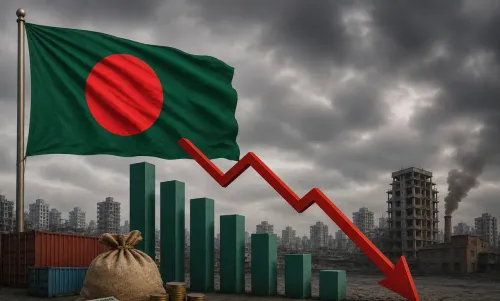
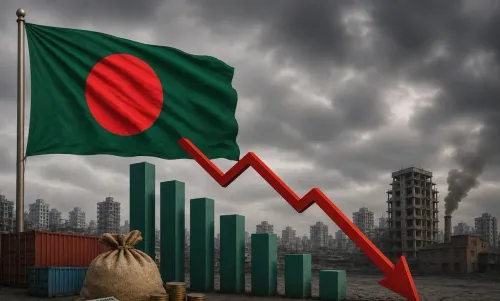
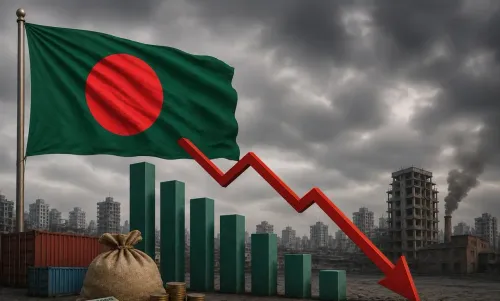
Bangladesh revenue-to-GDP ratio at 8% in 2024, lowest in Asia: IMF data
Synopsis
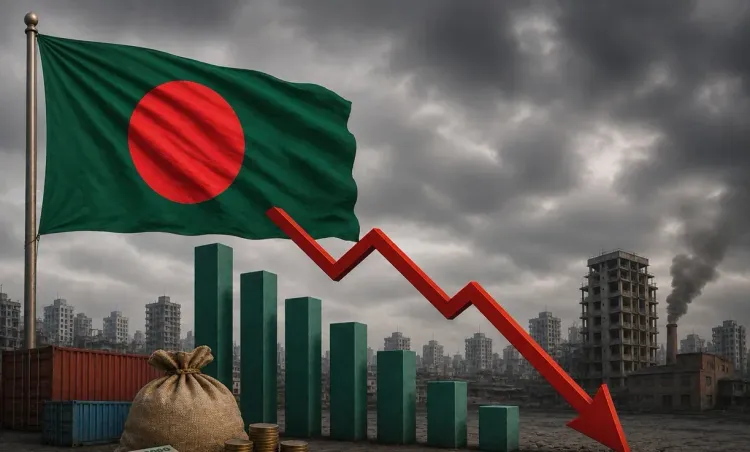
Bangladesh's government revenue stands at just 8% of GDP — the lowest in Asia and barely above war-torn Yemen and Sudan. With the global minimum benchmark at 15% and neighbours like Bhutan collecting nearly 27%, the IMF data exposes a structural fiscal crisis that is directly stunting Bangladesh's health, education, and human capital outcomes.
Key Takeaways
Bangladesh collected approximately 8 per cent of GDP in government revenue in 2024 — the lowest among Asian economies, per IMF data.
The country ranks only marginally above conflict-hit economies Yemen and Sudan on this metric.
Pakistan records 12% , Sri Lanka 13.68% , and Bhutan 26.97% — all significantly higher within the region.
The global minimum benchmark for fiscal adequacy is 15% of GDP ; advanced economies such as Denmark and Norway exceed 50% .
Weak enforcement, a large informal sector, and low public trust in institutions are identified as key structural causes.
Expanding the formal tax net, improving direct taxation, and scaling digital tax systems are flagged as the most critical reforms.
Bangladesh's government revenue collection stood at roughly 8 per cent of GDP in 2024, placing the country among the weakest fiscal performers globally and only marginally ahead of conflict-affected economies such as Yemen and Sudan, according to a report citing International Monetary Fund (IMF) data. The finding, published in The Daily Star, identifies Bangladesh as the lowest-ranked Asian economy on this metric and flags deep structural constraints in its public finance system.
Where Bangladesh Stands Regionally
The gap between Bangladesh and its South Asian neighbours is stark. Pakistan records a revenue-to-GDP ratio of 12 per cent, while Sri Lanka stands at 13.68 per cent. Bhutan leads the sub-regional comparison at 26.97 per cent, underscoring how far behind Dhaka lags even within its immediate neighbourhood.
Globally, a tax-to-GDP ratio of around 15 per cent is widely regarded as the minimum threshold for sustaining adequate public expenditure and macroeconomic stability. More than 70 developing economies remain below this benchmark, but Bangladesh's position near the very bottom of that group sets it apart. By contrast, advanced economies such as Austria, Denmark, Finland, and Norway collect upwards of 50 per cent of GDP in government revenue.
Root Causes of Weak Revenue Mobilisation
The report attributes Bangladesh's fiscal underperformance to a cluster of structural problems. A narrow tax base, the dominance of the informal sector, extensive tax exemptions and holidays, weak enforcement, and an over-reliance on indirect taxation are cited as primary drivers.
Notably, a deficit of public trust compounds the problem. According to the report, perceived corruption in state institutions has eroded tax compliance, with citizens reportedly unwilling to meet their obligations without visible improvements in the quality of public services — creating a self-reinforcing cycle of low revenue and low service delivery.
Impact on Public Services and Human Capital
The constrained fiscal space has had tangible consequences. Investment in health and education has remained limited over the years, and the report concludes that Bangladesh continues to underperform in human capital development as a direct result of chronic underinvestment in these sectors. This positions the country poorly for the kind of productivity-led growth that could eventually expand its tax base organically.
Reform Priorities Identified
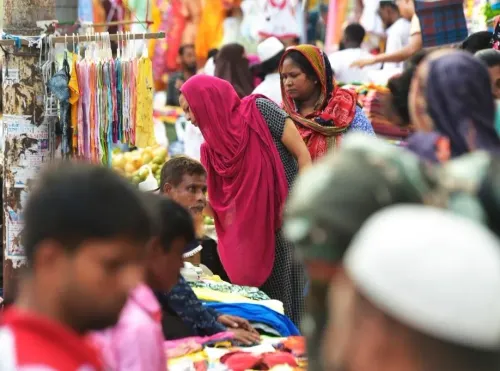
Expanding the formal tax net is identified as the most urgent reform. Large segments of economic activity — including rural markets and peri-urban business hubs — remain entirely outside the tax system. The report also calls for strengthening direct taxation, improving land valuation reporting, and scaling up digital tax infrastructure to curb evasion and boost administrative efficiency.
With the IMF increasingly linking programme support to fiscal consolidation benchmarks, the pressure on Dhaka to widen its revenue base is set to intensify in the near term.
Point of View
Yet the state has consistently failed to capture a proportionate share of that prosperity. The informal-sector excuse is wearing thin: peer economies with comparable informality levels have done better by investing in digital tax infrastructure and reducing exemption regimes. The deeper problem is a political economy where tax holidays and exemptions serve entrenched business interests, and where the social contract between citizen and state remains broken. Without a credible anti-corruption anchor to rebuild trust, no digital tax system will close the compliance gap. The IMF's growing conditionality lens makes this not just a development issue but a sovereign creditworthiness question.
NationPress
26 Sept 2026
Frequently Asked Questions
What is Bangladesh's revenue-to-GDP ratio in 2024?
Bangladesh collected approximately 8 per cent of its GDP in government revenue in 2024, making it the lowest among Asian economies according to IMF data. This places it only marginally above conflict-affected countries such as Yemen and Sudan.
How does Bangladesh compare to other South Asian countries on tax revenue?
Bangladesh significantly trails its neighbours — Pakistan records 12%, Sri Lanka 13.68%, and Bhutan 26.97% in revenue-to-GDP terms. The global minimum benchmark considered adequate for public spending is 15%, which Bangladesh falls well short of.
Why is Bangladesh's revenue collection so low?
The report attributes the weakness to a narrow tax base, a dominant informal sector, widespread tax exemptions, poor enforcement, and heavy reliance on indirect taxes. Low public trust in institutions due to perceived corruption has further suppressed voluntary compliance.
What impact does the low revenue ratio have on Bangladesh's citizens?
The constrained fiscal space has limited government investment in health and education over the years. According to the report, Bangladesh continues to underperform in human capital development as a direct consequence of this chronic underinvestment.
What reforms are recommended to improve Bangladesh's fiscal position?
The report prioritises expanding the formal tax net to cover rural markets and peri-urban hubs, strengthening direct taxation, improving land valuation reporting, and rolling out digital tax systems to reduce evasion and improve collection efficiency.