Amit Shah inaugurates NCCF women's empowerment schemes in Kollam
Synopsis
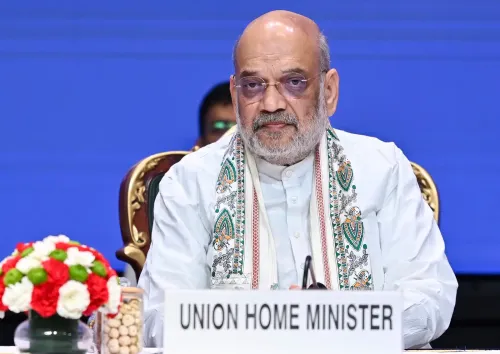
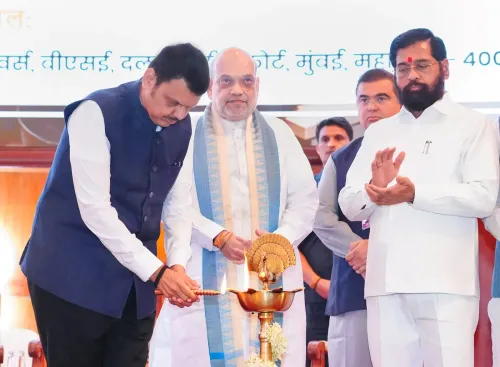
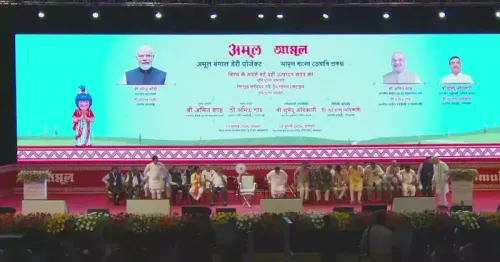
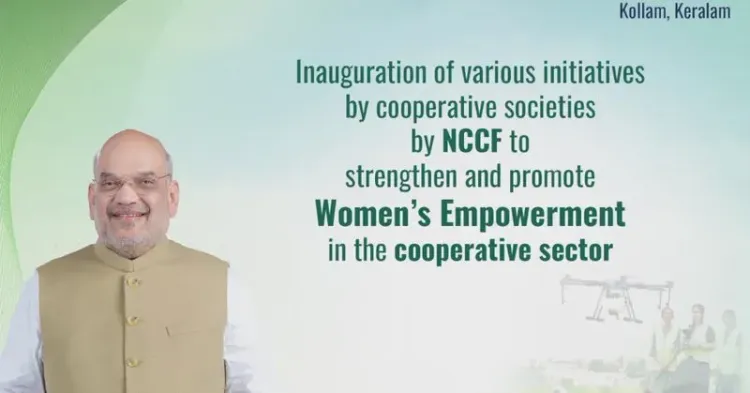
Union Home Minister Amit Shah inaugurated NCCF-led women's empowerment initiatives for Kerala's cooperative sector at a function in Kollam on September 26, 2026, underscoring the Ministry of Cooperation's push to modernise cooperatives and expand women's economic participation.
Key Takeaways
Union Home Minister Amit Shah addressed the inauguration of NCCF schemes for women's empowerment in the cooperative sector in Kollam, Kerala on September 26, 2026 .
The National Cooperative Consumers' Federation of India (NCCF) , established in 1965 , is the apex body for consumer cooperatives and the vehicle for the new initiatives.
Kollam was chosen as the venue given Kerala's historically dense cooperative network, one of the most developed in South Asia.
The Ministry of Cooperation was created in July 2021 to give dedicated central focus to the cooperative sector, with Shah as its minister.
The broader government push since 2021 has prioritised women's self-help groups and consumer cooperatives as channels for credit, marketing, and welfare delivery.
Specific funding details and beneficiary-coverage figures for the inaugurated schemes have not yet been officially disclosed.
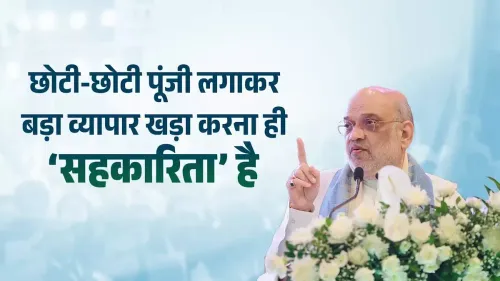
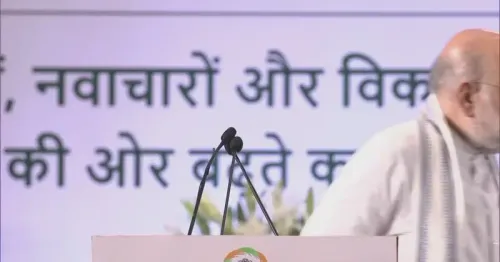
From the cooperative heartland of Kerala's coast, Union Home Minister and Minister of Cooperation Amit Shah addressed the inauguration of a fresh set of initiatives by the National Cooperative Consumers' Federation of India (NCCF) aimed at strengthening women's empowerment in the cooperative sector — choosing Kollam, Kerala, one of the country's most cooperative-dense districts, as the stage on Saturday, September 26, 2026.
Why Kollam — and why NCCF
Kollam is no symbolic backdrop. The coastal district sits at the centre of Kerala's cooperative web, a network that predates independence and remains among the most active in South Asia. Hosting a central government initiative here signals a deliberate effort to align the Ministry of Cooperation — established in July 2021 — with a state where the cooperative tradition runs deepest. Shah, who has been at the helm of that ministry since its creation, addressed the gathering in Malayalam, describing the event as the inauguration of 'various schemes being implemented by NCCF for the cooperative sector in Kerala' (കേരളത്തിലെ സഹകരണ മേഖലക്കായി എൻസിസിഎഫ് നടപ്പിലാക്കുന്ന വിവിധ പദ്ധതികളുടെ ഉദ്ഘാടനച്ചടങ്ങ്).
The NCCF, founded in 1965, is the apex body for consumer cooperatives in India. Its mandate covers procurement, distribution and the economic mobilisation of member societies — making it a natural vehicle for delivering welfare and livelihoods to women operating within the cooperative structure.
Women at the centre of the cooperative push
The central government's cooperative expansion since 2021 has placed women's self-help groups and consumer cooperatives near the top of its priority list. The logic is straightforward: cooperatives already reach rural women who remain outside formal banking and retail channels, and layering women-focused schemes onto existing cooperative infrastructure avoids the cost of building new delivery pipelines from scratch.
Kerala's cooperative movement — with its century-old roots — offers a ready test-bed. A successful rollout in Kollam can serve as a replicable model for less cooperative-dense states, giving the ministry a showcase it can point to as evidence that the 2021 institutional push is producing tangible outcomes on the ground.
The road the Ministry of Cooperation has travelled
When the Ministry of Cooperation was carved out as a standalone department five years ago, critics questioned whether a new ministry could add value in a sector already regulated by state governments. The Kollam event is, in part, an answer to that question — a minister physically present at a district-level inauguration, inaugurating schemes through the central apex body, in a state governed by a different political party. The optics of institutional reach matter as much as the policy detail.
Exact funding figures and beneficiary-coverage targets for the specific NCCF schemes launched on Saturday have not been officially disclosed. Those numbers, when they emerge, will determine whether this inauguration represents incremental progress or a genuinely scaled intervention for Kerala's cooperative women.
Point of View
A central apex body, also demonstrates the ministry's preferred model: using existing cooperative architecture rather than creating parallel structures. The emphasis on women's empowerment in Kerala is particularly notable given the state's own strong cooperative tradition; success here would hand the ministry a credible, replicable showcase. The next test is whether beneficiary numbers and scheme timelines are disclosed swiftly enough to validate the inauguration as policy delivery rather than political optics.
NationPress
26 Sept 2026
Frequently Asked Questions
What is NCCF and what does it do?
NCCF stands for the National Cooperative Consumers' Federation of India, the apex body for consumer cooperatives established in 1965 . It oversees procurement, distribution, and the economic mobilisation of member cooperative societies across the country.
Why did Amit Shah visit Kollam, Kerala for the cooperative inauguration?
Kollam is a district with one of India's densest cooperative networks. Kerala's overall cooperative movement is among the oldest and most active in South Asia, making it an ideal location to launch and demonstrate NCCF-led women's empowerment schemes.
What is the Ministry of Cooperation and when was it formed?
The Ministry of Cooperation was created in July 2021 as a dedicated central ministry to provide focused policy attention to India's cooperative sector. Amit Shah has served as its minister since its establishment.
What kind of schemes did NCCF launch for women in Kerala cooperatives?
The specific titles and funding details of the NCCF initiatives inaugurated in Kollam have not been officially disclosed. The schemes are described as aimed at strengthening women's empowerment within Kerala's cooperative sector.
How does the government's cooperative push benefit women in India?
Since 2021 , the central government has targeted women's self-help groups and consumer cooperatives as channels for credit, marketing, and welfare delivery, using the existing cooperative infrastructure to reach women outside formal banking and retail networks.