CM Himanta: Assam-Gujarat to Boost India's Green Maritime Future
Synopsis
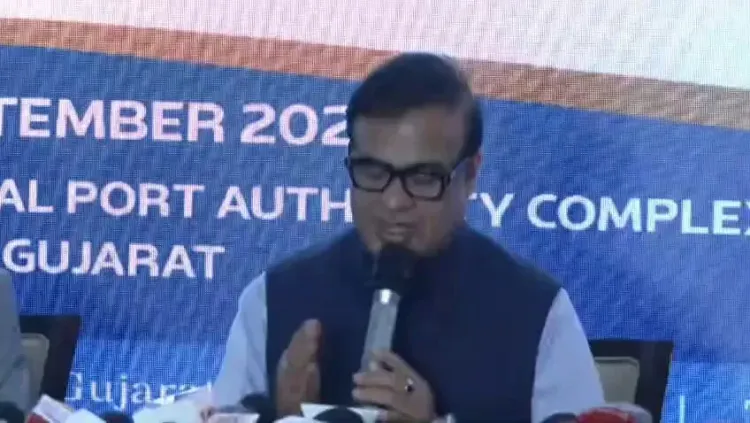
Chief Minister Himanta Biswa Sarma called September 26, 2026 historic as Assam and Gujarat joined forces to advance India's green maritime ambitions, linking the Brahmaputra's inland waterway potential with Gujarat's coastal clean-energy infrastructure under India's Maritime Vision 2030 framework.
Key Takeaways
Himanta Biswa Sarma declared September 26, 2026 a historic day for both Assam and Gujarat in India's maritime journey.
The collaboration is framed around green energy , aligning with Maritime India Vision 2030 's decarbonisation goals.
Assam brings inland waterway capacity on the Brahmaputra ; Gujarat contributes coastal port and renewable energy infrastructure.
The initiative builds on the Sagarmala Project (launched 2015 ) and the National Waterways Act 2016 , which encourage east-west maritime linkages.
Specific MoUs or project announcements from the event are yet to be formally detailed and publicly confirmed.
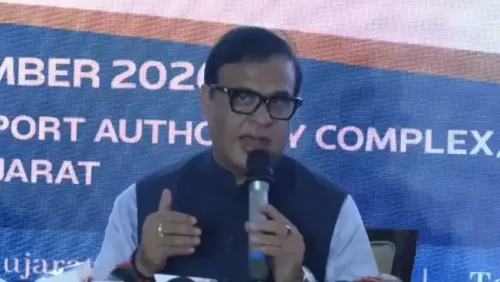
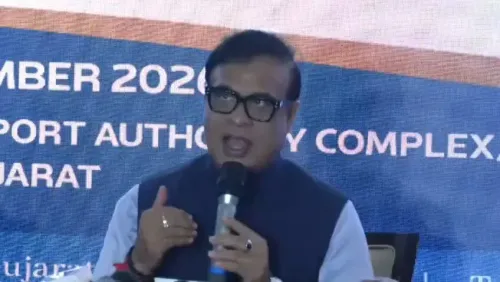
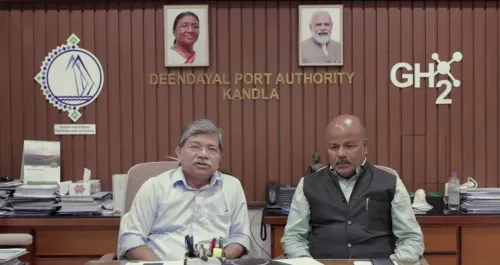
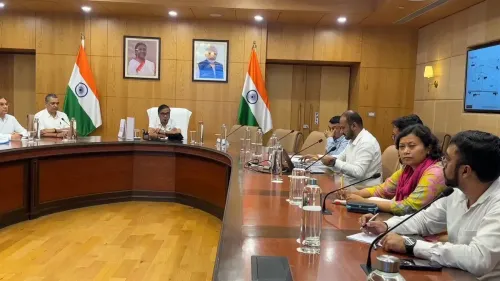
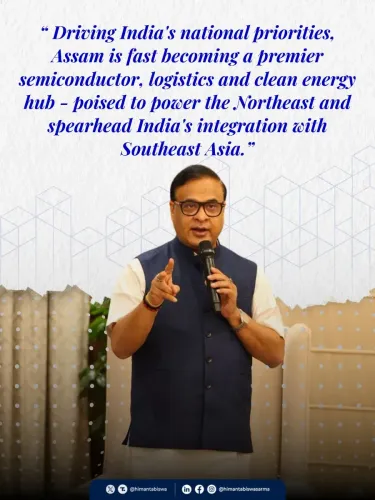
Two states separated by thousands of kilometres — one guarding India's northeastern riverine arteries, the other anchoring its western coastline — have found common cause in reshaping how India moves goods on water. The Chief Minister's Office of Assam announced on Saturday, September 26, 2026, that Chief Minister Dr. Himanta Biswa Sarma called the occasion 'a historic day for Assam and Gujarat' as both states came together to 'strengthen India's maritime journey through green energy.'
Brahmaputra meets the Arabian Sea: why this pairing matters
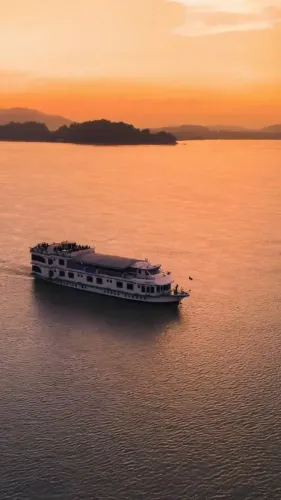
Assam sits at the heart of India's inland waterway ambitions on the Brahmaputra, one of the world's great navigable rivers and a key artery under the National Waterways Act 2016. Gujarat, meanwhile, commands India's longest coastline and hosts some of its most ambitious port and renewable energy infrastructure. Bridging these two theatres — riverine east and coastal west — has been a stated goal of national maritime planners for years.
The framing of 'green energy' is deliberate and significant. India's Maritime India Vision 2030, released in 2021, placed decarbonisation of shipping at the centre of the country's long-term port strategy. Connecting inland waterway states with coastal hubs capable of generating green hydrogen or running cleaner port operations is precisely the kind of integration that vision called for.
Sagarmala's long arc and the northeast's place in it
The Sagarmala Project, launched in 2015, was designed to unlock port-led development across India's coastline and its navigable rivers. For years, northeastern states were largely peripheral to this conversation — their logistical links to major ports long, costly, and carbon-intensive. A formal convergence with Gujarat's port ecosystem would mark a meaningful shift: the northeast moving from the margins of India's maritime economy toward its connective tissue.
Dr. Himanta Biswa Sarma, who has led Assam since May 2021, has consistently positioned the state as a gateway — not a hinterland — for India's eastern and northeastern trade. Aligning with Gujarat on green maritime infrastructure is consistent with that framing, and it signals that state-to-state cooperation, not just Centre-driven mandates, will shape India's next waterway chapter.
What green maritime integration looks like in practice
The specific projects and any formal agreements from this occasion remain to be publicly detailed. But the policy direction is clear: eastern riverine capacity combined with western coastal clean-energy infrastructure creates a multimodal corridor with dramatically lower emissions than road or rail alternatives for bulk cargo. That is not a distant aspiration — it is the explicit logic of India's current port and waterways policy stack.
Whether this moment produces a formal memorandum of understanding, a joint investment proposal, or a combined pitch to central green hydrogen timelines will determine how 'historic' today's handshake truly is. The framework exists. The political will, from at least one side, is now on the record.
Point of View
The northeast was structurally absent from port-led development narratives dominated by coastal states; this partnership, if backed by concrete MoUs, would rewrite that calculus. It also signals that Chief Minister Himanta Biswa Sarma is aggressively repositioning Assam as a logistics hub rather than a landlocked beneficiary of central schemes. The green energy framing, anchored in Maritime India Vision 2030, gives both states political cover to access central clean-energy financing — making this as much a fiscal strategy as an environmental one.
NationPress
26 Sept 2026
Frequently Asked Questions
Why are Assam and Gujarat collaborating on maritime issues?
Assam holds key inland waterway assets on the Brahmaputra, while Gujarat commands India's longest coastline and major port infrastructure. Together they can form an integrated east-west green maritime corridor that reduces cargo emissions and supports India's Maritime Vision 2030.
What is the Sagarmala Project and how does it relate to this?
The Sagarmala Project, launched in 2015, is a central scheme for port-led development and coastal shipping. It actively encourages linkages between inland riverine states like Assam and coastal states like Gujarat to unlock trade and reduce logistics costs.
What is Maritime India Vision 2030?
Maritime India Vision 2030 is a national blueprint released in 2021 that guides the sustainable growth of India's ports, shipping, and inland waterways, with a strong emphasis on green technologies and decarbonisation of the maritime sector.
What did CM Himanta Biswa Sarma say about the Assam-Gujarat maritime event?
Chief Minister Dr. Himanta Biswa Sarma described September 26, 2026 as 'a historic day for Assam and Gujarat,' stating that both states were coming together to 'strengthen India's maritime journey through green energy.'
How does Assam benefit from a maritime partnership with Gujarat?
Assam gains access to Gujarat's coastal port network and clean-energy ecosystem, helping transform the Brahmaputra inland waterway into a viable low-emission freight corridor and positioning Assam as a logistics gateway rather than a peripheral state.