CM Himanta Flags Rare Earth and Green Energy as Assam's Top Priorities
Synopsis
Assam Chief Minister Himanta Biswa Sarma has declared rare earth and green energy as priority sectors for the state, aligning with India's national push on critical minerals and clean energy ahead of 2030 targets.
Key Takeaways
Assam CM Himanta Biswa Sarma publicly flagged rare earth and green energy as the state's top economic priorities on 26 September 2026 .
India amended the Mines and Minerals (Development and Regulation) Act in 2023 to allow auctions of critical mineral blocks, providing the legal framework for states like Assam to act.
The National Green Hydrogen Mission (2023) offers additional policy and funding scaffolding for Assam's green energy ambitions.
Assam's economy has historically depended on oil, tea, and agriculture; this pivot signals a deliberate diversification strategy.
Sarma's role as NEDA convenor gives the announcement a broader northeast India resonance, potentially setting a template for other states in the region.
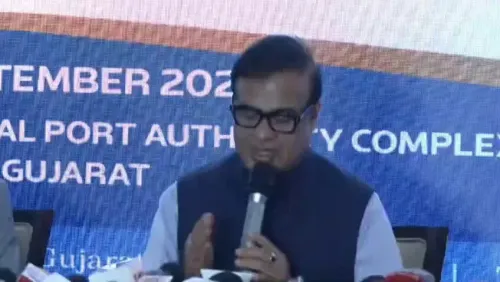
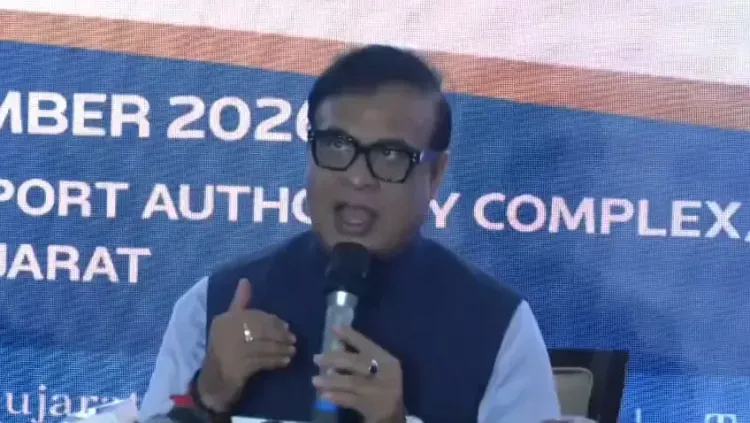
Assam is staking its economic future on two of the world's most strategically charged sectors. On Saturday, 26 September 2026, Assam Chief Minister Himanta Biswa Sarma declared on X that the state is prioritising rare earth and green energy — a pointed signal to investors and policymakers that India's northeast is moving beyond its legacy oil-and-tea economy.
A state repositioning itself on India's critical-minerals map
The post — 'असम Rare Earth और Green Energy क्षेत्रों को प्राथमिकता दे रही हैं' ('Assam is prioritising Rare Earth and Green Energy sectors') — is brief but carries strategic weight. Assam's economy has long run on crude oil, tea, and agriculture. A pivot toward rare earths and renewables would place the state squarely inside India's national drive to secure critical mineral supplies and scale non-fossil energy capacity ahead of its 2030 clean-energy targets.
The national policy scaffolding for exactly this kind of state-level push already exists. India amended the Mines and Minerals (Development and Regulation) Act in 2023 to unlock auctions of critical mineral blocks, including rare earth elements. The National Green Hydrogen Mission, also launched in 2023, created a framework for states to anchor green fuel and renewable projects. Sarma's announcement suggests Assam intends to use both windows actively.
Why rare earths — and why now
Rare earth elements sit at the heart of electric vehicles, wind turbines, defence electronics, and semiconductors — industries that global supply chains are scrambling to de-risk from single-country dependence. Several northeastern states have been encouraged by the Centre to leverage their mineral and hydro endowments to seed new industrial corridors. Assam's geology and its proximity to energy-hungry Bangladesh and Southeast Asia add logistical logic to the ambition.
As NEDA convenor, Sarma also carries an implicit responsibility to model a template that other northeast states might follow — making this declaration more than a local economic headline. What comes next — state policy documents, exploration licences, or memoranda of understanding with private developers — will determine whether the priority is a roadmap or a rallying call.
Point of View
And is now relying on state governments to convert that architecture into ground-level investment. For Assam, the move is as much about industrial identity as it is about economics — shifting the state's self-image from a resource-extraction periphery to a strategic-sector hub. The timing, with India's 2030 clean-energy commitments drawing closer, sharpens the urgency. The real test will be whether Assam follows this signal with binding policy instruments — exploration blocks, single-window clearances, or anchor investor agreements — that give the priority real teeth.
NationPress
26 Sept 2026
Frequently Asked Questions
What did Assam CM Himanta Biswa Sarma say about rare earth and green energy?
CM Sarma stated on 26 September 2026 that Assam is prioritising rare earth and green energy sectors, signalling a strategic economic shift for the state.
What are rare earth minerals and why are they important for Assam?
Rare earth elements are critical inputs for electric vehicles, wind turbines, and defence electronics. Assam's geology and location in northeast India make rare earth exploration a strategic opportunity aligned with India's national critical-minerals push.
What is India's policy on critical minerals that backs Assam's push?
India amended the Mines and Minerals (Development and Regulation) Act in 2023 to allow competitive auctions of critical mineral blocks, including rare earths, enabling states like Assam to attract mineral developers.
What is the National Green Hydrogen Mission and how does it relate to Assam?
The National Green Hydrogen Mission, launched in 2023, provides a framework for states to develop green hydrogen and renewable energy projects — a policy lever Assam can use to advance its green energy priority.
Is Assam currently producing rare earth minerals?
No specific rare earth production data for Assam is confirmed at this stage; CM Sarma's announcement indicates intent to prioritise the sector, with formal exploration and investment steps yet to be publicly detailed.