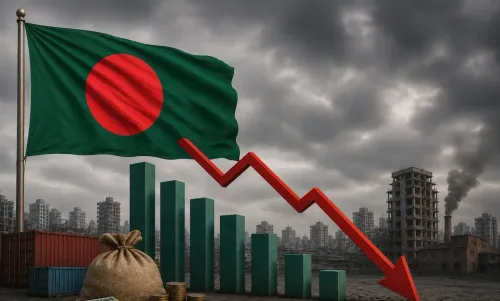
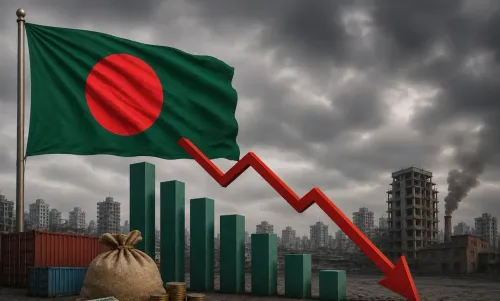
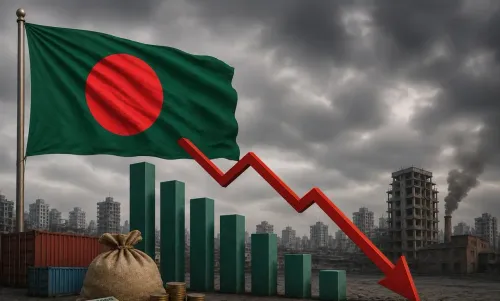
S&P revises Bangladesh outlook to negative on banking, external risks
Synopsis
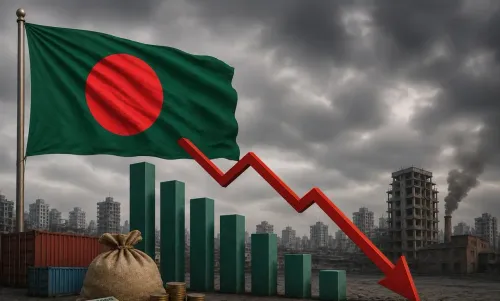
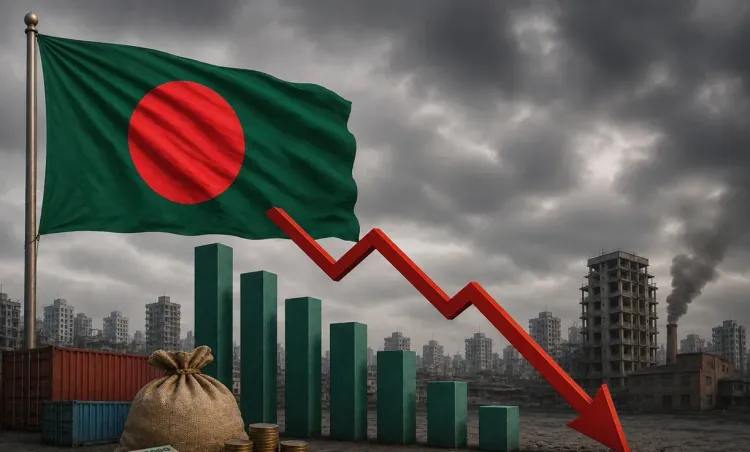
S&P Global has put Bangladesh on a negative outlook — one step from a downgrade — flagging a toxic mix of banking fragility, fiscal tightness, and external shocks. With GDP growth collapsing to 2.22% in Q3 FY26 and industrial output contracting, the warning is as much about structural rot as it is about cyclical headwinds.
Key Takeaways
S&P Global revised Bangladesh's long-term outlook to negative from stable, citing banking sector weakness and external risks.
Annual GDP growth is projected to average 4.5 per cent over the next three years.
Bangladesh's GDP expanded just 2.22 per cent in Q3 FY26 , down from 4.53 per cent a year earlier.
The industrial sector contracted by -0.28 per cent in Q3 FY26, compared with 3.33 per cent growth the prior year.
A further downgrade could occur if narrow net external debt exceeds 100 per cent of current account receipts on a sustained basis.
Recovery depends on sustained remittances , an RMG sector rebound , and continued multilateral lender engagement .
S&P Global has revised its long-term outlook on Bangladesh to negative from stable, citing persistent weaknesses in the country's banking sector, mounting fiscal constraints, and rising external headwinds from volatile energy and trade conditions. The revision signals that Bangladesh's economic growth and external balance sheet position could deteriorate further in the near term.
Why S&P Downgraded the Outlook
The ratings agency pointed to a combination of structural and cyclical pressures. 'We revised the outlook to negative due to the increasing risks to Bangladesh's economy posed by a weak domestic banking sector, fiscal constraints, external headwinds, and the growing prospect of a more protracted recovery,' S&P said in its assessment.
S&P also flagged administrative and institutional weaknesses and limited revenue-raising capacity as factors that leave the government with little fiscal room to manoeuvre. The country's modest per capita income and an elevated government interest burden were cited as additional drags on the economy.
Key External Risks Identified
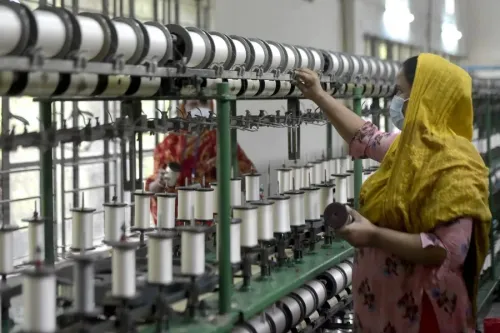
The agency identified several adverse external conditions complicating Bangladesh's recovery path, including the war in the Middle East, financial sector imbalances, and energy market vulnerabilities. Sustained stability in Bangladesh's external accounts, S&P noted, would depend heavily on continued remittance inflows, a rebound in the readymade garment (RMG) sector, and ongoing engagement with multilateral lenders.
This comes amid a broader slowdown in Bangladesh's economic momentum. Annual economic growth is expected to average around 4.5 per cent over the next three years, a marked step down from earlier trajectories.
GDP Growth Slumps in FY26
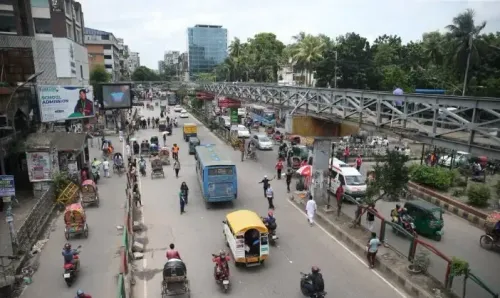
Bangladesh's economic deceleration has been sharp and broad-based. In the third quarter of FY26, GDP expanded by just 2.22 per cent, down significantly from 4.53 per cent in the corresponding period a year earlier. The contraction in the industrial sector, which recorded -0.28 per cent growth against 3.33 per cent the previous year, was a primary driver of the slowdown.
Conditions That Could Trigger a Further Downgrade
S&P outlined specific thresholds that could prompt an outright ratings cut. A sustained decline in Bangladesh's long-term trend growth to levels comparable with lower-income peers would be one trigger. Another would be a deterioration in the external position — specifically if narrow net external debt exceeds 100 per cent of current account receipts on a sustained basis, according to the agency's report.
Notably, this is not an isolated warning. Bangladesh has faced compounding pressures since a sharp political transition and has struggled to stabilise its foreign exchange reserves and banking sector simultaneously. The outlook revision effectively places the country on watch for a potential ratings downgrade if recovery conditions do not improve materially.
What Comes Next
The path back to a stable outlook will require Bangladesh to demonstrate measurable progress on banking sector reform, fiscal consolidation, and export recovery — particularly in the RMG sector, which remains the backbone of its foreign exchange earnings. Continued multilateral support, including from the International Monetary Fund (IMF) and the World Bank, will be critical to bridging the external financing gap in the near term.
Point of View
Not a surprise — Bangladesh's banking sector has carried non-performing assets and governance deficits for years, and the political turbulence of the past year has made reform harder, not easier. What the ratings action underscores is that the window for a soft landing is narrowing: with industrial output already in contraction and the RMG sector yet to fully rebound, the country's traditional growth levers are simultaneously under pressure. The deeper risk is fiscal — limited revenue-raising capacity means the government cannot easily spend its way out of a slowdown, and multilateral support, while critical, comes with conditionalities that constrain policy space. If remittances soften — as they could if Middle East instability deepens — the external position could deteriorate faster than S&P's base case assumes.
NationPress
28 Oct 2026
Frequently Asked Questions
Why did S&P Global revise Bangladesh's outlook to negative?
S&P Global revised Bangladesh's outlook to negative from stable due to a weak domestic banking sector, fiscal constraints, limited revenue-raising capacity, and rising external risks including energy market volatility and the impact of the war in the Middle East. The agency also flagged administrative and institutional weaknesses as limiting the government's ability to respond to economic stress.
What is Bangladesh's current GDP growth rate?
Bangladesh's GDP grew by just 2.22 per cent in the third quarter of FY26, sharply down from 4.53 per cent in the same period the previous year. Annual growth is expected to average around 4.5 per cent over the next three years, according to S&P's assessment.
What could trigger an outright ratings downgrade for Bangladesh?
S&P has indicated it could lower Bangladesh's ratings if the country's long-term trend growth falls to levels comparable with lower-income peers, or if its external position worsens such that narrow net external debt exceeds 100 per cent of current account receipts on a sustained basis.
Which sectors are driving Bangladesh's economic slowdown?
The industrial sector has been the primary drag, contracting by -0.28 per cent in Q3 FY26 compared with 3.33 per cent growth a year earlier. Broader headwinds include banking sector imbalances, energy market vulnerabilities, and subdued performance in the readymade garment sector.
What does Bangladesh need to do to stabilise its credit outlook?
S&P has indicated that sustained remittance inflows, a recovery in the readymade garment sector, and continued engagement with multilateral lenders are key to stabilising Bangladesh's external accounts and potentially returning the outlook to stable.