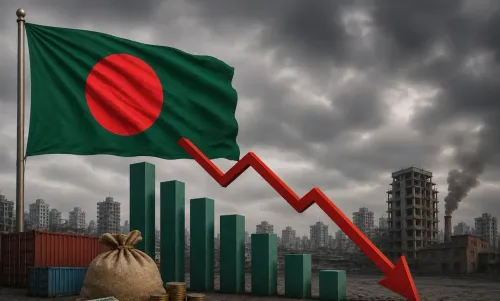
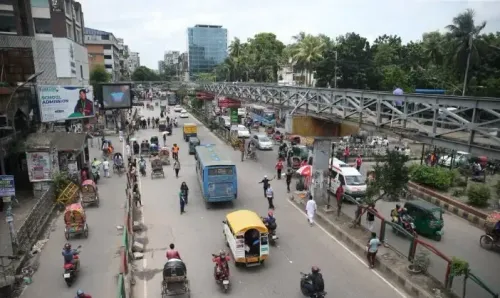
Bangladesh GDP growth slows to 2.22% in Q3 FY26 as industrial sector contracts
Synopsis
Bangladesh's quarterly GDP growth has more than halved year-on-year to just 2.22% in Q3 FY26, with the industrial sector sliding into negative territory for the first time in recent memory. Compounded by an impending loss of LDC trade preferences and rising energy costs, the country's full-year growth target of 4.14% looks increasingly out of reach.
Key Takeaways
Bangladesh's GDP grew just 2.22 per cent in Q3 FY26 , down sharply from 4.53 per cent in the same quarter a year earlier.
The industrial sector contracted -0.28 per cent , with manufacturing at -0.34 per cent and utilities at -3.56 per cent .
Growth has decelerated every quarter this fiscal: 4.96% in Q1, 3.03% in Q2, and 2.22% in Q3.
The Bangladesh Bureau of Statistics (BBS) provisional full-year target of 4.14 per cent is now considered at risk by analysts.
Bangladesh has sought a three-year extension from the UN to manage the economic impact of graduating from Least Developed Country (LDC) status.
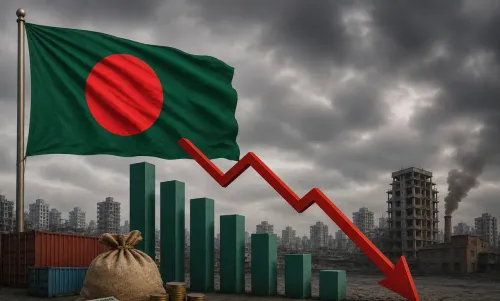
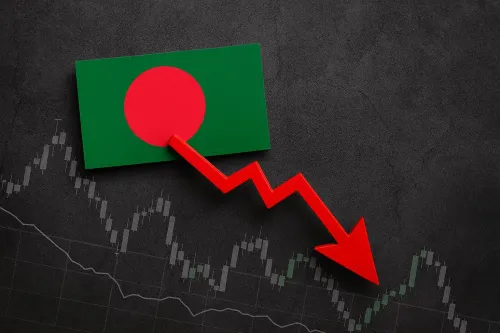
Bangladesh's economic growth slowed sharply to 2.22 per cent in the third quarter of FY26, less than half the 4.53 per cent recorded in the same period a year earlier, according to data cited by Dhaka-based financial publication The Financial Express. The deceleration marks the steepest quarterly drop in the country's growth trajectory this fiscal year.
Industrial Contraction at the Core
The primary drag came from Bangladesh's industrial sector, which posted -0.28 per cent growth in Q3 FY26, a sharp reversal from the 3.33 per cent expansion it recorded in the corresponding quarter of the previous year. Within the sector, manufacturing contracted to -0.34 per cent, while utilities — comprising electricity, gas, and water supply — suffered a steeper slump of -3.56 per cent.
Analysts cited in the report attributed the negative industrial performance to 'ongoing constraints in domestic production, energy-supply challenges, and shifting demand dynamics.' They added that targeted policy interventions would be necessary to engineer a rebound in manufacturing during the final quarter of the fiscal year.
Agriculture and Services Also Lose Steam
The Bangladesh Bureau of Statistics (BBS) noted that cooled growth across both agriculture and services sectors compounded the overall slowdown. The services sector — historically a significant pillar of Bangladesh's economy — grew just 3.52 per cent in Q3 FY26, a modest figure relative to its usual contribution.
This comes amid a continuing downward trajectory across the fiscal year: growth stood at 4.96 per cent in the first quarter and 3.03 per cent in the second quarter before the Q3 slump to 2.22 per cent.
Full-Year GDP Target Now Under Threat
Analysts warn that the Q3 performance makes it increasingly difficult for Bangladesh to achieve the BBS's provisional annual growth estimate of 4.14 per cent for FY26. With the final quarter carrying the burden of recovery, the gap between actual and projected growth has widened considerably.
Notably, this is not an isolated data point — it reflects a structural deceleration that has built through successive quarters, raising questions about the durability of Bangladesh's post-pandemic economic recovery.
LDC Graduation Adds to Economic Pressure
A separate recent report flagged an additional layer of vulnerability: the Bangladesh government has acknowledged that the country's scheduled graduation from the United Nations' Least Developed Country (LDC) category this year could further strain an already fragile economy. The loss of preferential trade access associated with LDC status is expected to weigh on export competitiveness at a time when exports are already reportedly falling.
Compounding the challenge, high inflation and rising energy and fertiliser costs — linked in part to the ongoing Middle East crisis — have stretched the country's fiscal position. Bangladesh has reportedly sought a three-year extension from the UN to prepare for the transition away from LDC trade preferences.
What Comes Next
With Q4 FY26 now underway, analysts say the window for a meaningful recovery is narrow. Whether targeted policy action on energy supply and manufacturing incentives can reverse the industrial contraction in time to salvage the annual growth target remains to be seen.
Point of View
Suggesting a structural problem rather than a seasonal blip. The industrial contraction is particularly alarming: manufacturing was supposed to be the engine of Bangladesh's middle-income ambitions, yet it is now shrinking. The timing could not be worse — LDC graduation will strip away trade preferences precisely when export competitiveness is already under pressure from high inflation and an energy crisis partly fuelled by Middle East instability. Dhaka's request for a three-year UN extension is a tacit admission that the graduation timetable has outrun the economy's readiness.
NationPress
20 Oct 2026
Frequently Asked Questions
What is Bangladesh's GDP growth rate in Q3 FY26?
Bangladesh recorded GDP growth of 2.22 per cent in the third quarter of FY26, down from 4.53 per cent in the same period the previous year, according to data from the Bangladesh Bureau of Statistics.
Why did Bangladesh's economic growth slow in Q3 FY26?
The slowdown was driven primarily by a contraction in the industrial sector, which posted -0.28 per cent growth. Manufacturing shrank by -0.34 per cent and utilities fell by -3.56 per cent. Analysts cited energy-supply constraints, domestic production challenges, and shifting demand as key factors.
Is Bangladesh on track to meet its full-year FY26 GDP target?
Analysts say achieving the Bangladesh Bureau of Statistics' provisional full-year target of 4.14 per cent growth is now increasingly unlikely, given the sharp Q3 deceleration and the narrow window remaining in Q4 FY26 for a recovery.
What is the significance of Bangladesh's LDC graduation for its economy?
Bangladesh is set to graduate from the United Nations' Least Developed Country category, which will result in the loss of preferential trade terms. The government has acknowledged this could worsen the already fragile economic situation and has sought a three-year extension from the UN to prepare for the transition.
How has Bangladesh's GDP growth trended across FY26?
Growth has declined every quarter in FY26 — from 4.96 per cent in Q1 to 3.03 per cent in Q2 and 2.22 per cent in Q3 — reflecting a consistent downward trajectory through the fiscal year.