Bangladesh Sees Record Low Growth in Economic Units Since 1996

Synopsis
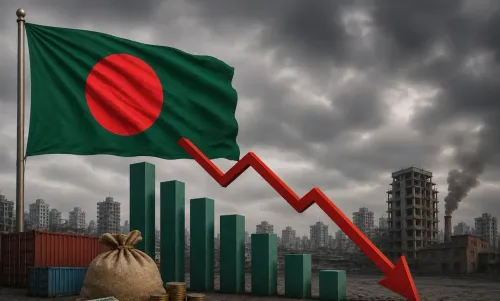
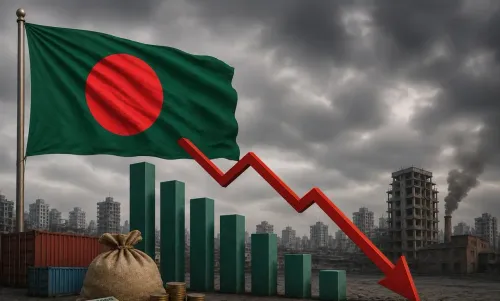
Bangladesh's economic landscape is facing challenges, with a staggering 1.17 crore economic units recorded in 2024, marking the lowest growth since 1996. This decline in growth raises questions about the future of the country's economy.
Key Takeaways
Total economic units in 2024: 1.17 crore Lowest growth rate since 1996 Growth from 2013 to 2024 : 50% Wholesale and retail trade: 40.19% of units Manufacturing sector: 9.57% of units
New Delhi, April 12 (NationPress) In 2024, Bangladesh reached a total of 1.17 crore economic units, representing the lowest growth rate since 1996, as per a report by local media outlets. From 2013 to 2024, the nation experienced a 50% increase in economic units, significantly lower than the 111% surge observed in the preceding decade, according to final statistics from the Economic Census 2024 published by the Bangladesh Bureau of Statistics (BBS).
The BBS defines an economic unit as a single establishment or household engaged in profit-driven economic activities, household benefits, or community advantages.
Back in 1996, there were 21.68 lakh economic units operating in Bangladesh, which climbed by 71% to 37 lakh by 2003, according to BBS.
Current data also indicates that the growth in the number of individuals engaged in these economic units is the lowest in 28 years, dating back to 1996.
Approximately 3.06 crore people are now involved in these economic units, reflecting a 25% increase since 2013, as per the latest census.
The 2024 census results reveal that the wholesale and retail sector constitutes the largest portion at 40.19%, followed by transportation and storage at 22.22% of all economic units.
In contrast, the manufacturing sector held only 9.57% of total economic units in 2024, suggesting that nearly 90% of these units fall within the services sector.
Final statistics show growth in economic units across both rural and urban landscapes, with rural areas representing two-thirds of the total.
The Economic Census 2024 indicates that micro industries make up 57%, while cottage industries account for 39% of the total economic units in Bangladesh.
Small industries contribute a mere 4.2%, with medium industries at 0.31% and large industries at 0.08%.
Point of View
It's clear that the latest Economic Census results indicate a troubling trend in Bangladesh's economic growth. The sharp decline in the growth of economic units raises critical concerns about the sustainability and future trajectory of our economy. It's essential to analyze these figures thoroughly for a more comprehensive understanding.
NationPress
15 Oct 2026
Frequently Asked Questions
What is the current number of economic units in Bangladesh?
As of 2024, Bangladesh has recorded 1.17 crore economic units.
How does the current growth rate compare to previous decades?
The growth from 2013 to 2024 is 50%, significantly lower than the 111% growth rate observed in the previous decade.
What sectors dominate the economic units in Bangladesh?
Wholesale and retail trade make up 40.19%, while transportation and storage account for 22.22% of the economic units.
What percentage of economic units are in the manufacturing sector?
The manufacturing sector constitutes only 9.57% of total economic units as of 2024.
What percentage of economic units are found in rural areas?
Rural areas account for two-thirds of the total economic units in Bangladesh.