Automation and AI set to disrupt 40% of Bangladesh's workforce: Report
Synopsis
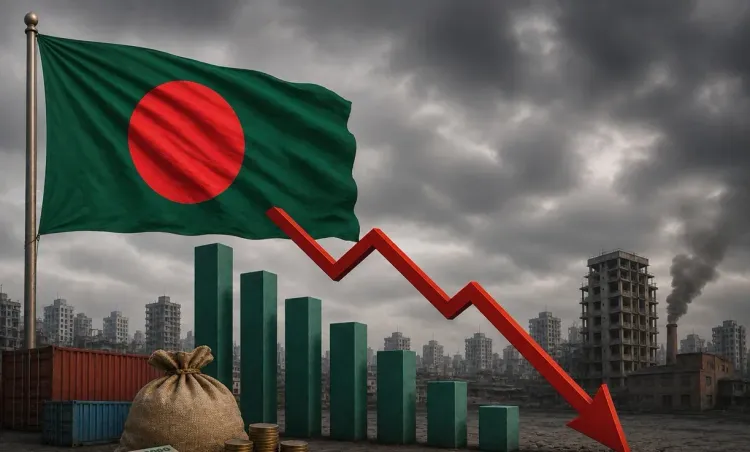
Bangladesh lost 1.3 million jobs in 2024 — 90% of them held by women — and that may only be the beginning. A new report warns that automation and AI could disrupt 40% of the entire workforce, with the RMG sector alone potentially shedding 60% of female jobs by 2041. With LDC graduation stripping away trade buffers, the window for reform is narrowing fast.
Key Takeaways
Around 40 per cent of Bangladesh's workforce could face disruption from automation and AI , according to a report by The Daily Star .
Bangladesh lost nearly 1.3 million jobs in 2024 , with about 90 per cent of those losses affecting women .
Up to 60 per cent of female jobs in the RMG sector could vanish by 2041 if current automation trends continue.
Approaching LDC graduation will remove preferential trade access, accelerating competitive pressure on export sectors.
The report identifies TVET reform as critical, calling for industry-led, outcome-focused skills training aligned with emerging sectors.
Around 40 per cent of Bangladesh's workforce faces potential disruption from automation and artificial intelligence, according to a report that raises urgent questions about the future of the country's labour-intensive manufacturing sector and its capacity to safeguard jobs. The findings underscore deep structural vulnerabilities in an economy that has long relied on export-led, low-wage production.
Key Findings of the Report
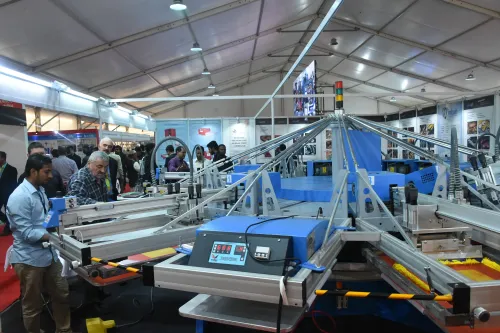
The report, published by The Daily Star, a Bangladesh-based publication, warns that the country's export-led, labour-intensive growth model is under mounting pressure as manufacturers increasingly adopt automation and digital production systems. It also flags a rapid surge in high-value services that often lack adequate social protection, leaving workers exposed.
Citing official labour data, the report noted that Bangladesh lost nearly 1.3 million jobs in 2024, with approximately 90 per cent of those losses affecting women. The scale of displacement points to a structural shift already well underway, not a future risk.
RMG Sector Under Acute Pressure
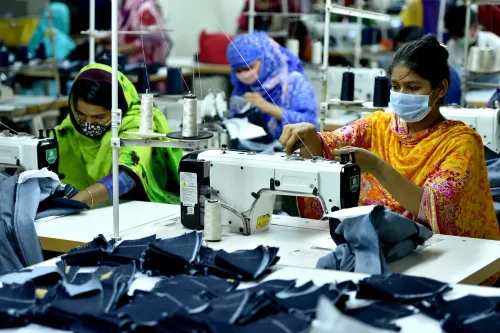
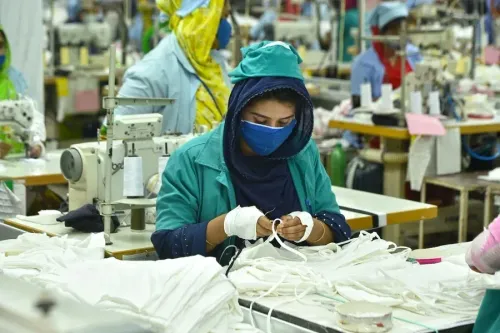
The ready-made garments (RMG) sector — the backbone of Bangladesh's export economy — faces particularly acute disruption. Some estimates cited in the report suggest that up to 60 per cent of female jobs in the sector could disappear by 2041 if current automation trends continue unchecked. This comes at a time when large segments of the workforce remain in insecure or informal employment.
The report noted that young people, women, and persons with disabilities are especially vulnerable to displacement and face the most limited access to reskilling opportunities. The concentration of risk among already-marginalised groups amplifies the social stakes of the transition.
LDC Graduation to Intensify Competitive Pressures
'The pressures are likely to intensify as Bangladesh approaches LDC graduation. The withdrawal of preferential trade access will sharpen competitive pressures in export sectors, particularly RMG, accelerating the shift towards automation and higher-productivity production systems,' the report stated.
This is a critical inflection point. As Bangladesh graduates from Least Developed Country (LDC) status, it will lose the preferential trade concessions that have historically insulated its garment exporters from global competition — removing a buffer precisely when automation is already reshaping production floors.
Policy Gaps and the TVET Challenge
The report argues that current policy instruments in Bangladesh are failing to address these challenges. Responses to artificial intelligence, the Fourth Industrial Revolution (4IR), and Technical and Vocational Education and Training (TVET) reform have yet to be effectively integrated into sector-specific transition strategies or workforce adaptation mechanisms.
Skills systems are identified as a critical weak link. According to the report, TVET in Bangladesh lacks strong connections with industry and emerging sectors, leaving graduates ill-equipped for the jobs being created even as automation eliminates the ones being lost.
'TVET should be reformed to be industry-led and outcome-focused by collaborating with employers on curricula, expanding apprenticeships, and aligning training with new sectors and international labour markets,' the report recommended.
What Comes Next
Without urgent reform of skills infrastructure and social protection frameworks, the report suggests that the transition to automated, higher-productivity production could widen inequality rather than drive inclusive growth. The trajectory of Bangladesh's RMG sector over the next decade will serve as a bellwether for how other labour-surplus economies in South Asia navigate the automation wave.
Point of View
Not a projected one. What the report does not fully reckon with is the compounding effect: LDC graduation will strip preferential market access at the same moment automation is hollowing out the low-skill jobs that graduation was supposed to move beyond. Bangladesh's TVET system, still weakly linked to industry, is being asked to reskill a workforce at a pace and scale it has never demonstrated it can achieve. The real question is not whether disruption will happen — it already is — but whether the political will exists to fund and reform the social protection and skills architecture before the window closes.
NationPress
3 Oct 2026
Frequently Asked Questions
What percentage of Bangladesh's workforce could be disrupted by automation and AI?
According to a report by The Daily Star, around 40 per cent of Bangladesh's workforce could face disruption from automation and artificial intelligence. The report highlights that large segments of workers in labour-intensive sectors, particularly RMG, are most at risk.
How many jobs did Bangladesh lose in 2024?
Bangladesh lost nearly 1.3 million jobs in 2024, according to official labour data cited in the report. Approximately 90 per cent of those losses affected women, reflecting the concentration of female workers in automation-vulnerable roles.
Why is the RMG sector particularly vulnerable?
The ready-made garments sector is Bangladesh's primary export industry and relies heavily on low-skill, labour-intensive production — precisely the kind of work most susceptible to automation. Some estimates suggest up to 60 per cent of female jobs in the sector could disappear by 2041 if current trends continue.
How does LDC graduation affect Bangladesh's job market?
As Bangladesh graduates from Least Developed Country status, it will lose preferential trade access that has historically shielded its exporters from global competition. The report warns this will sharpen competitive pressure on the RMG sector, accelerating the shift toward automation and higher-productivity systems.
What reforms does the report recommend for Bangladesh's skills system?
The report calls for TVET to be reformed into an industry-led, outcome-focused system by collaborating with employers on curricula, expanding apprenticeships, and aligning training with new sectors and international labour markets. It argues current skills systems are failing to meet labour market demands.