AI-driven crime surges in Bangladesh as deepfakes target women, experts urge regulation

Synopsis
In Bangladesh, over 73% of AI-linked smear campaigns in 2025 targeted women in showbiz using deepfakes — and experts say the country's legal framework is dangerously unprepared. The real risk isn't just the crime wave; it's that a rushed 'rumour prevention law' could silence critics just as effectively as it silences criminals.
Key Takeaways
68 severe misinformation campaigns targeted 29 prominent women in Bangladesh's entertainment industry in 2025 , according to Rumor Scanner .
50 of those 68 attacks — over 73% — explicitly used advanced AI-generated video content .
Generative tools including Midjourney , DALL-E 3 , Sora 2 , and Google Veo 3.0 are seeing rapid adoption among Bangladeshi youth.
Experts warn unregulated AI could cause long-term damage to Bangladesh's education system , job market , and cinema industry .
Analysts caution that any new AI law must clearly distinguish criticism and satire from disinformation to avoid becoming a tool of censorship.
The report calls for binding local accountability for Facebook , TikTok , and X on content moderation within Bangladesh.
Artificial intelligence-driven criminal activity is rising sharply in Bangladesh, with deepfakes, disinformation campaigns, and AI-generated content increasingly weaponised against individuals and institutions, according to a report released on Sunday, 7 June 2025. Experts are calling for an urgent national and global AI regulatory framework to contain the damage before it becomes irreversible.
Scale of the Problem
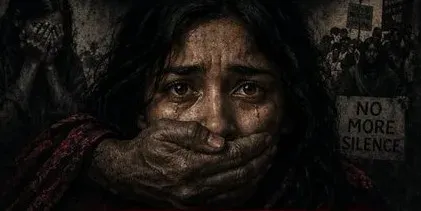
The numbers are stark. According to local fact-checking organisation Rumor Scanner, a total of 68 severe rumours and items of misinformation targeted 29 prominent women in Bangladesh's showbiz industry in 2025 alone. Of those 68 smear campaigns, 50 video contents explicitly utilised advanced AI technology — meaning more than 73% of the attacks were AI-generated, according to the data cited in the report.
Deepfakes and the Content Crisis
Television studios and social media platforms in Bangladesh are increasingly using AI to generate content, and the resulting deepfakes have become exceptionally difficult for ordinary viewers to distinguish from authentic material. AI image-generation tools have gained particular traction among young users, with conversational and generative platforms such as Copilot, Midjourney, DALL-E 3, Sora 2, Runway Gen 4.5, and Google Veo 3.0 all recording growing adoption in the country.
Broader Institutional Risks
The threat extends well beyond individual reputations. Experts cited in the report argue that the unregulated proliferation of AI could inflict severe long-term damage on Bangladesh's education system, job market, and cinema industry. The convergence of cheap generative tools, low platform accountability, and weak domestic legislation has created a regulatory vacuum that bad actors are actively exploiting.
The Regulation Dilemma
Tech analysts are pressing for immediate, strict AI regulations — but with a critical caveat. Experts warn that any new law must be carefully drafted to avoid becoming a tool of political suppression. According to the report, legislation must draw clear distinctions between criticism, misinformation, deliberate disinformation, hate speech, satire, and political sarcasm. As the report noted, 'If the law remains ambiguous, a rumour prevention law runs the high risk of swiftly mutating into a criticism-suppression law.' This concern is not hypothetical — several countries in South and Southeast Asia have seen broadly worded digital content laws deployed against journalists and opposition voices.
Platform Accountability and What Comes Next
The report also calls for enforcing local accountability on major social media platforms including Facebook, TikTok, and X, demanding greater transparency, local-language content moderation, and active action against fake accounts, bot networks, unlabelled AI videos, and communal content. Without binding obligations on these platforms within Bangladeshi jurisdiction, experts argue, self-regulation will remain insufficient. The push for a comprehensive AI policy framework is now gaining urgency as the gap between technological capability and legal oversight continues to widen.
Point of View
Concrete measure of AI-enabled harm: 50 AI-generated attacks against 29 women in a single year is not a fringe problem, it is a structural one. What the report surfaces, but mainstream coverage tends to underplay, is the double-edged nature of the regulatory response: the same vague language that could criminalise deepfakes could equally criminalise satire and dissent. Bangladesh has previous form here — its now-repealed Digital Security Act was widely condemned for exactly that misuse. Getting the legal architecture right is as important as getting it done fast.
NationPress
22 Oct 2026
Frequently Asked Questions
What is the scale of AI-driven crime in Bangladesh?
According to fact-checking organisation Rumor Scanner, 68 severe misinformation campaigns targeted 29 prominent women in Bangladesh's entertainment industry in 2025, and 50 of those campaigns used AI-generated video content. This indicates that over 73% of such attacks were deepfake-driven.
Which AI tools are being misused in Bangladesh?
The report identifies generative AI platforms including Copilot, Midjourney, DALL-E 3, Sora 2, Runway Gen 4.5, and Google Veo 3.0 as seeing growing adoption in Bangladesh, including for the creation of deepfake content used in smear campaigns.
Why are experts cautious about new AI laws in Bangladesh?
Experts warn that broadly worded AI or 'rumour prevention' legislation risks being misused to suppress legitimate criticism, satire, and political commentary. They argue the law must clearly define and separately address misinformation, disinformation, hate speech, and satire to prevent it from becoming a censorship tool.
Who is most affected by AI-driven misinformation in Bangladesh?
Women in Bangladesh's showbiz and entertainment industry have been the primary targets so far, according to Rumor Scanner data. However, experts argue the broader impact could extend to the education system, job market, and cinema industry if AI misuse goes unchecked.
What are experts recommending to address the crisis?
Experts are calling for a comprehensive national and global AI regulatory framework, binding local accountability for platforms like Facebook, TikTok, and X, and enhanced local-language content moderation. They also want action against fake accounts, bot networks, and unlabelled AI-generated videos circulating in Bangladesh.