Gender inequality, climate shocks drive human trafficking in Bangladesh: Report
Synopsis
A report by The Asian Age lays bare the structural roots of Bangladesh's trafficking crisis — gender inequality, youth unemployment, fraudulent digital recruitment, and climate-driven displacement are converging to feed criminal networks that exploit thousands every year. The finding that climate shocks are now a trafficking driver reframes what has long been treated as purely a law enforcement problem.
Key Takeaways
Human trafficking affects thousands of people every year in Bangladesh despite stronger laws and greater awareness, according to a report in The Asian Age .
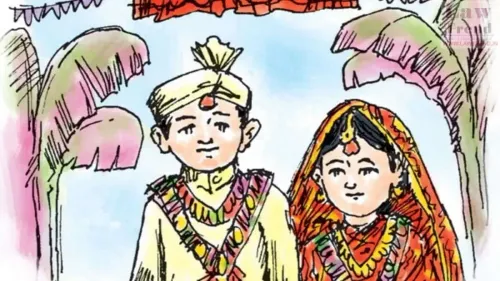
Women and girls are disproportionately vulnerable, with gender inequality, child marriage, and labour market discrimination cited as structural risk factors.
Domestic trafficking — victims moved from rural to urban areas for forced labour or sexual exploitation — is flagged as a serious and under-addressed challenge.
Traffickers are increasingly using social media, messaging apps, and online job advertisements to recruit victims, making cyber-enabled trafficking an emerging law enforcement challenge.
Climate shocks — floods, cyclones, and riverbank erosion — are displacing families and creating new pools of vulnerable people that traffickers exploit.
Experts call for integrating climate adaptation, girls' education, and women's economic empowerment into anti-trafficking strategies.
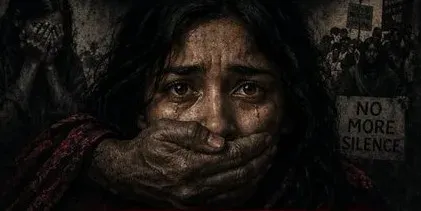
Human trafficking remains one of Bangladesh's most acute human rights crises, with women and girls bearing a disproportionate share of the burden, according to a report published by Bangladeshi daily The Asian Age on 18 July. The report identifies gender inequality, child marriage, limited access to education, and labour market discrimination as structural factors that heighten women's and girls' vulnerability to exploitation.
Scale and Nature of the Crisis
According to the report, human trafficking in Bangladesh affects thousands of people every year despite sustained government efforts, increased public awareness, and stronger legal frameworks. Criminal networks continue to exploit poverty, unemployment, irregular migration, natural disasters, and social vulnerability, luring victims with false promises of employment, education, or marriage.
'The result is a complex humanitarian crisis that extends beyond national borders and demands coordinated action from the government, civil society, neighbouring countries, and the international community,' the report stated.
Experts cited in the report noted that trafficking is not confined to cross-border movements. Domestic trafficking poses a serious and often under-reported challenge, with victims from rural communities frequently transported to urban centres and subjected to forced labour, domestic servitude, or commercial sexual exploitation.
Economic Desperation as a Key Enabler
High youth unemployment, restricted access to education, and the aspiration for better livelihoods push many individuals toward informal recruitment channels — channels that traffickers actively exploit. According to the report, unscrupulous brokers charge excessive recruitment fees and supply fraudulent travel documents. Once victims reach their destination, passports are frequently confiscated, wages withheld, and freedom severely curtailed.
Human rights advocates cited in the report have called for greater investment in girls' education, expanded economic opportunities for women, and stronger community-based protection mechanisms. Strengthening women's economic independence and social empowerment, they argue, can reduce the vulnerabilities that traffickers exploit.
Digital Platforms and Cyber-Enabled Trafficking
Advances in technology have reshaped trafficking methods across Bangladesh. Traffickers are increasingly using social media, messaging apps, and online job advertisements to identify and recruit potential victims. The report also flagged the growing use of fake job agencies, fraudulent scholarship schemes, and deceptive marriage proposals to build trust before exploitation.
Cyber-enabled trafficking has emerged as a distinct and growing challenge, the report warned, requiring investigators to pursue sophisticated networks operating across multiple jurisdictions — a task that strains existing law enforcement capacity.
Climate Change as an Emerging Driver
The report highlights climate change as an increasingly significant, if underacknowledged, driver of trafficking in Bangladesh. Floods, cyclones, riverbank erosion, and saltwater intrusion regularly displace families, forcing internal migration and creating conditions of acute economic insecurity.
'Displaced populations often lack stable housing, employment, and social protection, making them easier targets for traffickers,' the report noted. Development experts cited in the report argue that climate adaptation, disaster preparedness, and social safety programmes must be integrated into anti-trafficking strategies — not treated as separate policy domains.
What Needs to Happen Next
The report calls for coordinated action spanning government agencies, civil society organisations, neighbouring countries, and the international community. Anti-trafficking strategies, it argues, must address root causes — poverty, gender discrimination, climate vulnerability — rather than focusing solely on law enforcement responses. Whether Bangladesh's policy framework will be restructured to reflect this broader approach remains to be seen.
Point of View
Not an edge case. Bangladesh loses an estimated 0.5% to 1% of its habitable land to climate stressors each decade; if anti-trafficking policy continues to treat this as a separate domain, it will chronically undercount the at-risk population. Equally telling is the digital recruitment angle: law enforcement frameworks built around physical border crossings are structurally mismatched to networks operating through encrypted apps and fake LinkedIn-style portals. The real accountability question is whether donor-funded anti-trafficking programmes in Bangladesh will be redesigned to reflect these realities, or whether they will continue to fund awareness campaigns in communities where the threat has already moved online.
NationPress
16 Oct 2026
Frequently Asked Questions
Why are women and girls most vulnerable to human trafficking in Bangladesh?
Women and girls face heightened vulnerability due to structural factors including gender inequality, child marriage, limited access to education, and discrimination in the labour market, according to the report. These conditions reduce economic options and increase exposure to traffickers who exploit poverty and misinformation.
How are traffickers using technology to recruit victims in Bangladesh?
Traffickers are increasingly using social media platforms, messaging apps, and online job advertisements to identify and approach potential victims. The report also highlights the use of fake job agencies, fraudulent scholarship schemes, and deceptive marriage proposals as recruitment tools, with cyber-enabled trafficking now requiring cross-jurisdictional investigations.
What role does climate change play in driving human trafficking in Bangladesh?
Floods, cyclones, riverbank erosion, and saltwater intrusion regularly displace Bangladeshi families, leaving them without stable housing, employment, or social protection — conditions that traffickers actively exploit. Development experts cited in the report argue that climate adaptation and disaster preparedness must be integrated into anti-trafficking strategies.
Is human trafficking in Bangladesh only a cross-border problem?
No. The report explicitly notes that domestic trafficking is a serious challenge, with victims from rural communities frequently moved to urban areas and subjected to forced labour, domestic servitude, or commercial sexual exploitation. Cross-border trafficking is one dimension of a broader crisis.
What solutions does the report recommend to combat trafficking in Bangladesh?
The report calls for greater investment in girls' education, expanded economic opportunities for women, stronger community-based protection mechanisms, and the integration of climate adaptation into anti-trafficking strategies. It also stresses coordinated action between the government, civil society, neighbouring countries, and the international community.